Digital Asset Trading Business Financial Model – Case Study
Client Overview
Our client is a digital asset trading group offering regulatory and technology solutions. They required a dynamic trading business financial model covering five years, including income statements, balance sheets, and cash flow statements for each entity.
Oak Business Consultant developed a comprehensive three-statement model with depreciation tables, asset calculations, and financial ratios. The model also includes blockchain node operations, discounted cash flow, and scenario analysis.
Built in Excel with automated spreadsheet formulas and error checks, the model helps the client plan revenue growth, assess investment opportunities, and support regulatory compliance and venture capital readiness.
Client Challenges
- Multi-Entity Financial Reporting
The client operates a group of companies. They required separate financial statements for each entity. This included the income statement, cash flow statement, and balance sheet for every company. - Consolidated View of Financial Position
In addition to individual reporting, the client also needed a consolidated overview. This would summarize the financial performance and position of the entire group. - Five-Year Financial Forecasting
The client sought a comprehensive financial model. It needed to project revenue, expenses, and capital structure over the next five years. These forecasts would support investment decisions and guide fundraising plans. - Asset Depreciation Tracking
Each company in the group held different types of assets. The client requested a detailed depreciation schedule for each company. They also needed separate asset calculations to track book values and manage capital allocation clearly. - Advanced Financial Modeling Requirements
The financial model had to be dynamic and Excel-based. It needed features such as scenario analysis, sensitivity analysis, error-trap formulas, and automated spreadsheet logic. This would ensure the model was flexible, accurate, and easy to use. - Blockchain Infrastructure Modeling
The client’s business relies on blockchain technology. The model needed to capture the financial workings of both master nodes and sub-nodes. These components impact financial data, capital expenditure, and cash flow planning. - Regulatory Compliance Insights
The company operates in a highly regulated industry. The financial model had to account for variables related to regulatory authority requirements. It also needed to reflect potential compliance costs and risks.
Features of the Digital Asset Trading Financial Model

1. Customizable Input Assumptions
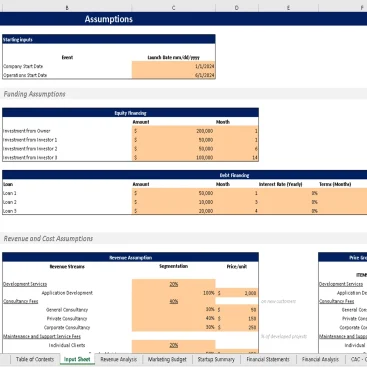
The financial model includes a flexible input sheet. Users can easily update key variables like trading volume, fees, capital expenditures, and transaction costs. All related statements and calculations update automatically. This makes it ideal for scenario analysis and real-time forecasting in digital asset trading environments.
2. Multi-Entity and Group-Level Financial Structure
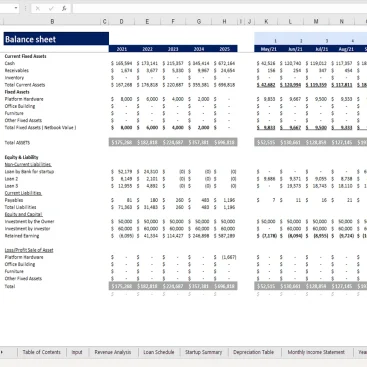
The model supports financial statements for each entity within a group. It includes separate income statements, cash flow statements, and balance sheets. A consolidated overview brings everything together. This feature is ideal for holding companies, cross-border exchanges, and multi-subsidiary blockchain platforms.
3. Revenue Modeling for Crypto & Digital Asset Businesses
Revenue projections are built for blockchain and trading platforms. They account for transaction fee income, staking rewards, masternode earnings, and API integration fees. The model includes variables for user growth, transaction volume, and trading margins. It is built to fit exchange operators and DeFi platforms.
4. Blockchain Node Infrastructure Modeling
The model includes the economics of node operations. It separates master nodes and sub-nodes. Costs like hardware, maintenance, and electricity are modeled alongside rewards and mining revenue. This is crucial for companies operating validator or full-node systems on PoS or PoA networks.
5. 5-Year Forecast with Monthly & Annual Projections
It features a comprehensive 5-year forecast. All projections—income, cash flow, and balance sheet—are available monthly and annually. Users can track trends, prepare for funding rounds, and make long-term strategic decisions.
6. Detailed Asset and Depreciation Module
Each company’s asset base is tracked separately. The model calculates depreciation by asset class using defined accounting rules. This includes schedules for capital assets, disposals, and profit/loss on disposal. The structure complies with IFRS and GAAP standards.
7. Investment Planning and Use of Funds
The model helps startups plan investment rounds. It maps how funds are allocated—toward infrastructure, hiring, compliance, and platform development. This section supports communication with investors, VCs, and stakeholders.
8. Expense Planning and Department-Level OPEX Tracking
Operating expenses are segmented across departments. This includes compliance, marketing, technology, and cloud services. Companies can adjust staff count, software subscriptions, legal fees, and more.
9. Breakeven and Sensitivity Analysis
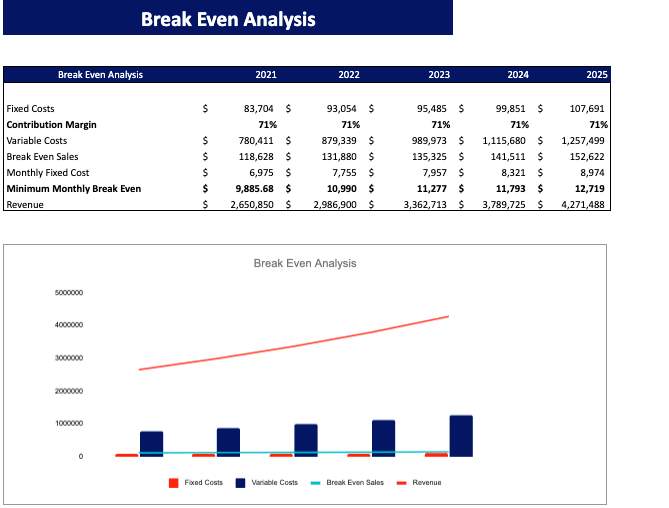
The breakeven module calculates when the business reaches profitability. It also includes tools to test sensitivities—such as changes in user acquisition cost, trading fees, or crypto price volatility.
10. KPI Dashboard and Financial Ratios
Key performance indicators are automatically calculated. This includes gross margin, net profit, revenue per customer, and user growth rate. Financial ratios like liquidity, profitability, and leverage are also included. Charts and dashboards make performance monitoring easy.
Outcome
Oak Business Consultant delivered a five-year, investor-ready financial model that streamlined multi-entity financial reporting and integrated blockchain node operations. The model enabled the client to manage cash flow more effectively, plan investments strategically, and ensure regulatory compliance. It provided a clear financial roadmap, supporting both operational decision-making and investor engagement.
What’s in It for You?
If you’re a founder, investor, or financial strategist in the digital asset trading or blockchain space, navigating a fast-moving regulatory and technological environment is complex. Without a reliable financial model, your venture risks:
- Inaccurate financial forecasts, leading to misaligned strategic decisions and missed investment opportunities.
- Uncontrolled operating costs, such as infrastructure, node operations, and compliance, which can shrink your margins.
- Lack of clarity on capital allocation, making it difficult to optimize investments across tech, talent, and regulatory functions.
- Cash flow volatility, impacting your ability to manage platform uptime, reinvest in development, or expand operations.
- Investor hesitation, due to unclear projections and inadequate reporting on digital asset economics.
How Can You Overcome These Challenges?
By implementing a robust, Excel-based financial model tailored to your digital asset trading business, you can:
- Gain financial clarity across multiple entities, with automated statements, depreciation schedules, and real-time forecasting.
- Model blockchain infrastructure accurately, including master and sub-nodes, staking rewards, and network-related costs.
- Project revenue confidently, factoring in trading volumes, user growth, and transaction fees.
- Optimize fund utilization, helping you plan investments across compliance, technology, and market expansion.
- Build investor-ready reports, with dynamic dashboards, financial ratios, and scenario analyses that highlight scalability and returns.
Ready to Strengthen Your Digital Asset Business Strategy?
At Oak Business Consultant, we specialize in financial modeling, revenue planning, and strategic support for blockchain and crypto trading ventures.
Book a free consultation today—and let’s build a financial model that fuels your growth, improves your funding readiness, and supports long-term success.
Frequently Asked Questions
Is the model customizable for different revenue models?
Absolutely. It includes inputs for trading fees, staking rewards, node operations, and more.
Does it include regulatory cost forecasting?
Yes, the model factors in compliance costs and can be adjusted based on regulatory requirements.
How is depreciation handled?
Each entity has its own detailed depreciation schedule, compliant with IFRS and GAAP standards.
Is it investor-ready?
Yes. The model includes use-of-funds planning, breakeven analysis, financial ratios, and KPIs to support fundraising.
What tools or software are needed?
The model is built entirely in Microsoft Excel with automated formulas—no special software required.
Conclusion
Oak Business Consultant delivered a robust, Excel-based financial model tailored for a multi-entity digital asset trading business. The model includes essential features such as 5-year financial forecasting, blockchain node infrastructure modeling, and detailed asset depreciation schedules. It also supports KPI tracking and consolidated financial statements. These features help the client improve strategic planning, meet regulatory requirements, and prepare for investor engagement. Ready to Elevate Your Financial Planning? Contact Oak Business Consultant for a customized financial model designed specifically for blockchain and digital asset businesses.