How Financial Analysis Services Benefit Startups
Learn How Financial Analysis Services Benefit Startups
Most founders don’t lack financial data. They lack a way to turn that data into a decision. A bank balance tells you what you have today. Financial analysis tells you whether you’ll still have it in six months, and what to do if you won’t.
Financial analysis is the practice of reviewing a company’s financial statements and calculating ratios to judge its stability, so that strengths and weaknesses show up before they become emergencies. Shareholders, lenders, and the founders themselves all need a working answer to the same three questions: is the business profitable, is it liquid enough to pay its bills, and is it solvent enough to survive the next twelve months.
Standard financial statements include the balance sheet, the income statement, the cash flow statement, and supporting notes. Internal analysis is done by employees, managers, or anyone with access to the company’s accounting records. External analysis is done by outsiders working from publicly available information: investors, creditors, credit agencies, and regulators.
Analysis can also be split by time horizon. A short-term study looks at whether the company can meet its near-term obligations, which is a liquidity question. A long-term study looks at whether it can meet its debts over years, which is a solvency question. Startups usually need both running at the same time, because a company can be profitable on paper and still run out of cash.
Financial reports every startup should actually be looking at
A financial analysis service isn’t one document. It’s a set of reports that answer different questions, and a startup that only tracks one or two of them is flying with half the instrument panel dark.
| Report | What it answers | Review frequency |
| Profit and loss statement | Are we making money, and on what? | Monthly |
| Balance sheet | What do we own, what do we owe, what’s left over? | Monthly or quarterly |
| Cash flow statement | Has the money actually moved, or is it stuck in receivables? | Monthly |
| AR aging report | Which customers are paying late, and how late? | Weekly to monthly |
| AP aging report | Which bills are due, and can any be delayed without penalty? | Monthly |
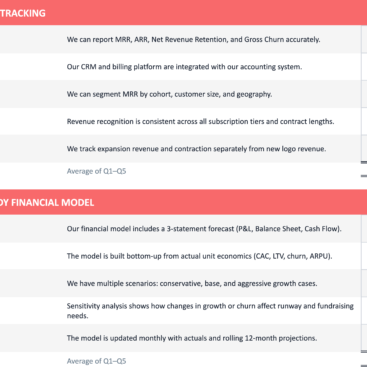
| Burn rate report | How much cash are we spending net of revenue? | Monthly |
| Runway report | How many months of operation does our cash balance buy us? | Monthly |
| Budget vs. actuals | Where did the plan diverge from reality, and why? | Monthly |
| Break-even analysis | How many units or how much revenue do we need to stop losing money? | Quarterly, or after any pricing change |
The P&L and balance sheet get the most attention because they’re the ones auditors and investors ask for first, but for an early-stage company, the cash flow statement and the runway report are usually the ones that actually change a decision. A company can show a profit on the P&L in a month it burned through six figures of cash, because revenue is recognized before the customer actually pays. That gap is exactly what a cash flow analysis is built to catch.
The benefits, in the order they usually matter to a founder
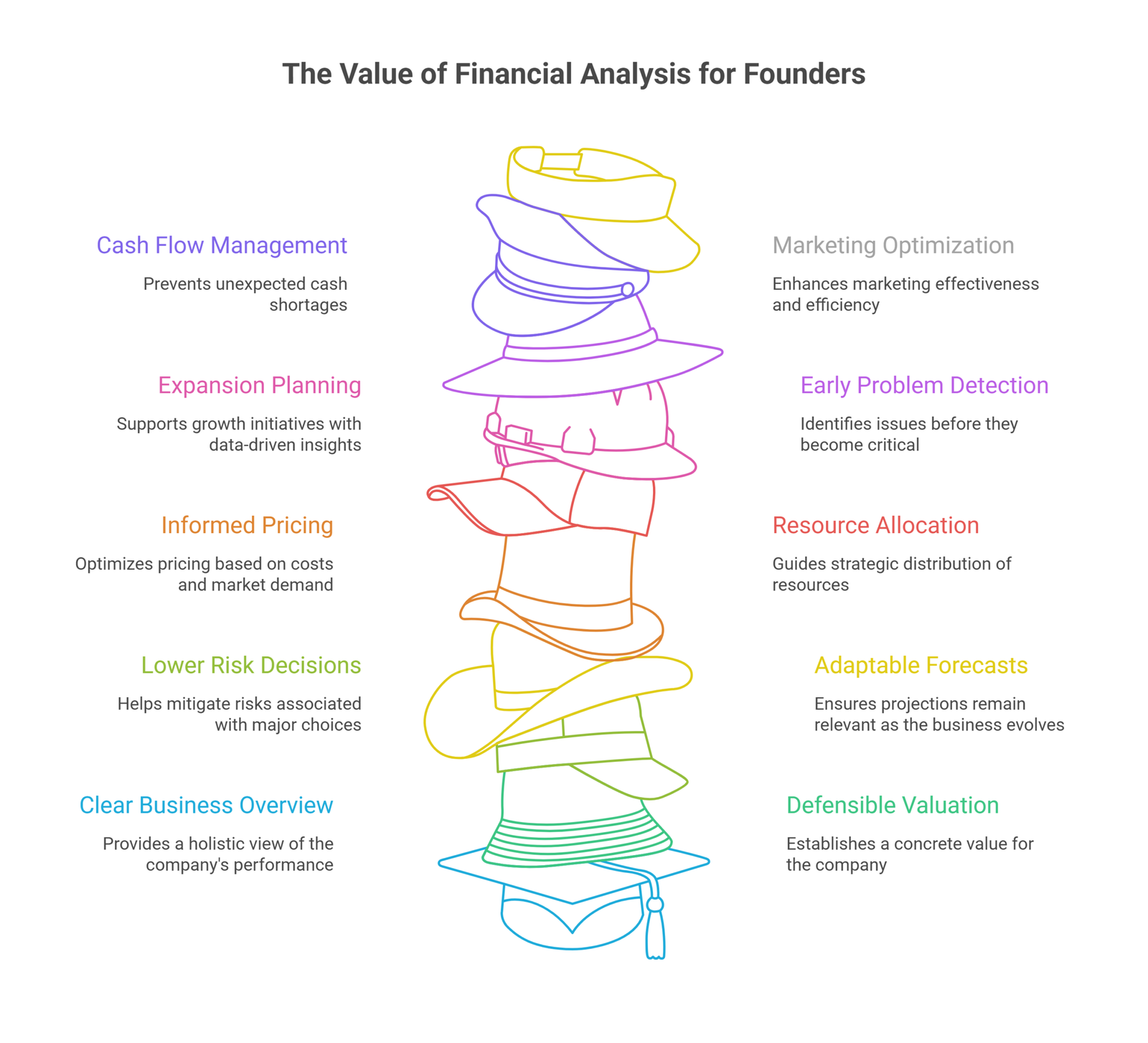
A clearer picture of the whole business, not just the parts that feel urgent.
Financial analysis forces a look at customers, income, costs, and risk together rather than in isolation. It’s common for a founder to believe revenue can grow quickly without a proportional rise in spending, and then find, once the numbers are actually run, that the assumption was optimistic and the marketing or product budget needs to grow faster than expected.
A defensible answer to “what is this company worth.”
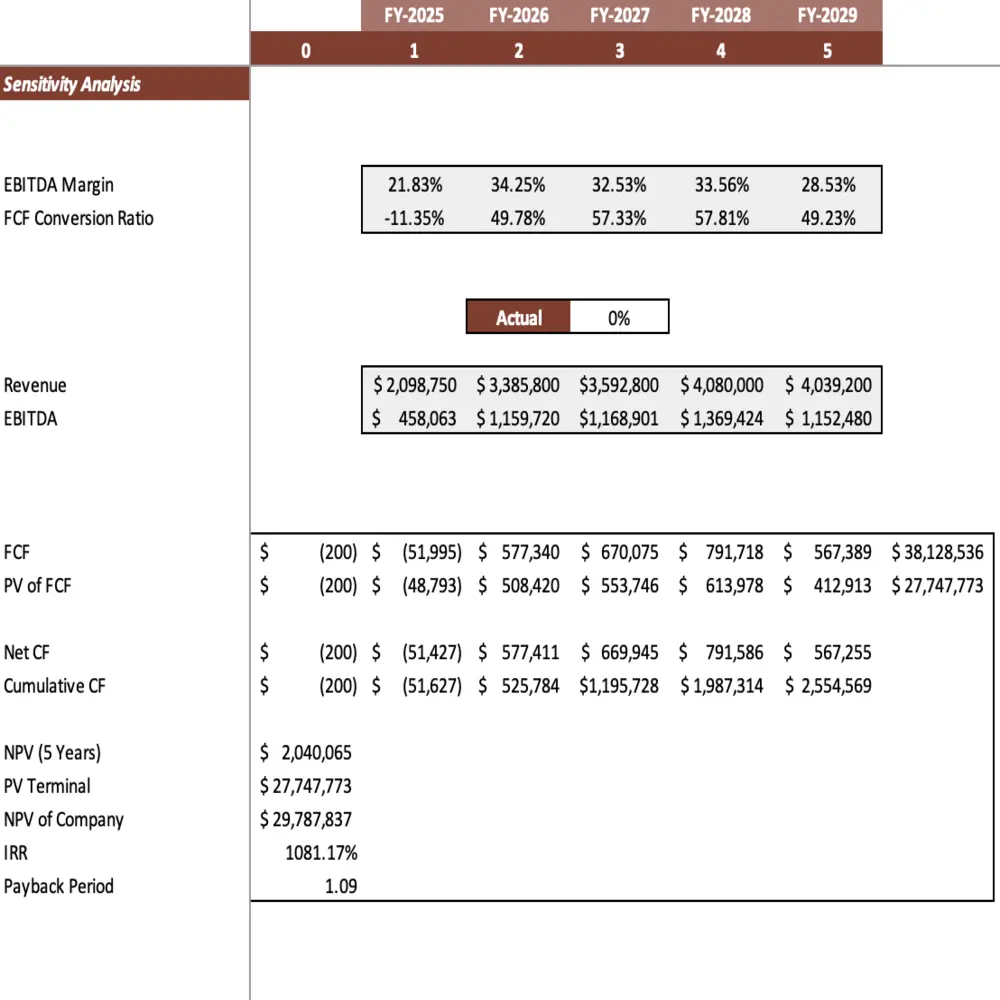
The most common valuation approach is discounted cash flow, or DCF, which takes the company’s projected future cash flows and discounts them back to today’s value using a rate that reflects risk, often the weighted average cost of capital. If a firm is expected to generate $100 in free cash flow next year and the discount rate is 10%, its implied value today is roughly $90. The math is simple; the hard part, and the part an analyst actually earns their fee for, is building defensible assumptions about growth, margin, and risk instead of picking numbers that flatter the pitch deck.
Lower risk on decisions that are hard to reverse.
Pricing, headcount, and market entry are the kinds of calls that are expensive to walk back. No model removes risk entirely, and every set of projections is wrong in some direction, but a well-built one gives a founder a structured way to stress-test a decision before money is committed rather than after.
Forecasts that hold up when the business changes.
A forecast built from the company’s actual strategic goals and operating patterns tends to survive contact with reality better than one built from generic templates. It also feeds risk assessment directly: if the model shows margin compressing under a specific growth scenario, that’s a problem worth catching in a spreadsheet rather than in a board meeting.
Pricing decisions grounded in actual cost of goods sold (COGS).
If prices are too high relative to the market, analysis will show softening demand and point toward a cut. If they’re too low relative to COGS, it’ll show margin being left on the table. Either way, the direction of the fix comes from the numbers rather than from a hunch about what the market will bear.
A resource-allocation framework instead of spur-of-the-moment budgeting.
Take an e-commerce startup deciding how to split a limited budget across SEO, product development, customer service, and shipping. The useful questions aren’t abstract: what has each department actually spent historically, what does it project needing next quarter, and is the team resourced to support the growth that’s being planned. Financial analysis turns those questions into a comparison instead of a guess.
Real input for expansion decisions.
Forecasting customer acquisition cost, lifetime value, and marketing spend together gives a company a route map for growth rather than a hope. It’s also the material that makes a fundraising conversation concrete: instead of walking investors through slides, a founder can walk them through a model that shows how the business is expected to generate revenue and profit.
A way to catch problems while they’re still small.
A financial analysis tracks income, expenses, assets, and liabilities together, which is what makes it possible to compute metrics like profit, return on investment, and working capital in one place. That’s also what lets a team compare which product line or division is actually carrying the business and which one is quietly losing money.
Enough visibility to avoid a cash crunch.
Ongoing cash flow analysis is the main defense against running out of money unexpectedly. It also helps a company estimate future cash needs early enough to act on them, rather than discovering the shortfall the week payroll is due.
Informed pricing and campaign decisions in marketing.
Once a company knows what it costs to acquire a customer and what that customer is worth over time, it can tell which marketing channels are actually working and which ones are burning budget for the sake of activity.
Ratios and benchmarks worth knowing before a pitch
Founders don’t need to memorize a finance textbook, but a few ratios come up often enough in investor conversations that it’s worth knowing what they mean before someone asks.
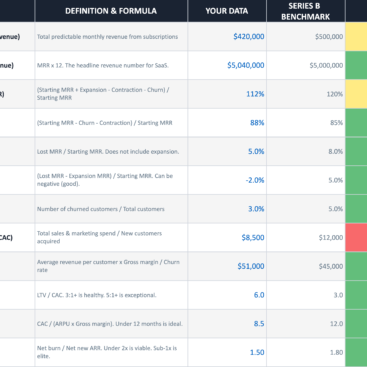
Debt-to-equity ratio compares how much of the company’s funding comes from debt versus owner or investor contributions; a 2:1 ratio means debt is twice the size of equity. Days Sales Outstanding (DSO) measures how long, on average, it takes to collect payment after a sale, and a rising DSO is usually the first sign of a collections problem before it shows up anywhere else. For SaaS companies specifically, investors evaluating a Series A round commonly look for gross margins above 70%, since that threshold signals the business model scales without costs growing in lockstep with revenue.
None of these numbers mean much in isolation. What matters is the trend, and whether the trend matches the story the founder is telling investors.
Who actually does this work inside a startup
In an early-stage company, financial analysis usually falls to whoever is available rather than whoever is best suited to it: equity research analysts and accountants do it where the budget exists, and in-house staff absorb it where it doesn’t. That’s not necessarily a problem early on, but it does create a specific failure mode. In-house teams tend to reach for generic templates with hard-coded assumptions that were built for a different kind of business, and those assumptions stop being useful the moment growth accelerates past what the template anticipated.
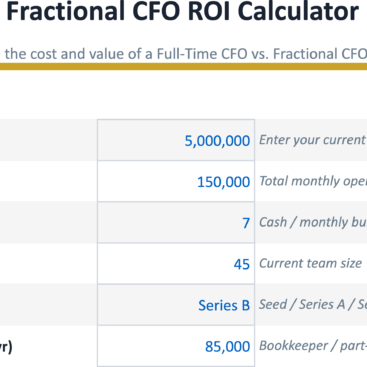
That’s the argument for bringing in outside expertise before the model becomes a liability rather than after: a financial analysis built by someone who does this across many companies tends to catch the assumption errors that are invisible from inside a single business. It’s also why fractional CFO services exist as a middle ground, giving a startup senior financial judgment without a full-time hire before the company is ready for one.
Frequently Asked Questions
How often should a startup run financial analysis?
Monthly at minimum for cash flow, burn rate, and the P&L. Break-even analysis only needs revisiting quarterly, or immediately after a pricing change.
Is financial analysis the same as accounting?
No. Accounting produces the records; financial analysis interprets them to answer a question, like whether the company can afford to hire three more people this quarter.
Do pre-revenue startups need financial analysis?
Yes, arguably more than a revenue-generating company does, because the entire pitch to investors rests on projections rather than trailing results. A pre-revenue company’s financial model is often the only concrete evidence of viability it can show.
What’s the difference between burn rate and runway?
Burn rate is how much cash the company spends per month, net of revenue. Runway is how many months the current cash balance will last at that burn rate. One is a rate, the other is a countdown.
Can a founder do this without hiring anyone?
For the basics, yes, especially with accounting software that automates report generation. Where it tends to break down is in building assumptions for a full model or a valuation, since that’s where inexperience shows up as a founder unconsciously modeling the outcome they want rather than the one the data supports.
What’s the single biggest reason startups get their financial analysis wrong?
Treating it as a one-time document for a pitch deck instead of a living process. A model built once for a fundraising round and never updated is already stale by the time the round closes.
Conclusion
A startup doesn’t fail because nobody was watching the numbers. It fails because the numbers were being watched too late, or in the wrong order, or without the context to know which ones actually mattered that month. Financial analysis is what turns a spreadsheet into an early warning system instead of a historical record.
If you’re not sure whether your current reporting is actually answering the questions that matter, that’s usually the first sign it’s time for a second set of eyes on it.
Talk to an Oak financial analyst about building a reporting setup that holds up under investor scrutiny, not just internal ones.