What Does an Automotive CFO Do? 7 Priorities for Dealers and Suppliers
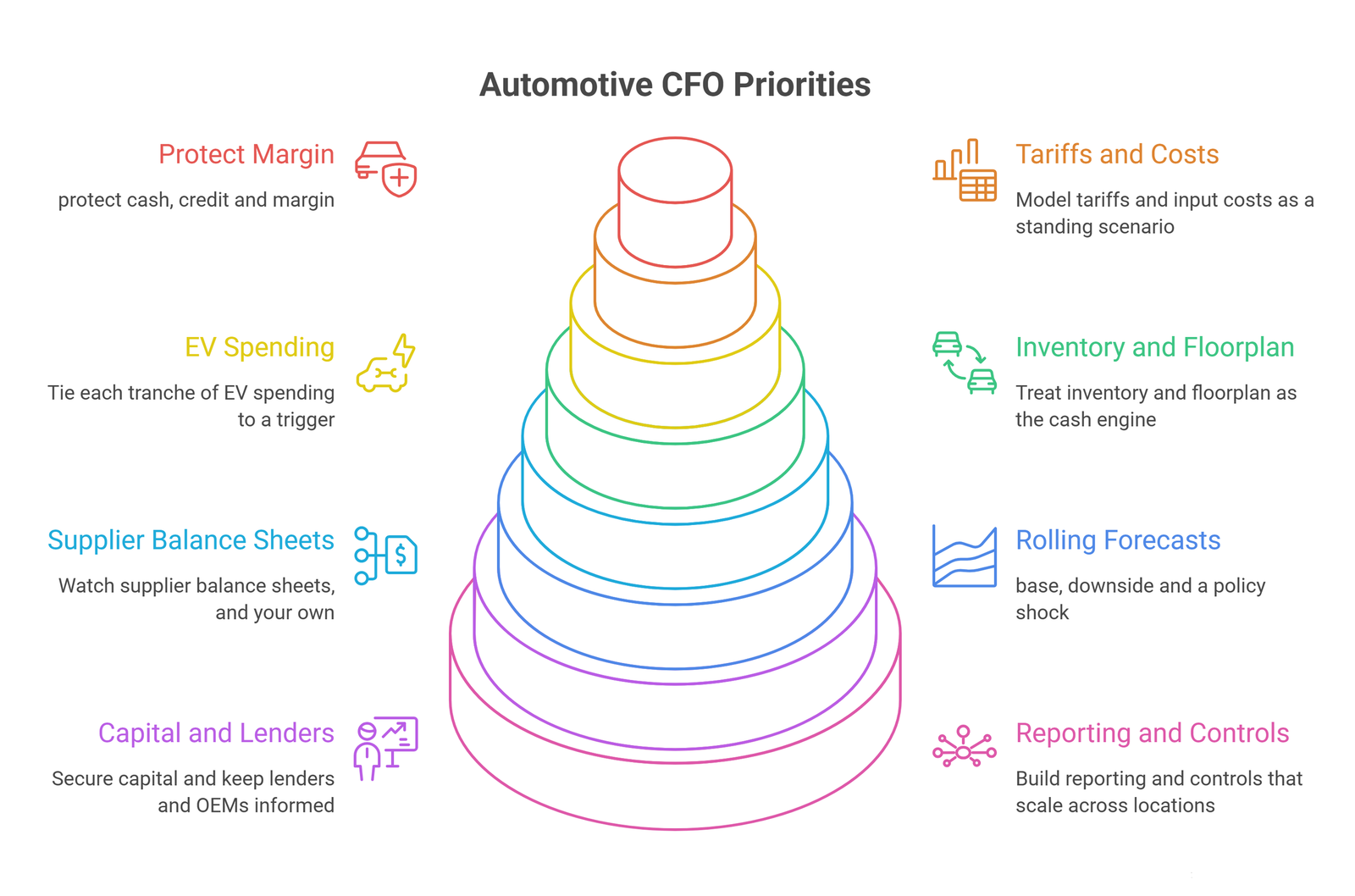
Automotive CFO: 7 priorities that protect margin when costs keep shifting
Automotive money gets committed years before the cars sell. A plant is retooled. A supplier builds a new line. A dealership group buys another franchise. Then tariffs move, EV demand softens or rates climb, and the plan under the spending changes.
That is the daily problem for an automotive CFO. The job is to protect cash, credit and margin while the assumptions keep moving.
This guide explains what an automotive CFO does, how the role differs by seat, seven priorities worth ranking first, and the metrics that show whether they are working. It is written for dealership owners, suppliers and automotive founders who are deciding how much finance leadership they need.
What does an automotive CFO do?
An automotive CFO owns the financial strategy of a company in the vehicle value chain. That covers forecasting, capital allocation, lender and OEM reporting, cost control, risk and the finance team.
The mix changes by seat. At an OEM, it is capital and program returns. At a dealership group, it is inventory, floorplan and OEM statements. At a supplier, it is line utilization, customer pricing and tooling recovery.
Three seats, three different jobs
The title is the same. The pressure is not.
| Seat | Biggest cash pressure | Metrics watched first | Common blind spot |
| OEM | Program capital, tariffs, warranty | Program return, EBIT margin, free cash flow | Planning on a single demand curve |
| Tier supplier | Underused lines, tooling not yet recovered | Utilization, customer price-downs, working capital | Debt raised against programs that later change |
| Dealership group | Vehicle inventory and floorplan | Days supply, floorplan cost, fixed operations absorption | Aged used stock |
Most small and mid-sized Oak clients sit in the third row. The priorities below apply to all three, with the examples leaning toward dealers and suppliers.
1. Model tariffs and input costs as a standing scenario
Tariffs are no longer a one-off shock. They change landed cost, pricing power and sourcing choices at the same time.
GM paid about $3.1 billion in tariffs over a full year, CFO Dive reported. Strong results offset more than 40% of that bill. Its CFO described the cost as something the company could adapt to.
A dealer or supplier rarely has that cushion. The CFO’s job is to map which parts and vehicles carry duty exposure, set a pass-through rule, and model margin at several tariff levels. Run the scenarios before a supplier asks for a price increase, not after.
2. Stage-gate EV and powertrain spending
EV demand has not moved in a straight line. GM recorded billions in charges after it cut EV capacity, including cash charges for cancelled contracts and supplier settlements.
The lesson applies at any size. Tie each tranche of EV spending to a trigger, such as order volume, customer commitments or incentive status. If the trigger is missed, the next tranche waits. A CFO who sets those gates early turns a write-down into a pause.
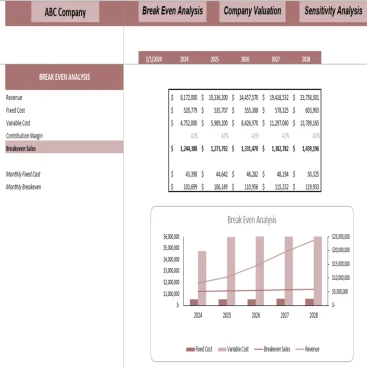
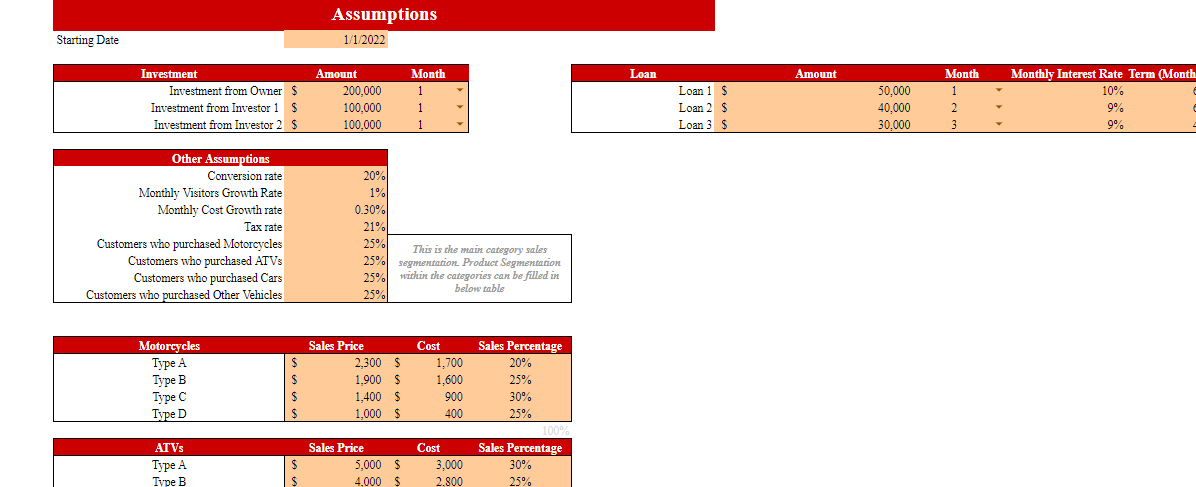
Emissions and incentive rules also shift, so the model should carry a no-credit case. A tool like an electric car agency financial model helps test unit economics before capital is committed.
3. Treat inventory and floorplan as the cash engine
For a dealership group, vehicles on the lot are the largest use of cash. Every extra day in stock costs floorplan interest and adds markdown risk.
A good automotive CFO tracks days supply for new and used stock separately, because used vehicles lose value faster. Aged units get an action plan and a named owner well before they age out.
OEM claims, incentives and receivables sit in working capital too. Slow OEM claim ageing ties up cash that never shows on the sales report. A car dealer financial model shows how inventory days, floorplan cost and gross profit interact.
4. Watch supplier balance sheets, and your own
Supply chain stress travels downstream. A supplier may carry a half-used line, engineering cost it has not recovered, and debt raised against a program that changed shape.
A dealer or OEM CFO should know which suppliers are single-source and how healthy their balance sheets are. A supplier CFO should press customers early on sequencing, volume commitments and cost recovery. Plant decisions move faster than supplier contracts.
5. Plan with rolling forecasts and scenarios
An annual budget is stale by spring. Automotive CFOs now run rolling forecasts that update monthly and carry at least three cases: base, downside and a policy shock.
The variables worth modeling are OEM mix, interest rates, EV share, tariff levels and inventory funding cost. If that work is not in-house, financial modeling support can build it once and hand over a model the team keeps updating. Our automotive budgeting guide covers the budget side in more detail.
6. Secure capital and keep lenders and OEMs informed
Dealer groups and suppliers lean on floorplan lenders, banks, OEM-backed financing and sometimes private equity. Each wants timely, accurate numbers in its own format.
A CFO who delivers clean lender and OEM packages on schedule gets better terms. That same CFO also gets more patience when a quarter goes wrong. For groups growing by acquisition, the CFO also owns integration: chart of accounts, reporting calendar and covenant tracking across every rooftop.
7. Build reporting and controls that scale across locations
One dealership can run on a spreadsheet and a good controller. Five cannot.
Scaling means a dealership-level P&L, a consolidated view, clean links between the dealer management system and the ledger, and controls that hold when staff change. A common goal in dealership CFO roles is zero material audit observations across statutory, tax and OEM audits. It is a useful standard for any group.
Metrics an automotive CFO tracks
| Metric | What it shows | Watch for |
| Days supply (new and used) | How long stock sits | Used stock aging faster than new |
| Floorplan cost per unit | Carrying cost of inventory | Rising rates on slow units |
| Gross profit per retail unit | Margin on each sale | Discounting to move aged stock |
| Fixed operations absorption | Service, parts and body gross profit divided by total operating expense | A ratio falling as the group adds locations |
| OEM claim ageing | Cash owed by the manufacturer | Claims older than the OEM window |
| EBITDA margin vs plan | Profit against budget | Gaps hidden by one strong location |
| Cash conversion cycle (suppliers) | Days from paying for inputs to collecting cash | Customer terms stretching |
When to hire an automotive CFO
Most dealerships and suppliers do not need a full-time CFO on day one. They need one when the finance questions outgrow the owner and the bookkeeper.
Common triggers:
- A second or third rooftop, or a pending franchise acquisition.
- A lender asking for forecasts the business cannot produce.
- Cash that stays tight even when sales look strong.
- An OEM audit finding or a late statement.
- A supplier program that was cancelled or resized.
A fractional CFO gives a growing dealer or supplier senior financial leadership for a set number of days each month. It costs less than a full-time hire and scales up as the group grows.
Frequently Asked Questions
What does an automotive CFO do?
An automotive CFO runs financial strategy for a company in the vehicle value chain. The work covers forecasting, capital allocation, OEM and lender reporting, cost control and risk. At a dealership, it also includes inventory, floorplan and working capital.
Does a small dealership need an automotive CFO?
Not always full time. A single-location dealer with a strong controller may be fine. A group planning acquisitions, facing a lender review or struggling with cash usually benefits from a fractional automotive CFO.
What is the difference between an automotive CFO and a controller?
A controller records and reports what happened, and keeps the books accurate. An automotive CFO uses that data to decide what to do next: how to fund inventory, price against tariffs, time EV spending and talk to lenders.
Which metrics matter most to an automotive CFO?
For dealers, days supply, floorplan cost, gross profit per retail unit and fixed operations absorption. For suppliers, utilization, price-downs and the cash conversion cycle. For OEMs, program returns and free cash flow.
How do tariffs affect automotive CFO planning?
Tariffs change landed cost, pricing power and sourcing decisions together. A CFO maps exposed parts, sets a pass-through rule and models margin at several tariff levels, so price decisions are made on numbers instead of reactions.
Can a fractional automotive CFO handle OEM reporting?
Yes, as long as the underlying accounting is current. A fractional CFO can prepare OEM and lender packages, review statement accuracy and set up a monthly close that supports both.
The next shock is already on its way
The strongest automotive CFOs do not try to predict the next shock. They build companies that can take one: stocked to a plan, funded with room to spare, and modeled for the bad case before it arrives.
If your dealership group or supplier is facing that kind of pressure, Oak’s team can help. Explore our CFO services or book a call.