How to Create a Restaurant Budget: A Guide for Owners and Managers
Effective Restaurant Financial Budgeting
Running a restaurant without a budget is like driving at night without headlights. You might make it a few miles, but sooner or later, something goes wrong. Knowing how to create a restaurant budget is one of the most practical skills any restaurant owner or manager can develop, yet it is one of the most commonly skipped steps in the industry. The numbers back this up: the restaurant business has one of the highest failure rates of any sector, and a lack of financial planning sits near the top of the list of reasons why. This guide walks you through the entire budgeting process, from the first day you are planning your concept to the ongoing monthly reviews that keep an established restaurant on track.
What Is a Restaurant Budget, and Why Does It Matter?
A restaurant budget is a written financial plan that estimates your expected income and expenses over a set period, usually a month, a quarter, or a full year. It gives you a structured way to compare what you thought would happen financially against what actually happened, so you can make smart adjustments before small problems become serious ones.
The importance of a budget goes beyond keeping the lights on. Here is what a solid budget does for your business:
- Clarifies your financial reality. When revenue and costs are laid out side by side, it is much harder to fool yourself about where you actually stand.
- Guides spending decisions. Instead of reacting to whatever comes up, you can make deliberate choices about where money goes.
- Helps you plan for growth. Whether you want to open a second location, renovate the dining room, or add a catering arm, a budget shows you whether the cash flow will support it.
- Protects you in slow seasons. A well-maintained budget helps you set aside reserves during strong months so that a slow January does not catch you off guard.
- Makes lender and investor conversations easier. Banks and investors want to see that you understand your numbers before they commit any capital.
Two Types of Restaurant Budgets You Need to Know
Before diving into the step-by-step process of how to create a restaurant budget, it is important to understand that there are two distinct budget types, each serving a different purpose.
1. The Startup Budget
The startup budget applies when you are planning a new restaurant or preparing to open one. It covers every cost you will incur before a single customer walks through the door, plus the working capital you will need to operate during the first weeks or months while revenue is still building.
2. The Operational Budget
The operational budget is for a restaurant that is already open. It is a forward-looking plan for ongoing income and expenses, typically built month by month and reviewed regularly against actual results.
Both budgets share the same underlying logic, but they focus on different cost categories and timeframes. We will cover both in detail below.
How to Create a Restaurant Startup Budget
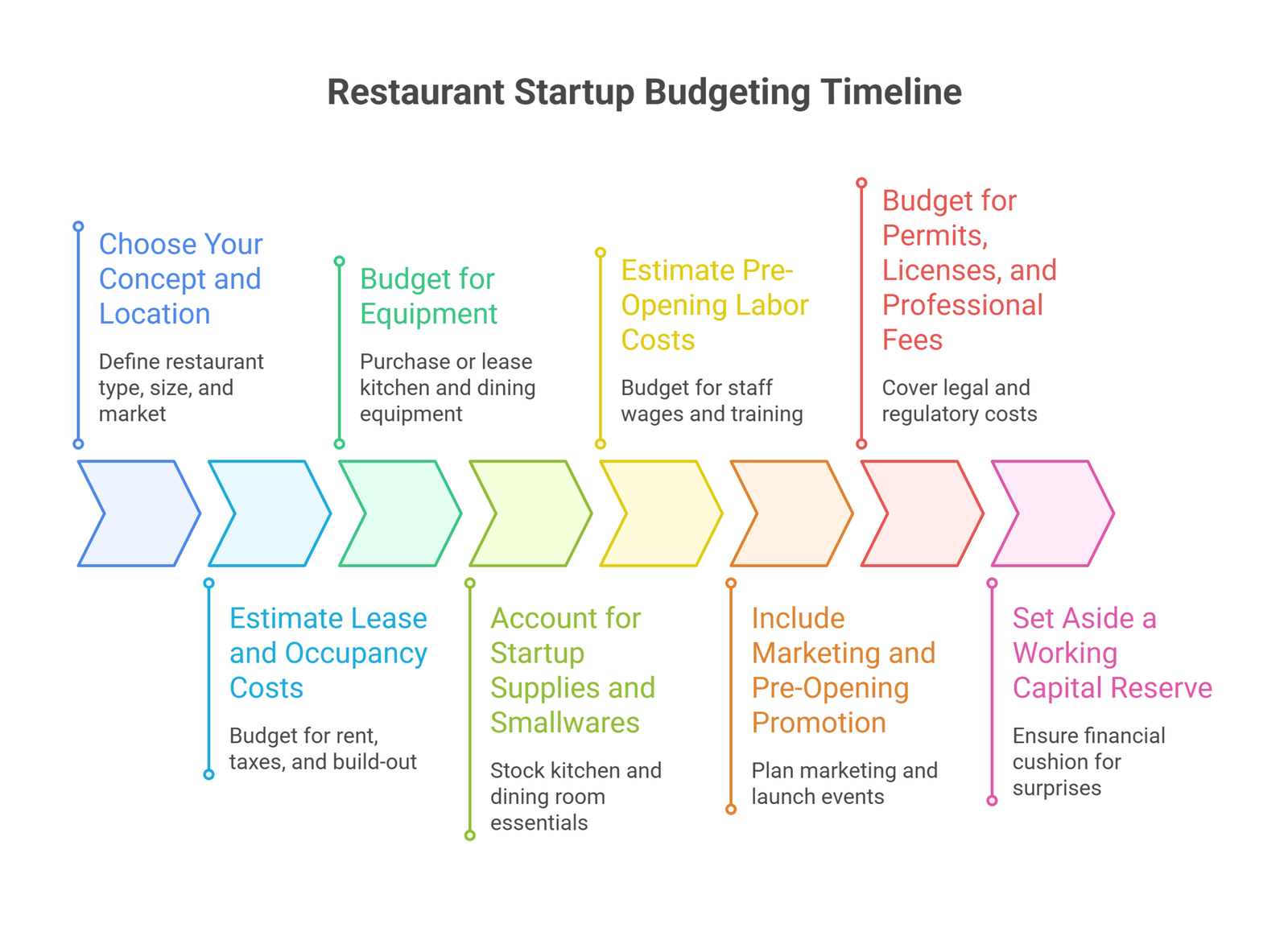
Opening a restaurant is expensive. Costs can range from tens of thousands of dollars for a small quick-service concept to several million for a full-service establishment in a prime urban location. Knowing how to create a restaurant budget for your startup means accounting for every major cost category before you commit your money.
Step 1: Choose Your Concept and Location
Your concept and location drive nearly every other number in your startup budget. A fast-casual taco spot in a suburban strip mall has dramatically different cost assumptions than a fine-dining steakhouse downtown. Before you can budget accurately, you need to know:
- What type of restaurant you are opening (quick service, fast casual, casual dining, fine dining, or a hybrid)
- The approximate size in square feet you need
- The neighborhood or market you are targeting
- Whether you plan to lease, build out an existing space, or purchase property
Location affects rent, labor rates, permit costs, competition, and the price your customers are willing to pay. These factors cascade through every line of your budget, so this decision deserves serious thought before you start putting numbers on paper.
Step 2: Estimate Lease and Occupancy Costs
Rent or mortgage payments will likely be one of your largest fixed expenses. The general rule of thumb is that occupancy costs, including rent, property taxes if applicable, and common area maintenance fees, should not exceed 6 to 10 percent of your projected revenue. If a space would push you above that threshold, look at whether your revenue assumptions are realistic or whether a different location makes more sense.
Beyond the monthly payment, budget for:
- Security deposit (typically one to three months of rent upfront)
- Tenant improvement allowance negotiations (some landlords offer a contribution toward build-out costs)
- Build-out and renovation (converting a raw space or modifying an existing one)
- Signage and exterior work
Get quotes from commercial real estate agents who specialize in restaurant spaces. They understand local market rates and can help you negotiate lease terms that protect your budget.
Step 3: Budget for Equipment
Commercial kitchen equipment is a major capital outlay for any new restaurant. Your equipment list will depend on your menu and concept, but most restaurants need some combination of the following:
- Commercial ranges, ovens, and fryers
- Refrigeration units and walk-in coolers
- Dishwashing systems
- Prep tables and storage shelving
- Point-of-sale systems
- Dining room furniture, fixtures, and lighting
- Bar equipment if applicable
For each item, decide whether you will buy new, buy used, or lease. New equipment carries a warranty and is less likely to fail at the worst possible moment. Used equipment can cut costs significantly, but factor in the age, condition, and availability of service parts. Leasing reduces upfront costs but adds a recurring expense to your operational budget.
Get multiple quotes for major purchases and include installation and delivery fees in your estimates.
Step 4: Account for Startup Supplies and Smallwares
Beyond major equipment, you need to stock your kitchen and dining room with everything required to serve food and drinks. This category includes:
- Cookware, sheet pans, and prep tools
- Plates, bowls, cups, and glassware
- Cutlery and serving utensils
- Linens, napkins, and table accessories
- Cleaning supplies and chemicals
- Initial food and beverage inventory
For a new restaurant, this category is easy to underestimate. Build your smallware list item by item based on your projected covers per service and the style of your operation. Add a 10 to 15 percent buffer because something always gets forgotten.
Step 5: Estimate Pre-Opening Labor Costs
Hiring and training staff before you open costs money, even though no revenue is coming in yet. Budget for:
- Management salaries during the setup period
- Staff wages during training
- Costs associated with trial runs and soft-opening events
The length of your pre-opening period and your staffing model will determine the total. A restaurant with a large team of servers, cooks, and bartenders will spend significantly more on pre-opening labor than a small counter-service operation.
Step 6: Include Marketing and Pre-Opening Promotion
People need to know you exist before you can sell them a meal. Your startup budget should include funds for:
- Logo design, branding, and menu design
- Website development
- Social media setup and initial content creation
- Grand opening events or soft launch promotions
- Local advertising (print, digital, or both)
- PR outreach if relevant to your concept
Marketing costs vary widely based on market size and concept ambition, but a reasonable starting range is two to five percent of your projected first-year revenue. A splashy downtown restaurant targeting food media attention will spend more; a neighborhood breakfast spot relying on word of mouth may spend less.
Step 7: Budget for Permits, Licenses, and Professional Fees
Restaurants operate in a heavily regulated environment. Budget for every required permit and license in your jurisdiction, which typically includes:
- Business license
- Food service permit
- Liquor license (if applicable, and these can be very costly in some markets)
- Health department permit
- Certificate of occupancy
- Music licensing if you plan to play recorded music
Add professional fees for the attorney who reviews your lease, the accountant who sets up your bookkeeping system, and any consultants you hire. These costs are not glamorous, but skimping on them can create serious problems down the road.
Step 8: Set Aside a Working Capital Reserve
This is the step that many first-time restaurant owners skip, and it is one of the most important. Even if your projections show profitability from day one, the reality is that most restaurants take several months to find their footing. Costs overrun, revenue builds more slowly than expected, and unexpected repairs happen.
A working capital reserve of three to six months of projected operating expenses gives you a financial cushion to absorb early-stage surprises without running out of cash. This reserve is not money you plan to spend; it is insurance against the uncertainty that is inherent in any new restaurant launch.
How to Create a Restaurant Operational Budget
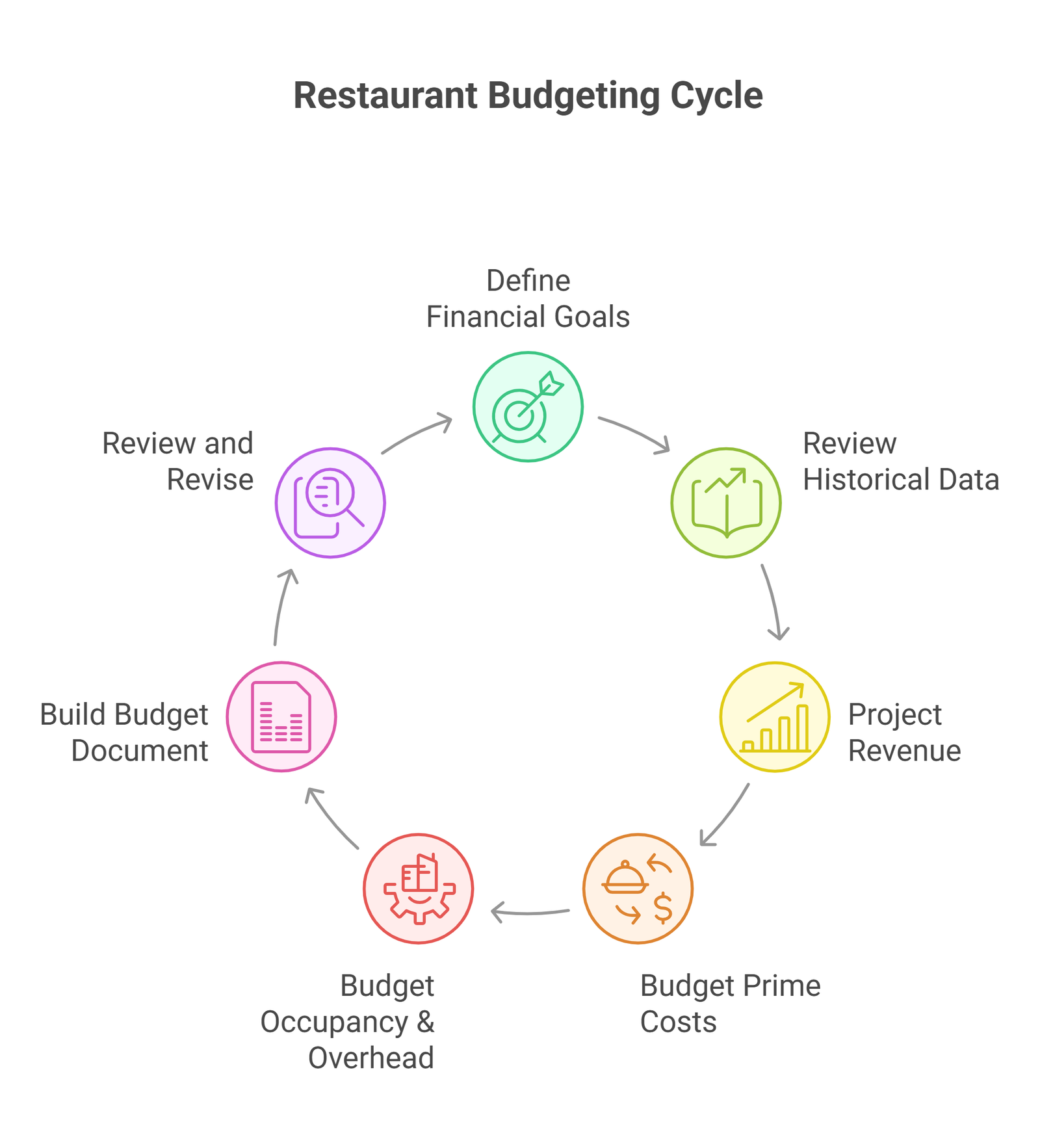
Once your restaurant is open, the focus shifts to managing ongoing income and expenses. Understanding how to create a restaurant budget for an operating business means building a realistic projection for each accounting period and then tracking your actual results against it consistently.
Here is the process step by step.
Step 1: Define Your Financial Goals for the Period
Start every budget cycle by getting clear on what you are trying to achieve. Financial goals might include:
- Reaching a target net profit margin (typically 3 to 9 percent for full-service restaurants)
- Reducing food cost percentage from the current level to a lower target
- Covering a specific capital investment, like new equipment or a dining room refresh
- Building up cash reserves after a difficult quarter
Specific goals make your budget more than just a financial exercise. They give every line item a purpose.
Step 2: Review Your Historical Financial Statements
Before projecting forward, look back. Pull your profit and loss statements, bank statements, and any other financial reports from the previous 6 to 12 months. Look for patterns:
- Which months are historically strong and which are slow?
- Are any cost categories trending upward?
- Are there revenue streams, like catering or private dining, that are underperforming?
- Are there any surprise expenses that recur but rarely get budgeted for?
Historical data is the most reliable foundation for any forward-looking forecast. If you do not have clean historical records, this is also the moment to fix your bookkeeping so that next cycle’s budget process is easier.
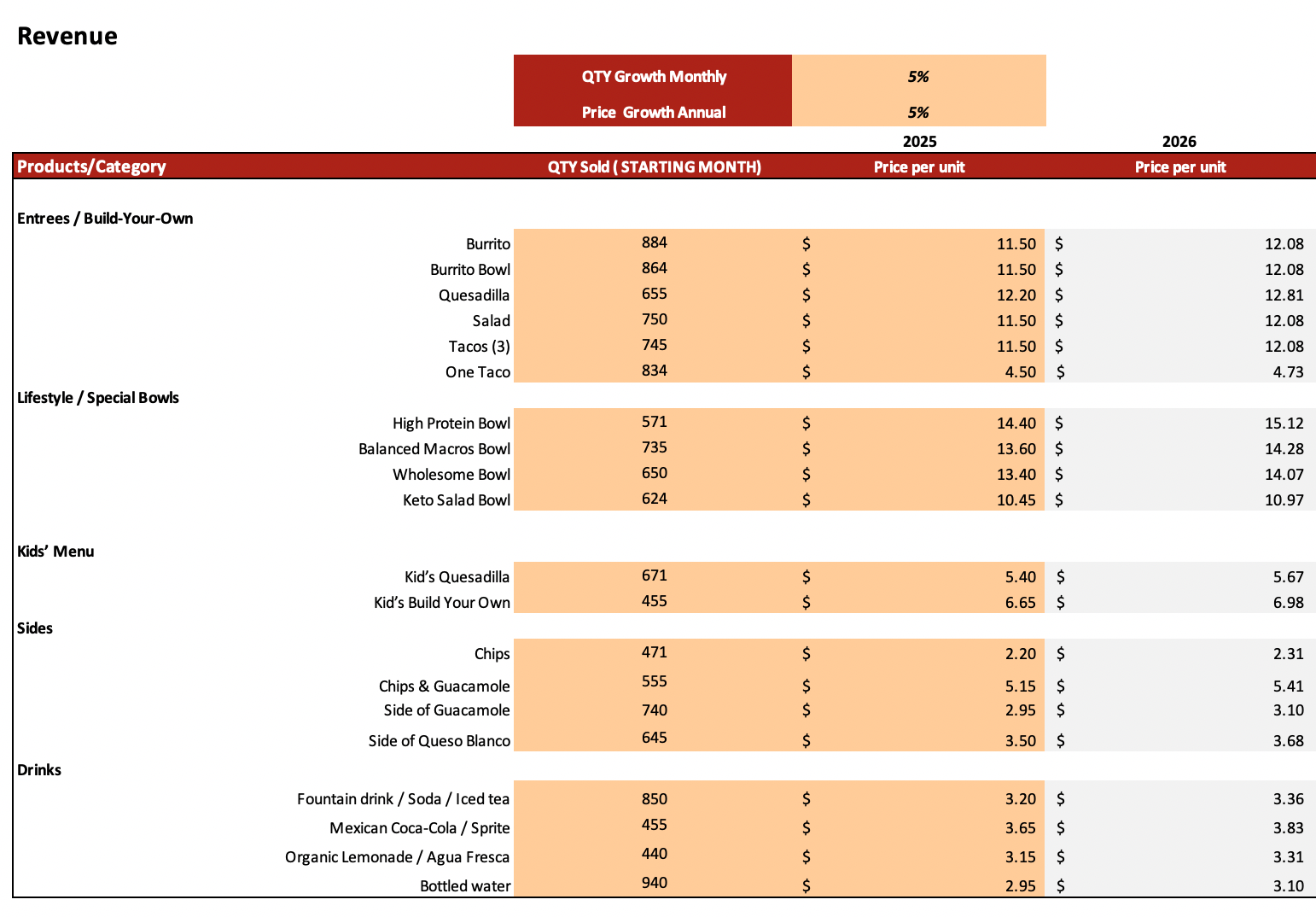
Step 3: Project Your Revenue
Revenue projections should be grounded in reality, not optimism. The best approach is to build your revenue estimate from the bottom up:
- Estimate your average covers per service (the number of customers you serve per meal period)
- Multiply by your average check size
- Account for the number of service periods per week
- Apply seasonal adjustments based on your historical patterns or local market knowledge
For example, if you average 80 covers for lunch at a $22 average check, five days a week, that is $88,000 per month from lunch alone. Add dinner, weekend traffic, private events, and any other revenue streams to build your full picture.
Also think about the factors that can shift your revenue, including your pricing strategy, menu changes, local events, competition, and economic conditions. Being honest about these variables gives you a budget you can actually use.
Step 4: Budget Your Prime Costs
Prime cost, the combination of food cost and labor cost, is the most critical metric in restaurant financial management. Most successful restaurants target a combined prime cost of 55 to 65 percent of revenue. This gives enough room to cover occupancy, operating expenses, and profit.
Food Cost
Food cost percentage is calculated by dividing the cost of food sold by total food revenue. The industry average is 28 to 35 percent, though this varies significantly by concept. A farm-to-table restaurant using premium local ingredients will run a higher food cost than a pizza concept built around high-volume, low-cost ingredients.
To budget food cost accurately:
- Build portion-cost calculations for every item on your menu
- Track waste, spillage, and staff meals, because these all count as cost of goods
- Adjust for seasonal ingredient price changes
- Account for menu mix (your more popular items drive your blended food cost percentage)
Labor Cost
Labor includes wages, salaries, payroll taxes, and any employee benefits you provide. Additionally, labor cost as a percentage of revenue typically runs 28 to 35 percent for most full-service restaurants, though quick-service concepts often run lower.
Budget labor by building out your schedule and pricing each position at the actual wage you pay. Include both hourly employees and salaried managers. Factor in overtime, sick leave coverage, and any mandatory paid leave in your jurisdiction.
Step 5: Budget Your Occupancy and Overhead Costs
Below prime cost, you have a category of largely fixed expenses that need to be budgeted carefully:
Occupancy Costs
- Rent or mortgage
- Property insurance
- Common area maintenance fees
- Parking costs if applicable
Utilities
- Gas and electricity (commercial kitchens are heavy users)
- Water and sewer
- Trash removal
- Internet and phone
Operating Expenses
- Smallware replacements
- Cleaning supplies
- Linen service if outsourced
- Pest control
- Music and streaming licensing
- POS system and software subscriptions
- Credit card processing fees (often 2 to 3 percent of revenue and easy to overlook)
Marketing
- Social media advertising
- Email marketing tools
- Promotions and loyalty programs
- Photography and content creation
Administrative and Professional Fees
- Accounting and bookkeeping
- Legal fees
- Business licenses and permit renewals
Maintenance and Repairs
- Equipment maintenance contracts
- Emergency repairs (budget a reserve for this, because something will always break)
Step 6: Build Your Budget Document
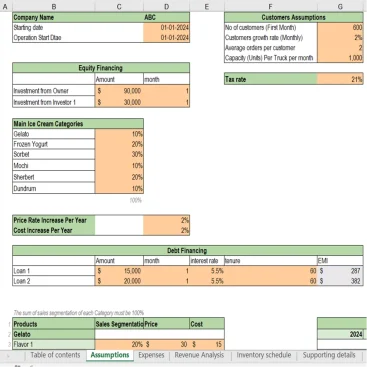
With all of the above information in hand, assemble your budget into a working document. A simple structure looks like this:
| Category | Budget | Actual | Variance |
| Revenue | |||
| Food Revenue | $X | ||
| Beverage Revenue | $X | ||
| Other Revenue | $X | ||
| Total Revenue | $X | ||
| Cost of Goods Sold | |||
| Food Cost | $X | ||
| Beverage Cost | $X | ||
| Total COGS | $X | ||
| Gross Profit | $X | ||
| Labor | |||
| FOH Wages | $X | ||
| BOH Wages | $X | ||
| Management Salaries | $X | ||
| Payroll Taxes & Benefits | $X | ||
| Total Labor | $X | ||
| Prime Cost | $X | ||
| Operating Expenses | |||
| Occupancy | $X | ||
| Utilities | $X | ||
| Marketing | $X | ||
| Admin & Professional | $X | ||
| Maintenance | $X | ||
| Total Operating Expenses | $X | ||
| Net Profit / (Loss) | $X |
The variance column is where the real management happens. Review it weekly for prime cost items and monthly for everything else. When actuals diverge from the budget, dig into why and decide whether the budget needs to be adjusted or operations need to change.
Step 7: Review and Revise Regularly
A budget is not a document you create once and file away. It is a management tool that should be reviewed at least monthly and updated when significant changes occur in your business or market. If a major supplier raises prices, if a competitor opens nearby, or if you add a new revenue stream, revise your budget to reflect the new reality.
Key Metrics to Track Alongside Your Budget
Knowing how to create a restaurant budget is one skill; knowing which numbers to watch most closely is another. Here are the metrics that matter most:
Food Cost Percentage (Cost of Food Sold / Food Revenue) x 100 Target: 28 to 35 percent for most concepts.
Labor Cost Percentage (Total Labor Cost / Total Revenue) x 100 Target: 28 to 35 percent for full-service; lower for quick service.
Prime Cost Percentage (Food Cost + Labor Cost) / Total Revenue x 100 Target: 55 to 65 percent.
Gross Profit Margin (Revenue – COGS) / Revenue x 100
Net Profit Margin Net Profit / Revenue x 100 Target: 3 to 9 percent for full-service restaurants.
Revenue Per Available Seat Hour (RevPASH) Revenue / (Number of Seats x Hours Open) A useful metric for comparing performance across different service periods.
Table Turnover Rate Number of Parties Served / Number of Tables A higher turnover rate means you are generating more revenue from the same physical space.
Practical Budgeting Strategies That Actually Work
Beyond understanding how to create a restaurant budget, you need strategies for keeping costs under control once the budget is in place.
Conduct Weekly Food Cost Reviews
Do not wait until the end of the month to look at your food costs. Run a weekly or twice-weekly food cost calculation by taking your beginning inventory, adding purchases, and subtracting ending inventory. Compare that number to your food revenue. Catching a food cost problem in week one gives you three weeks to fix it before it ruins the month.
Use a Recipe Costing System
Every item on your menu should have a documented recipe with portion sizes and per-unit ingredient costs. When ingredient prices change, update the costs in your recipe system and see the impact immediately. This discipline is one of the biggest differentiators between restaurants that manage food cost well and those that are always surprised by it.
Build Your Schedule Around Revenue, Not Habit
Labor scheduling is one of the most controllable costs in the restaurant, yet many operators schedule out of habit rather than based on projected volume. Build your weekly schedule using your revenue forecast for each service period. Add or reduce labor hours as the week unfolds based on actual versus expected business.
Negotiate with Suppliers
Your food cost percentage is partly a function of the prices you pay. Develop relationships with multiple suppliers for your highest-cost ingredients and review pricing regularly. Joining a purchasing cooperative or group buying program can give a smaller independent restaurant access to pricing that would otherwise only be available to large chains.
Set a Cash Reserve Policy
Decide on a target cash reserve, for example, 30 or 60 days of operating expenses, and treat contributions to that reserve as a non-negotiable budget line item. This disciplines you to build financial resilience over time rather than spending every dollar of profit as it comes in.
Plan for Seasonal Variability
Almost every restaurant has predictable busy and slow seasons. Build that variability into your annual budget rather than projecting flat monthly revenue. A summer restaurant in a beach town needs a very different approach to cash management than a downtown business-lunch concept that goes quiet in August.
Common Restaurant Budgeting Mistakes to Avoid
Even when you know how to create a restaurant budget, there are common errors that undermine the process:
Overestimating revenue in the first year. First-year restaurants almost always take longer to build a loyal customer base than owners expect. Build conservative revenue assumptions into your startup year budget.
Forgetting about occupancy escalations. Many restaurant leases include annual rent increases of 3 to 5 percent. Make sure your multi-year budget accounts for these increases.
Ignoring credit card processing fees. At 2 to 3 percent of revenue in a business that runs on thin margins, this is a meaningful cost. Many operators track it separately to stay aware of it.
Treating the budget as fixed. Business conditions change. A good budget is a living document, not a constraint you cling to when reality has moved on.
Not separating owner salary from profit. If you work in the restaurant, your compensation should appear as a labor cost, not as money you pull from the profits. Blending the two distorts every profitability metric.
Frequently Asked Questions
How often should I update my restaurant budget?
Review your budget against actual results monthly at minimum. For high-volatility line items like food cost and labor, a weekly review is better. Make formal revisions to the budget itself whenever a significant change occurs, such as a rent increase, a menu price change, or a major shift in customer volume.
What is the biggest budgeting mistake new restaurant owners make?
Underestimating startup costs and overestimating early revenue is the most common and most damaging mistake. New restaurants almost always cost more to open than the owner expected and take longer to build revenue than projected. Building in a larger contingency reserve and using conservative revenue assumptions in your first year can protect you from this scenario.
Should I hire a financial consultant or CFO for restaurant budgeting?
For many independent restaurants, especially those in the startup phase or going through a difficult stretch, working with an experienced restaurant financial consultant can be well worth the cost. They bring industry benchmarks, outside perspective, and technical expertise that can help you build a more accurate budget and interpret your results more effectively.
What percentage of revenue should food cost be?
Most restaurants target food cost between 28 and 35 percent of food revenue. High-end concepts using premium ingredients may run higher. Fast-casual and quick-service concepts often target the lower end. The key is knowing your target, tracking it weekly, and investigating quickly when the actual number drifts above it.
Conclusion
The restaurant business is demanding, competitive, and financially unforgiving. The owners who thrive long-term are almost always the ones who treat financial management with the same seriousness they bring to the food and the hospitality. Understanding how to create a restaurant budget is not just an accounting exercise. It is how you translate your vision for the restaurant into a plan you can actually execute and sustain.
Start with a clear-eyed picture of your costs, build revenue projections grounded in real data, track your prime cost weekly, and revise your budget when conditions change. Whether you are still in the planning phase for a new concept or working to turn around an established restaurant that is underperforming, the discipline of budgeting is one of the most powerful tools available to you.
If the process feels overwhelming, do not let that stop you from starting. A simple budget is far better than no budget at all. Begin with your revenue, your food cost, and your labor, and build from there. As you get comfortable with the numbers, you can expand the detail and sophistication of your financial planning over time.
The goal is simple: know where your money is coming from, know where it is going, and make sure more is coming in than going out. That is what knowing how to create a restaurant budget is ultimately about.
Are you running your kitchen with passion, but your finances on a guess? It’s easy to get buried in the day-to-day chaos of shifts, suppliers, and schedules, leaving your budget on the back burner. At Oak Business Consultant, our Fractional CFO services bring expert financial engineering straight to your restaurant. We help you map out realistic startup costs, track prime costs weekly, and build automated recipe costing systems—giving you executive-level financial clarity without the full-time corporate price tag. Stop driving your restaurant in the dark. Schedule Your Free Restaurant CFO Consultation.