How to Fund Your Business: Seven Financing Options and How to Choose
Ways to Finance Your Business and How to Pick the Right One
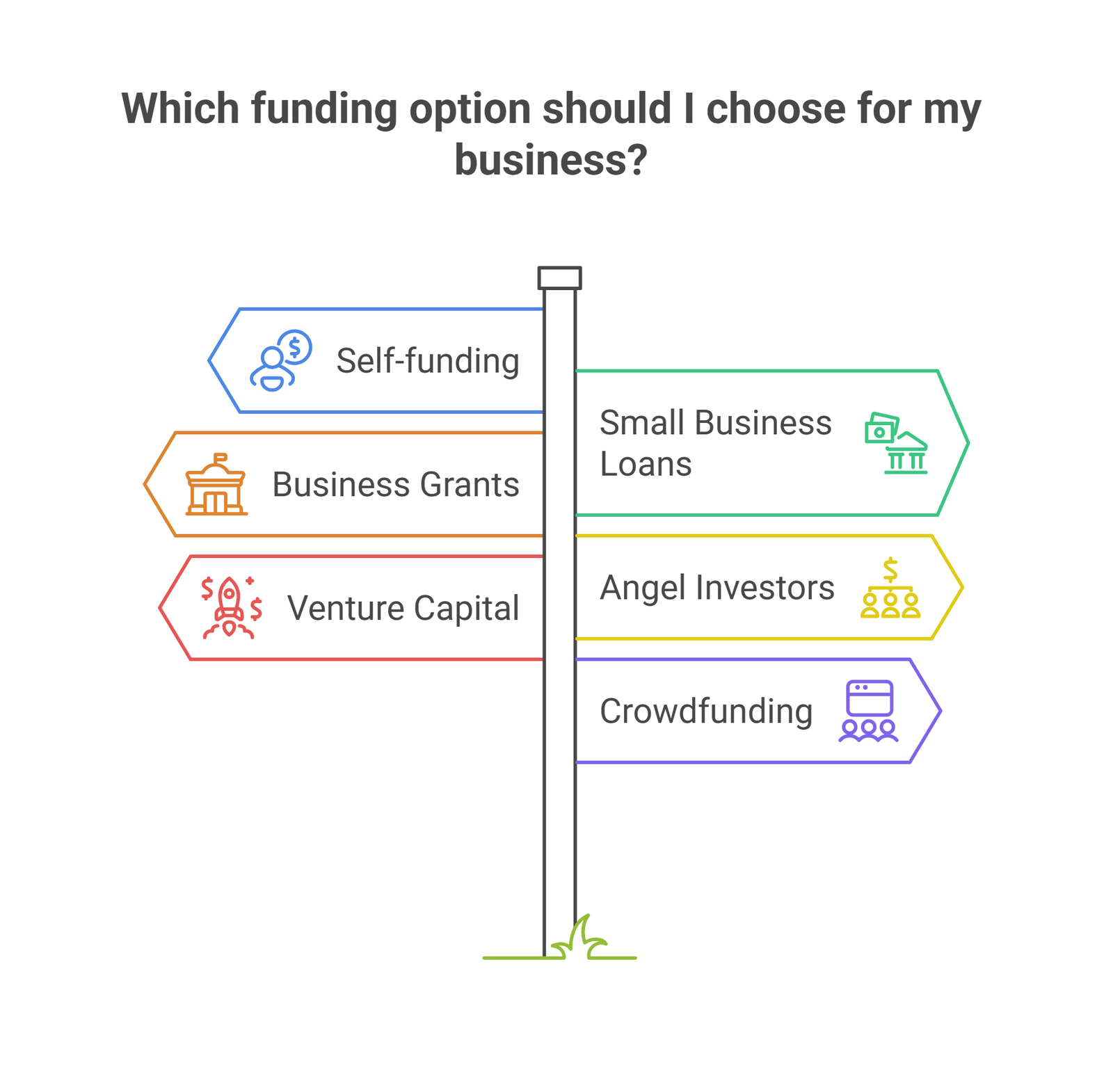
Most founders pick a funding source because it’s the one they’ve heard of most, not the one that fits their stage or risk tolerance. That’s how a bootstrapped local service business ends up chasing venture capital it doesn’t need, or a high-growth startup gives up equity it could have avoided with a grant or a loan. Funding is not one decision. It’s a mix, and the mix should change as your business grows.
How you fund your business shapes more than your bank balance. It determines how much control you keep, how fast you can grow, and what your investors or lenders will expect from you in return. This guide walks through the main financing options available, what each one actually costs you, and how to decide which combination fits your situation.
How much funding do you actually need?
Before picking a source, get specific about the number. Vague estimates lead to either raising too little, which forces a rushed second round, or raising too much, which dilutes ownership or piles on debt you didn’t need.
Build a simple funding pyramid: your absolute minimum to launch, a realistic operating budget for the first twelve months, and a stretch figure that covers a slower-than-expected ramp. Tying this number to an actual financial model makes it far more credible to a lender or investor than a round figure pulled from a gut feeling.
Debt, equity, or non-dilutive: the three types of business funding
Every funding option on this list falls into one of three buckets, and knowing which bucket you’re choosing from matters more than the specific product.
Debt means you borrow money and repay it with interest, on a schedule, regardless of how the business performs that month. You keep full ownership, but you take on a fixed obligation. Bank loans, SBA loans, and online lenders fall here.
Equity means you exchange a percentage of ownership for capital. There’s no repayment schedule, but you give up some control and a share of future profits. Angel investment and venture capital fall here.
Non-dilutive capital means money that requires neither repayment nor equity, most commonly grants and some crowdfunding. It’s the cheapest capital available, but usually the hardest and slowest to secure.
Most businesses end up combining more than one bucket over time. Understanding which bucket a funding conversation belongs to before you enter it changes how you negotiate.
Self-funding and bootstrapping
Bootstrapping means funding the business from your own savings, income, or help from friends and family. It’s usually the first source founders turn to because it requires no outside approval and no equity given up.
With self-financing, you retain full control, but you also carry all the risk. Be careful about tapping into retirement accounts early. Early withdrawals often come with penalties and can set back your own retirement timeline, so check with a financial advisor before going that route.
A few practical habits make bootstrapping sustainable: start with the minimum viable version of your product rather than a polished one, track spending closely even with a simple spreadsheet, and reinvest early profits into the business rather than drawing them out immediately.
Small business loans and SBA loans
Loans give you a lump sum of capital without giving up ownership, but the money has to be repaid on schedule regardless of how sales are going.
Banks and credit unions offer traditional term loans, typically with lower interest rates and longer repayment terms, but they also expect a strong credit score, a solid business plan, and sometimes collateral. The U.S. Small Business Administration guarantees loans through approved lenders, including smaller SBA microloans under $50,000 that are easier for first-time founders to qualify for.
If you don’t qualify for a traditional loan, online lenders and fintech platforms offer faster approvals with more relaxed criteria. The tradeoff is usually a higher interest rate and a shorter repayment window, so read the terms carefully before signing.
Before taking on any loan, confirm three things: you can realistically afford the monthly repayment, the loan will generate enough revenue to justify its cost, and you understand every fee attached to it.
Business grants
Grants are funds from government agencies, nonprofits, or corporations that don’t need to be repaid and don’t require giving up equity. That makes them the cheapest capital on this list, but also the most competitive and the slowest to secure.
Look for grants through federal and state economic development programs, industry-specific competitions, and nonprofit foundations tied to your sector. Technology and research-focused startups should also look at programs like SBIR and STTR, which fund early-stage innovation without taking equity.
A strong grant application is specific: it names exactly how the funds will be used, sets measurable goals tied to the grant’s purpose, and is submitted on time with every requested document included. Pairing a grant with a loan or a modest self-funded runway is a common way to stretch non-dilutive capital further.
Angel investors
Angel investors are individuals, often experienced entrepreneurs themselves, who invest their own money in early-stage businesses in exchange for equity. They tend to write smaller checks than venture capital firms and get involved earlier, sometimes before a business has any revenue.
What angels look for is fairly consistent: a founding team they trust, a market big enough to matter, and a clear, honest picture of both the opportunity and the risk. You’ll typically find angel investors through industry events, local entrepreneurship groups, alumni networks, and matchmaking services built specifically to connect founders with the right investors.
Because you’re giving up ownership, treat an angel conversation the way you’d treat a long-term business partnership rather than a one-time transaction. The investor you bring on is someone you’ll be reporting to for years.
Venture capital
Venture capital firms invest larger sums than angels, usually in exchange for a meaningful ownership stake and, often, a board seat. Additionally, venture capital differs from traditional financing in a few important ways: it focuses on high-growth businesses, it’s structured around equity rather than debt, and it comes with a longer investment horizon in exchange for potentially higher returns.
Raising a venture round generally follows the same sequence:
- Identify the right investors. Not every VC firm invests in every industry or stage, so target the ones whose portfolio matches your business.
- Share your business plan. This is the first document any serious investor will ask for. It should include an executive summary, a marketing plan, and a financial plan, and you should expect follow-up questions on all three.
- Go through due diligence. Investors will review your product, your market, your competitive position, and your financial statements in detail.
- Negotiate the terms. If the firm wants to invest, the next step is agreeing on a term sheet that spells out valuation, board rights, and other conditions.
- Close and deploy. Once terms are signed, the capital arrives, and the fund becomes actively involved in the business going forward. Subsequent rounds usually depend on hitting the milestones set in this one.
Crowdfunding
Crowdfunding raises smaller contributions from a large number of people, called backers, usually in exchange for early access to a product or another non-equity reward rather than ownership.
Because most backers aren’t investors in the legal sense, crowdfunding carries less structural risk than giving away equity. It’s a strong fit for consumer products, creative projects, and any business idea that can generate genuine excitement online. Some platforms also support equity-based crowdfunding, where backers do receive a small ownership stake, so check which model a given platform uses before launching a campaign.
A campaign’s success depends heavily on preparation: a clear video, a visually strong campaign page, tiered rewards that make sense at different contribution levels, and a plan to drive traffic to the page rather than relying on the platform’s own audience.
Comparing your funding options
| Funding type | Ownership impact | Typical speed | Best fit |
| Bootstrapping | None | Immediate | Early-stage, low-capital businesses |
| Bank or SBA loan | None | Weeks to months | Businesses with steady revenue and credit history |
| Online lender | None | Days | Fast cash needs, less-than-perfect credit |
| Grants | None | Months | Research, innovation, or mission-driven ventures |
| Angel investment | Partial equity | Weeks to months | Early-stage startups needing smaller capital and mentorship |
| Venture capital | Significant equity | Months | High-growth startups needing large capital to scale fast |
| Crowdfunding | None to minimal | Weeks | Consumer products with broad appeal |
How to choose the right funding mix
Match the funding type to what you’re actually trying to solve. If you need to prove demand before committing real capital, bootstrapping or crowdfunding tests the idea without giving anything away. Moreover, if you have steady revenue and need working capital, a loan is usually cheaper than equity in the long run. If you need capital to scale faster than revenue alone would allow, angel or venture funding makes sense, but only if you’re genuinely prepared to share control.
Most businesses combine sources over time rather than relying on one. A founder might bootstrap the first six months, add a small loan for equipment, and later bring in an angel investor once there’s traction to show. Working with a startup fundraising advisor before you approach any investor or lender helps you sequence this correctly instead of raising the wrong type of capital at the wrong stage.
Frequently Asked Questions
What is the easiest way to fund a small business?
Bootstrapping is usually the fastest and least complicated option since it requires no external approval, though it depends on having enough personal savings or income to sustain the business.
Do I have to give up equity to get funding?
No. Loans, grants, and most crowdfunding campaigns don’t require equity. Equity is typically only exchanged with angel investors and venture capital firms.
How much equity should I give up to an investor?
There’s no fixed answer, but most early-stage rounds range from 10% to 25% of the company. The right number depends on your valuation, how much capital you need, and what the investor brings beyond money.
What is the difference between an SBA loan and a regular bank loan?
An SBA loan is guaranteed in part by the Small Business Administration, which lets banks offer it to businesses that might not qualify for a conventional loan, often with lower rates and longer terms.
Can I combine multiple funding sources?
Yes, and most successful businesses do. A common pattern is starting with self-funding or a small loan, then adding grants, angel investment, or venture capital as the business grows.
What do investors look for before funding a business?
Most look for a capable founding team, a clear and realistic financial plan, evidence of market demand, and a specific explanation of how the funds will be used.
Conclusion
There’s no universally best way to fund a business, only the option that fits what you need capital for right now and what you’re willing to give up to get it. Getting the sequence right, rather than jumping straight to whichever source sounds the most impressive, is what keeps founders in control of their own company as it grows.
If you’re weighing your funding options and want a financial model or business plan that will actually hold up in front of a lender or investor, talk to our team about what fits your stage.