The Impact of Artificial Intelligence on Business Intelligence Tools
The Influence of AI on Modern Business Intelligence Tools
The rapid advancement of Artificial Intelligence has significantly transformed how organizations collect, analyze, and interpret data. Business Intelligence (BI) tools were once limited to generating reports and dashboards based on historical information. Today, with the integration of intelligent algorithms, these tools provide predictive insights, automated analytics, and real-time decision support. This shift has redefined the role of data within companies, moving from passive reporting to proactive strategy development. The rise of ai in business intelligence has enabled businesses to unlock deeper value from their data assets. As industries become increasingly competitive, organizations are turning to smarter BI systems to stay ahead, improve efficiency, and make data-driven decisions with greater confidence.
The Evolution of Business Intelligence Systems
Traditional Business Intelligence tools focused mainly on descriptive analytics. They summarized past performance using charts, graphs, and static reports. While helpful, these systems required skilled analysts to interpret patterns and identify actionable insights. The introduction of Artificial Intelligence has revolutionized this process. Modern BI platforms now incorporate machine learning and advanced algorithms that automatically analyze vast datasets. Instead of waiting for analysts to interpret results manually, intelligent systems highlight key trends, anomalies, and growth opportunities in real time. This evolution marks a major shift in how organizations approach analytics. By embedding ai in business intelligence, companies transform their BI tools into dynamic systems that actively guide decision-making rather than simply reporting past events.
Enhanced Data Processing and Automation
One of the most significant contributions of Artificial Intelligence to BI tools is the automation of data processing. Businesses generate enormous amounts of structured and unstructured data daily. AI-powered systems can process this information quickly and accurately, eliminating manual workload and reducing human error. Automated data cleansing, integration, and categorization improve overall data quality. Additionally, natural language processing allows users to interact with BI tools through conversational queries. Instead of complex coding or technical expertise, employees can simply ask questions in plain language and receive instant insights. This accessibility democratizes data analytics across organizations. The integration of ai in business intelligence empowers teams at all levels to leverage insights efficiently and confidently.
Predictive Analytics and Forecasting
Data-Driven Predictions
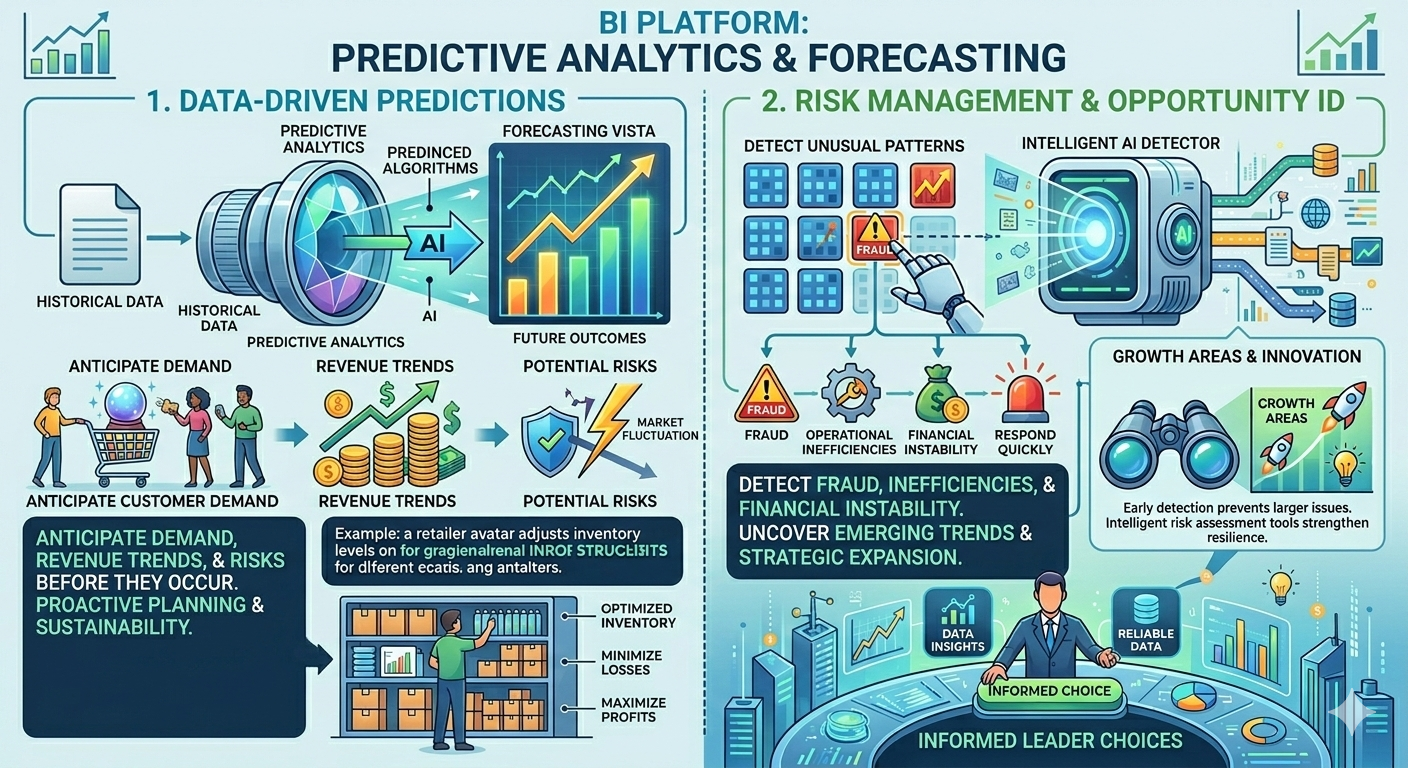
Predictive analytics has become a cornerstone of modern BI systems. Using historical data and advanced algorithms, Artificial Intelligence can forecast future outcomes with remarkable accuracy. Businesses can anticipate customer demand, revenue trends, and potential risks before they occur. These predictive insights help organizations allocate resources more effectively and prepare for market fluctuations. For example, retailers can adjust inventory levels based on forecasted demand, minimizing losses and maximizing profits. By integrating ai in business intelligence, companies shift from reactive decision-making to proactive planning. This forward-looking approach enhances competitiveness and ensures long-term sustainability.
Risk Management and Opportunity Identification
Beyond forecasting sales and revenue, predictive models also assist in identifying risks and opportunities. Artificial Intelligence can detect unusual patterns that signal fraud, operational inefficiencies, or financial instability. Early detection allows companies to respond quickly and prevent larger issues. At the same time, AI-driven analysis uncovers emerging trends and growth areas that may otherwise remain hidden. These insights enable strategic expansion and innovation. By embedding intelligent risk assessment tools into BI platforms, organizations strengthen their resilience. The combination of predictive analytics and ai in business intelligence ensures that leaders make informed choices supported by reliable data insights.
Prescriptive Analytics and Strategic Guidance
While predictive analytics estimates future outcomes, prescriptive analytics takes a step further by recommending specific actions. Artificial Intelligence analyzes multiple scenarios and suggests optimal solutions based on business objectives. For instance, if a decline in customer engagement is detected, the system may recommend targeted marketing campaigns or product adjustments. This capability transforms BI tools into strategic advisors. Rather than simply presenting data, they guide executives toward informed decisions. The integration of prescriptive analytics within ai in business intelligence enhances operational efficiency and accelerates response times. Organizations benefit from actionable recommendations that align with their goals and improve overall performance.
Real-Time Insights and Agile Decision-Making
Modern markets evolve rapidly, requiring businesses to adapt quickly. Artificial Intelligence enables BI tools to provide real-time insights by continuously monitoring live data streams. Automated alerts notify managers of sudden changes, such as unexpected revenue drops or supply chain disruptions. Immediate access to up-to-date information supports agile decision-making. Companies can respond to challenges as they arise, minimizing potential losses. Real-time dashboards powered by ai in business intelligence create a transparent and responsive environment. This agility is essential in industries where timing significantly impacts profitability and customer satisfaction.
Personalization and Customer Intelligence
Customer experience plays a crucial role in business success. AI-enhanced BI tools analyze customer behavior, preferences, and feedback to generate personalized insights. Artificial Intelligence identifies patterns in purchasing habits and engagement levels, enabling businesses to tailor products and services accordingly. Personalized marketing strategies become more precise and effective when guided by data-driven analysis. Companies can segment audiences accurately and deliver relevant content to each group. By leveraging ai in business intelligence, organizations enhance customer loyalty and improve retention rates. The ability to understand customers at a deeper level provides a significant competitive advantage in today’s market.
Challenges and Ethical Considerations
Despite its advantages, integrating Artificial Intelligence into BI tools presents challenges. Data privacy and security concerns must be addressed carefully. Organizations handle sensitive information that requires strict governance and compliance with regulations. Additionally, AI systems depend on high-quality data. Inaccurate or biased datasets can lead to misleading insights and flawed decisions. Businesses must invest in robust data management practices to ensure reliability. Employee training is also essential to interpret AI-generated insights correctly. By addressing these challenges proactively, companies can maximize the benefits of ai in business intelligence while maintaining ethical standards and customer trust.
The Future of AI in Business Intelligence
The future of BI tools lies in deeper integration with Artificial Intelligence technologies. Emerging innovations such as augmented analytics and self-learning systems will further enhance analytical capabilities. These systems will continuously refine their predictions based on new data inputs. Voice-enabled analytics and advanced visualization techniques will make insights more accessible to non-technical users. As organizations increasingly rely on data-driven strategies, ai in business intelligence will become a central component of corporate planning. Companies that embrace these advancements early will be better positioned to adapt to technological changes and evolving market demands.
Frequently Asked Questions
What are predictive and prescriptive analytics?
Predictive analytics forecasts future trends using historical data. Prescriptive analytics recommends optimal actions to achieve business objectives based on these predictions.
How does AI help with real-time decision-making?
AI continuously monitors live data, generates instant alerts, and updates dashboards, allowing businesses to respond quickly to changes and minimize potential losses.
Can AI improve customer intelligence?
Yes. AI analyzes behavior, preferences, and engagement patterns to provide personalized insights, optimize marketing, improve retention, and enhance customer experience.
What challenges come with AI in BI?
Key challenges include data privacy, security, biased or poor-quality datasets, and the need for employee training to interpret AI-driven insights accurately.
How can my business leverage AI-driven insights effectively?
By integrating AI into financial models and strategy, businesses can make smarter, growth-focused decisions, optimize performance, and gain a competitive edge.
Conclusion
Artificial Intelligence is transforming Business Intelligence tools, automating data processing and delivering predictive insights. Modern businesses gain real-time analytics, personalized customer intelligence, and strategic recommendations, enabling smarter, faster decisions. While data quality and ethical challenges remain, careful implementation ensures lasting success.
Ready to turn insights into action with Oak Business Consultant? Our experts help you translate complex data into actionable insights, optimize financial performance, and make confident, growth-focused decisions. Contact us now for a free consultation.