How Does a CFO Influence Strategic Decisions?
CFO for Strategic Decisions
In the old days of business, the Chief Financial Officer (CFO) was often seen as the “scorekeeper”—the person in the back room making sure the books balanced and the taxes were paid. But if you walk into any high-performing C-suite today, you’ll find a very different reality.
The modern financial leader has moved from the back office to the head of the table. So, how does a CFO influence strategic decisions in a way that actually moves the needle? It isn’t just about spreadsheets; it’s about turning raw data into a narrative that guides the entire company’s future.
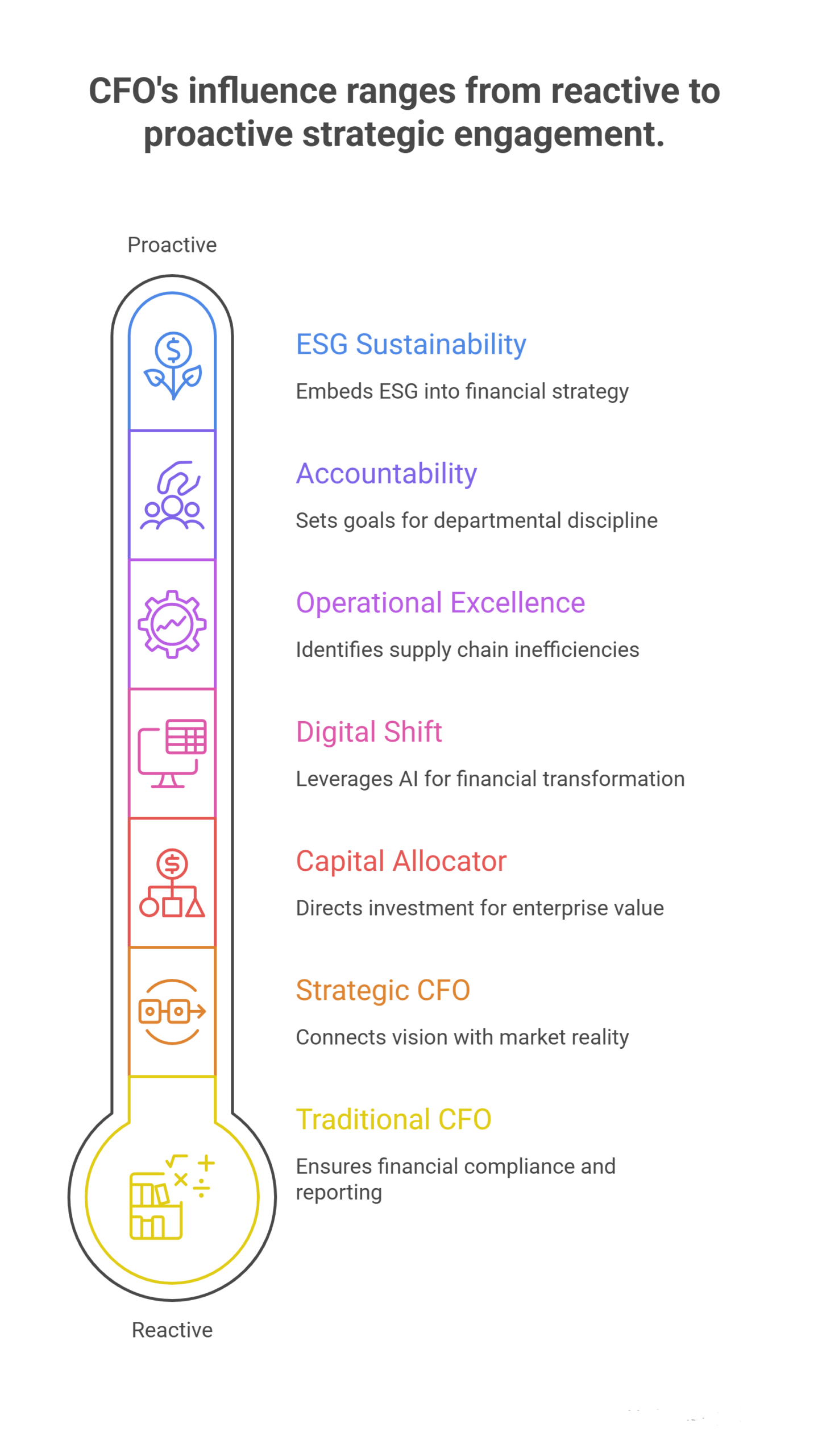
At its core, a Strategic CFO acts as the bridge between a CEO’s grand vision and the cold, hard reality of the market. They ensure that every bold move is backed by a solid investment thesis and that the company’s financial health remains the priority, even during periods of rapid business growth.
1. Turning “Gut Feel” into Data-Backed Decisions
Every leader has a “gut feeling” about a new product or a market shift. While intuition is valuable, it’s also risky. One of the most significant ways how does a CFO influence strategic decisions is by replacing guesswork with data-backed decisions.
By utilizing advanced analytics and business intelligence, the CFO takes complex financial data and translates it into a story the rest of the leadership team can understand. They look past the surface-level numbers to find the “why” behind the performance.
- From Data Deficit to Clarity: Many companies suffer from a data deficit, they have plenty of information but no way to use it. The CFO implements FP&A tools to create a clear analytical framework.
- Business Metrics that Matter: Instead of just looking at the income statement, a strategic leader tracks specific business metrics like customer acquisition cost vs. lifetime value, ensuring the growth stage of the company is sustainable.
2. The Master of Capital Allocation
Money is a finite resource. Deciding where to put it is the ultimate strategic puzzle. A CFO influences strategic decisions by acting as the primary architect of capital allocation.
Should the company invest in a new R&D project, or is it time for an acquisition? The CFO leads the due diligence process to ensure that any financial transactions or funding rounds actually add to the enterprise value rather than just increasing company size for the sake of it.
Strategic Planning and Risk
Every strategic plan carries a certain amount of risk. The CFO doesn’t just say “no” to risky ideas; they use scenario planning to show the board what happens in a “best-case” and “worst-case” world. This gives the C-suite team the confidence to take calculated risks because they already have a roadmap for the “what-ifs.”
3. Navigating the Digital Shift: AI and Automation
The question of how does a CFO influence strategic decisions today is inseparable from technology. We are living in an era of emerging technologies like artificial intelligence and machine learning.
A forward-thinking CFO leverages these tools to transform financial operations:
- Robotic Process Automation (RPA): By automating the financial close process, the finance team saves hundreds of hours. This time is then redirected toward strategic thinking.
- Real-time Financial Data: Using cloud-based technology and cloud computing, a CFO can see the company’s financial health in real-time, rather than waiting for a report at the end of the month.
- Predictive Modeling: With machine learning, financial modeling becomes predictive. The CFO can forecast market trends and shifts in market share with much higher accuracy.
4. Operational Excellence and the Supply Chain
A CFO’s influence isn’t limited to the finance department. They often have a bird’s-eye view of the entire organization’s internal processes. By diving into the financial reporting of the supply chain, they can identify inefficiencies that others might miss.
For example, by tightening vendor terms or optimizing accounts receivable and accounts payable, the CFO can unlock significant working capital. This “found money” can then be reinvested into agile innovation, giving the company a competitive edge without needing external debt.
5. Building a Culture of Accountability
Strategic decisions only work if people follow through. A CFO influences the company culture by setting clear performance tracking goals. When every department, from Marketing to HR, understands how their budget impacts the balance sheet and cash flow statements, the entire organization becomes more disciplined.
The Human Side of Finance
While we often think of the Office of the CFO as being all about logic, it also requires a great deal of two-way communication and even emotional support. Leaders like Jeff Thomson and Gary Cokins have often highlighted in Forbes Magazine that the best CFOs are those who can mentor other executives, helping them understand the financial acumen needed to run their own departments effectively.
6. ESG and Long-term Sustainability
In 2026, corporate strategy isn’t just about profit; it’s about purpose. Environmental social governance (ESG) has become a top priority for investors.
The CFO is the one who integrates these goals into the financial strategy. They ensure that sustainability efforts aren’t just “greenwashing” but are actually reflected in the company’s financial planning and long-term business success. This holistic approach ensures transformation success that lasts for decades, not just quarters.
Frequently Asked Questions
How does a CFO influence strategic decisions during a crisis?
During a crisis, the CFO becomes the “Chief Resilience Officer.” They focus on cash forecasting, protecting the balance sheet, and identifying which strategic plans should be paused to preserve liquidity.
What is the difference between a traditional CFO and a Strategic CFO?
A traditional CFO focuses on historical financial statements and compliance. A Strategic CFO focuses on the future, using data analytics and strategic thinking to drive business growth.
Why is the “growth stage” of a company important for a CFO?
The growth stage determines the CFO’s focus. A startup CFO might focus on funding rounds and cash flow, while a CFO managing post-IPO financial management will focus on earnings per share and regulatory auditing processes.
How do emerging technologies help in decision-making?
Technologies like AI and EPM software allow for data-based decision making. They remove human bias and provide a clearer picture of business performance through data visualization.
Conclusion
The modern business world is too fast for “gut feels” and delayed reports. When we ask how does a CFO influence strategic decisions, the answer lies in their ability to be a true partner to the CEO, someone who provides the analytical framework and the financial leadership to turn a vision into a reality.
From mastering the nuances of marginal economics to leading a team through complex financial modeling, the CFO is the heartbeat of the modern enterprise. They ensure that the company doesn’t just grow, but grows wisely.
Want to see how expert financial leadership can drive your business forward? At Oak Business Consultant, our CFO services provide the strategic insight and financial expertise mid-market companies need to thrive. From guiding your funding rounds to optimizing operations with advanced FP&A tools, we act as your dedicated financial partner. We don’t just manage your numbers, we help shape the strategy that powers your company’s growth. Contact us today to schedule a consultation and take the next step toward financial excellence.