7 Reasons to Hire a Virtual CFO
Why to Hire a Virtual CFO
Most business owners do not decide to hire a virtual CFO because they read an article about it. They decide because they missed a cash flow problem until it was already a crisis. Or because an investor asked for a financial model they did not have. By the time the need is obvious, it usually has a cost attached.
A virtual CFO gives you senior-level financial leadership without the salary or the long-term commitment of a full-time hire. There is no recruiting timeline either. Here is what one actually does, what it costs, and the seven situations where hiring one pays for itself.
What is a virtual CFO, exactly?
A virtual CFO is an experienced finance professional who provides CFO-level strategy and planning remotely. Most work on a part-time or contract basis. They handle the same core responsibilities as an in-house CFO: budgeting, forecasting, cash flow management, fundraising support, and financial reporting. The difference is structure, not scope.
You will also see the term “fractional CFO” used almost interchangeably with virtual CFO. In practice, “virtual” describes how the work is delivered, which is remotely. “Fractional” describes how much time the CFO gives your business: a fraction of a full workweek, split across multiple clients. Most virtual CFO services are also fractional by design. The two labels usually point to the same arrangement.
Virtual CFO vs. in-house CFO vs. fractional controller
| Virtual/fractional CFO | In-house CFO | Outsourced controller | |
| Typical cost | $3,000 to $10,000 per month | $180,000 to $400,000+ per year, plus benefits | $2,000 to $6,000 per month |
| Time commitment | 10 to 40 hours per month, scalable | Full-time, salaried | Part-time, ongoing |
| Best for | Growing businesses that need strategy without a full-time seat | Larger companies with complex, continuous CFO-level needs | Businesses that need clean books more than strategic direction |
| Focus | Strategy, forecasting, fundraising, risk | Same, plus day-to-day department leadership | Bookkeeping accuracy, reporting, close process |
7 reasons to hire a virtual CFO
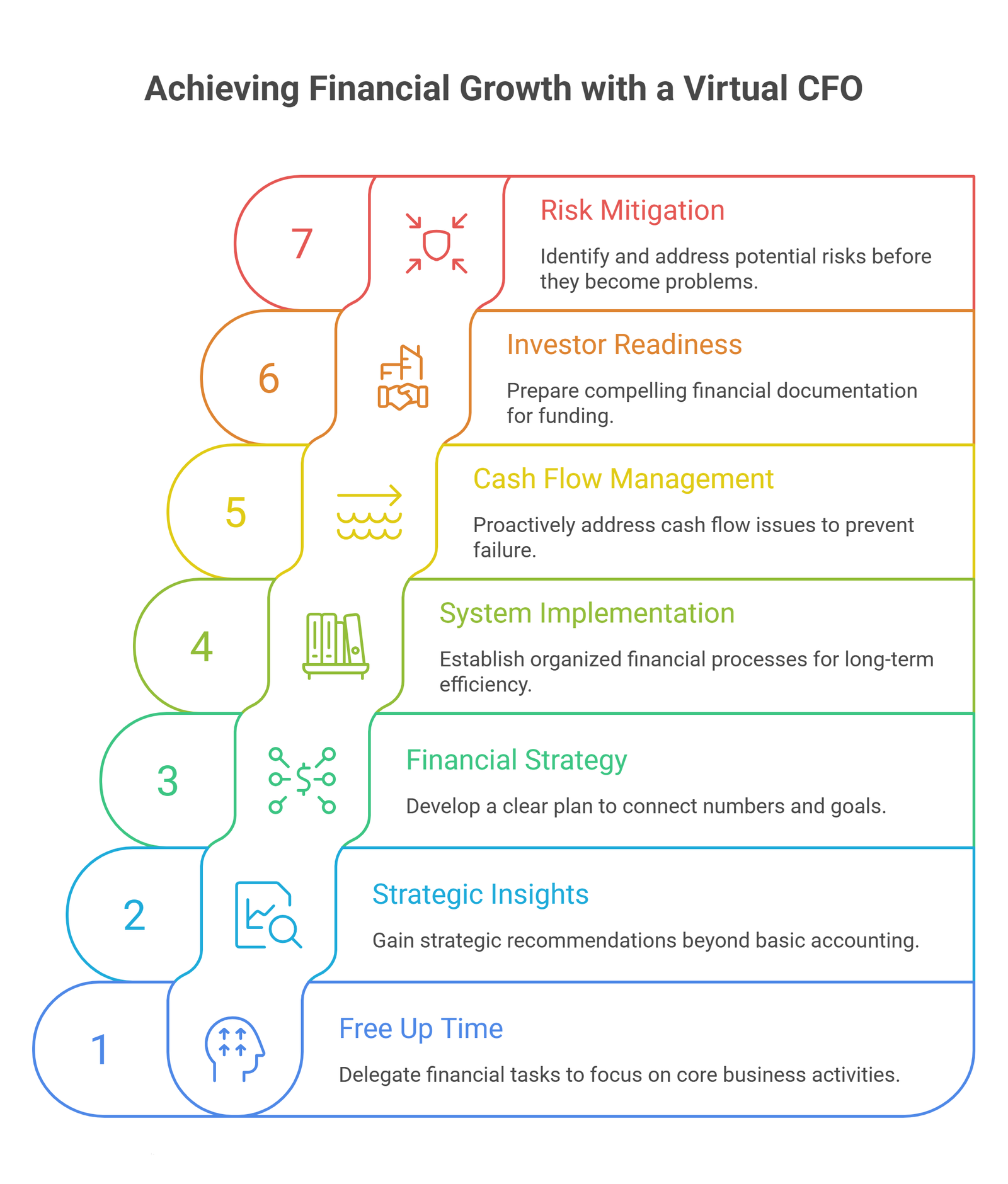
1. You are managing finances yourself, and it is costing you time you do not have
Every hour spent reconciling spreadsheets is an hour not spent on product, sales, or hiring. Owners who handle their own finances tend to decide on gut feel instead of current numbers. That is a hard habit to break once the business gets more complex. A virtual CFO takes the financial workload off your plate. That frees you up to focus on what actually grows the business.
2. Your accountant can keep the books, but cannot tell you where to take the business next
Accountants and bookkeepers are essential, but their job is accuracy and compliance, not strategy. A virtual CFO reviews the same numbers and turns them into a recommendation. That might mean raising prices, cutting an underperforming service line, or delaying a hire by a quarter. It is a different skill set, and most small businesses do not have it in-house. Because a virtual CFO usually works across several companies, they bring an outside view your internal team cannot. Many also have a network of specialists, from tax attorneys to M&A advisors, ready when your situation calls for it.
3. You do not have a real financial strategy, just a set of habits
A financial strategy connects your current numbers, your goals, and your budget into a plan you can execute. Without one, growth tends to happen by accident. So do the mistakes. A virtual CFO builds that plan with you and adjusts it as conditions change. That beats reacting to problems only after they show up in the bank balance.
4. You need financial systems, not just financial advice
Advice fades. Systems stick. A virtual CFO sets up processes that keep your finances organized long after any single conversation. That includes tracking income and expenses and monitoring invoices and payments so nothing slips. Because they are not tied to office hours, they can also support businesses across time zones. That often means faster turnaround than a traditional in-house hire.
5. Cash flow problems keep catching you off guard
Cash flow issues are one of the most common reasons growing businesses fail. They are rarely a surprise in hindsight. A virtual CFO builds a rolling cash flow forecast so you can see a shortfall coming. That means weeks or months out, not the week payroll is due. That lead time is usually the difference between a manageable adjustment and a scramble for a bridge loan.
6. You are trying to raise capital without investor-ready numbers
Pitch decks do not close funding rounds on their own. Investors and lenders want clean financial statements, realistic projections, and a business plan built on defensible assumptions. A virtual CFO prepares that documentation and can support the funding process directly. That matters more at the negotiating table than a well-designed slide.
7. You cannot yet see where the risk actually sits in your business
Every business carries risk, but most owners only see the risks that have already caused a problem. A virtual CFO identifies exposure before it becomes a loss. That could be a compliance gap, a customer concentration issue, or a market you are entering without a cost model. They also build the mitigation plan, not just the warning.
What does a virtual CFO cost?
Pricing depends on scope, business size, and how many hours you need each month. The market has still settled into fairly consistent ranges.
| Engagement type | Typical cost | What it usually covers |
| Hourly / ad hoc | $150 to $450 per hour | One-off reviews, second opinions, specific projects |
| Monthly retainer (small business) | $2,000 to $6,000 per month | Ongoing reporting, budgeting, cash flow oversight |
| Monthly retainer (growth stage) | $5,000 to $10,000+ per month | Fundraising support, forecasting, board-level reporting |
| Full-time in-house CFO | $180,000 to $400,000+ per year | Continuous, full-scope CFO leadership |
Even at the higher end, most businesses spend well under half of what a full-time hire would cost. That is before factoring in recruiting time, benefits, and the risk of a bad fit.
Signs it is time to hire one
Not every business needs a virtual CFO on day one. It is usually time to hire one when:
- Revenue has crossed roughly $500,000 to $1 million and decisions are outpacing your financial visibility
- You are preparing for a funding round, acquisition, or sale
- Cash flow has surprised you more than once in the past year
- Your internal team is handling CFO-level decisions without CFO-level training
- You are entering a new market or product line and need a real cost model before committing
How to choose the right virtual CFO for your business
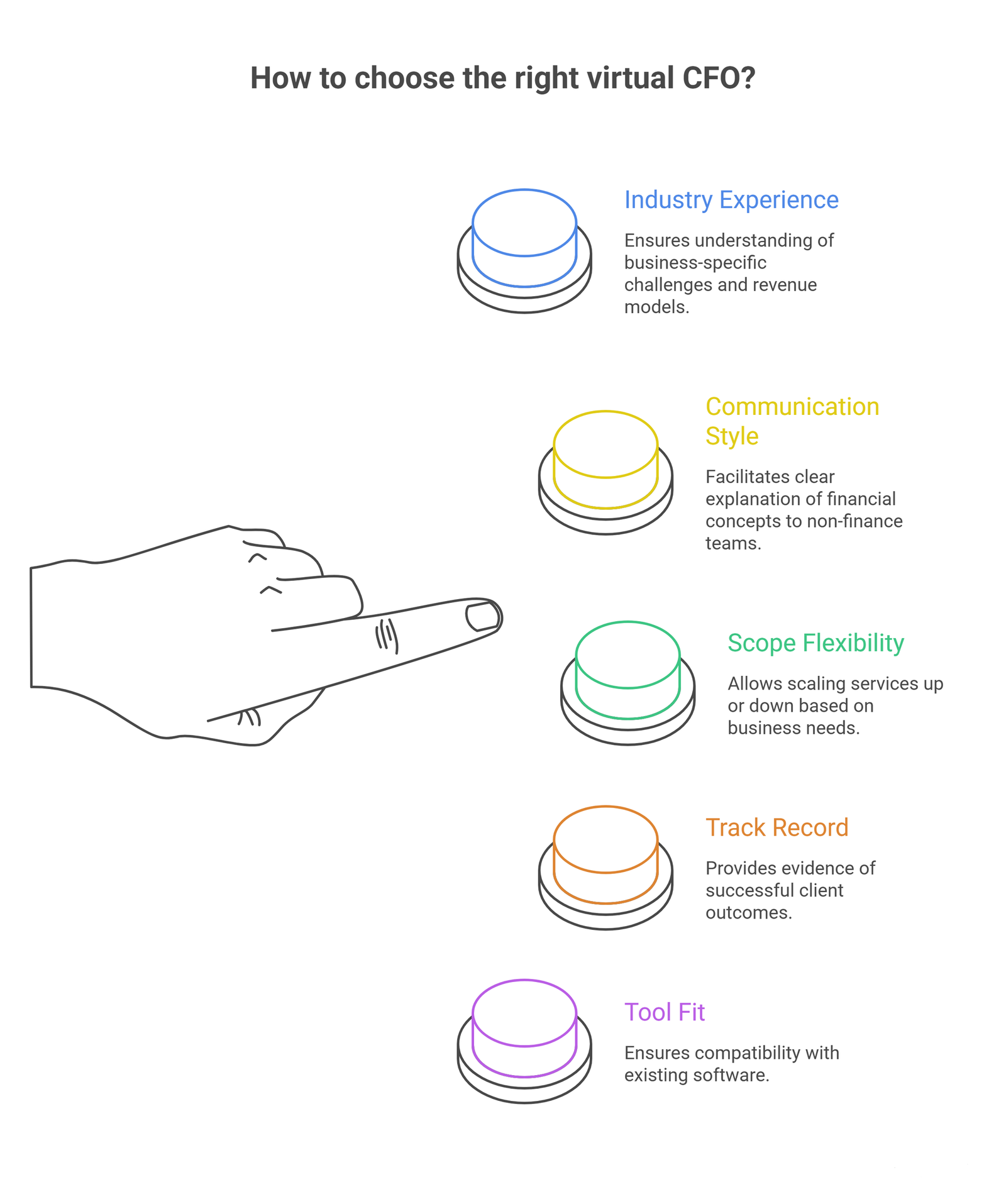
Not every virtual CFO is the right fit for every business. Before you hire one, check for:
- Industry experience. Do they understand your revenue model, margins, and typical challenges?
- Communication style. Can they explain financial concepts clearly to a non-finance team?
- Scope flexibility. Can the engagement scale up during a fundraise or busy season, then back down after?
- Track record. Can they point to businesses they have actually helped, not just services they offer?
- Tool fit. Are they comfortable in the accounting and reporting software you already use?
Oak Business Consultant has provided virtual and fractional CFO services to businesses across industries for years. That is why we built this checklist the way we did. Use it regardless of who you end up hiring.
Frequently Asked Questions
Is a virtual CFO the same as a fractional CFO?
Almost always, yes. “Virtual” refers to remote delivery and “fractional” refers to part-time hours. Most providers using either label do both at once.
How much does a virtual CFO cost per month?
Most small and mid-sized businesses pay between $2,000 and $10,000 per month, depending on scope and hours. Ad hoc or project work is typically billed hourly, from $150 to $450 per hour.
When should a small business hire a virtual CFO?
Common triggers include crossing roughly $500,000 to $1 million in revenue or preparing for a funding round. Recurring cash flow surprises are another. Expanding into a new market without a clear cost model is another.
Can a virtual CFO replace my accountant or bookkeeper?
No. Accountants and bookkeepers handle compliance, tax filing, and day-to-day recordkeeping. A virtual CFO uses that same data to build strategy, forecasts, and decisions. Most businesses need both.
How many hours does a virtual CFO typically work each month?
Most engagements run 10 to 40 hours per month. Hours usually scale up during fundraising, audits, or year-end close, then scale back down.
Is it worth hiring a virtual CFO before raising any funding?
Often, yes. Investors respond better to founders who can answer financial questions with real numbers. A virtual CFO can build that foundation before you are in the room asking for a check.
What is the biggest difference between a virtual CFO and a full-time CFO?
Cost and commitment. A full-time CFO typically costs $180,000 to $400,000 or more per year in salary alone. A virtual CFO delivers similar strategic leadership on a flexible schedule, for a fraction of that.
Final thoughts
Hiring a virtual CFO is not about admitting you cannot manage your own finances. It is about recognizing that strategic financial leadership is a specialized skill. Paying for it part-time is usually cheaper than the mistakes you make without it.
If any of the seven reasons above sound familiar, the cost of waiting is rarely low. It is usually higher than the cost of hiring. Book a call with our team to talk through what virtual CFO support would look like for your business.