



Dance Studio Excel Financial Model Template


Original price was: $125.$95Current price is: $95.
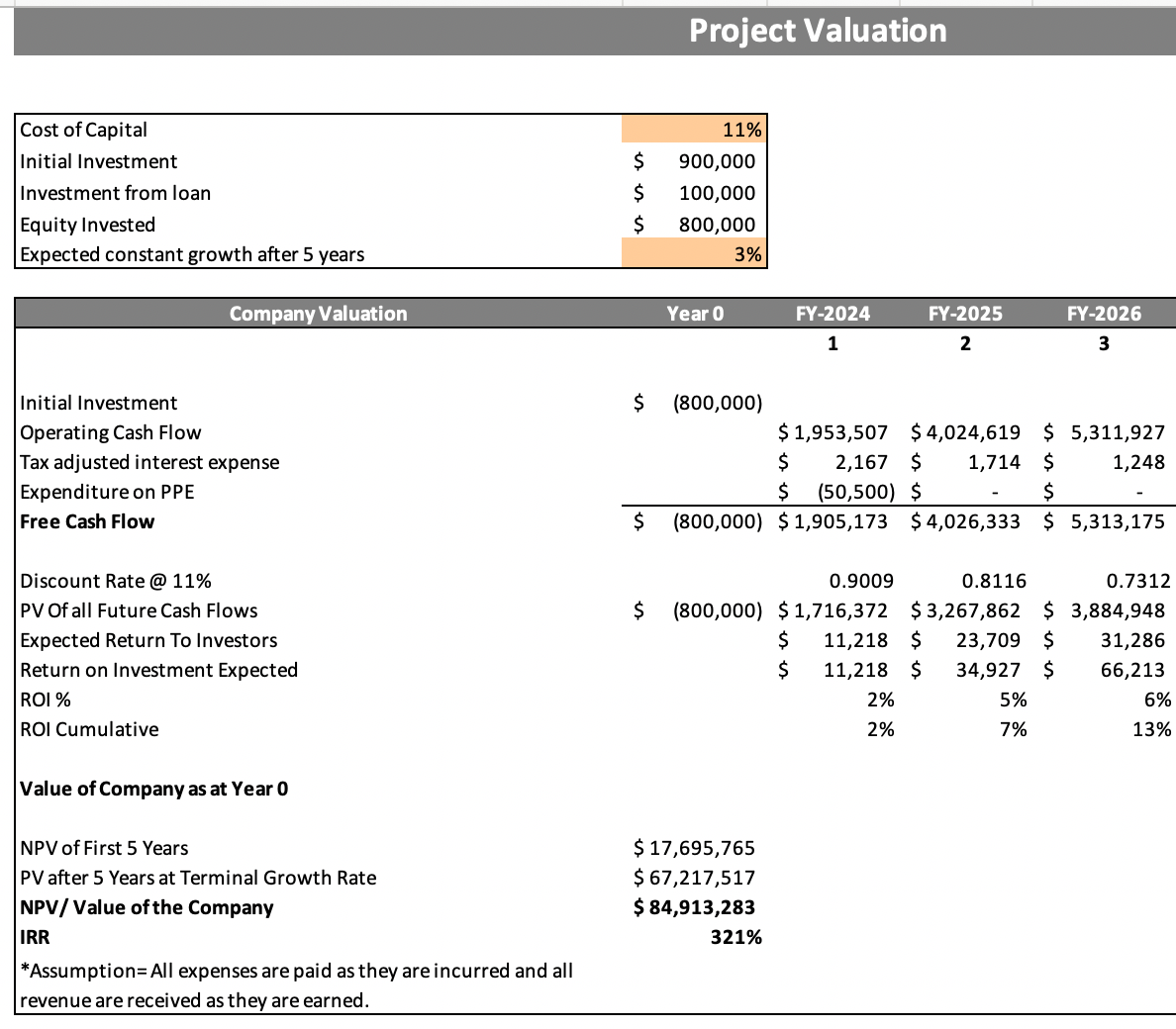
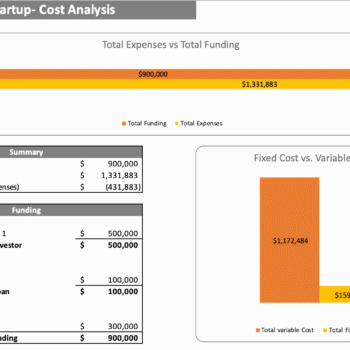
The Dance Studio Financial Model template is a dynamic financial plan for businesses. This model will help you improve cash management and track expenses, sales, and net revenue in detail to meet and outperform your financial objectives. Dance Studio Financial Model contains financial ratio analysis and contains a DCF valuation framework to monitor its worth.
Frequently Bought Together
- Description
- Reviews (1)
Description
Dance Studio Excel Financial Model Template: Overview
As a business owner venturing into the dance studio industry, understanding the blend of artistic passion and practical business acumen is crucial. This journey will take you through the nuances of creating a successful dance studio, from exploring various dance styles to understanding the needs of your target audience and potential customers. You will learn about the essential dance studio financial model, a tool that aids in forecasting cash flow projections, managing start-up costs, and optimizing marketing expenses. Whether you’re a seasoned dance instructor looking to expand into dance school ownership or are new to the dance industry, this guide is designed to equip you with the knowledge to make informed decisions and create a thriving environment for all dance classes and styles.
Key Features of the Model:
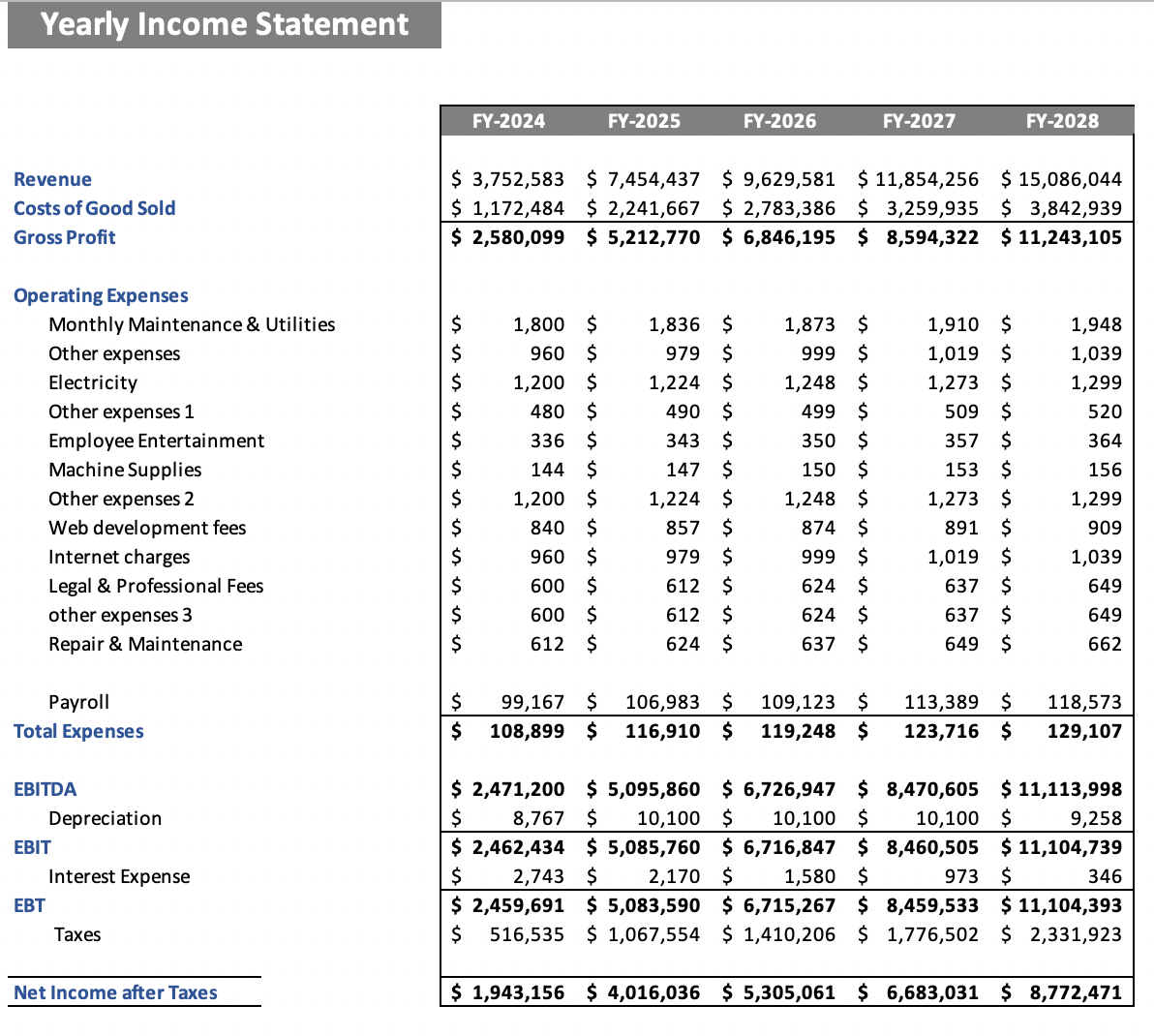
- Income Statement
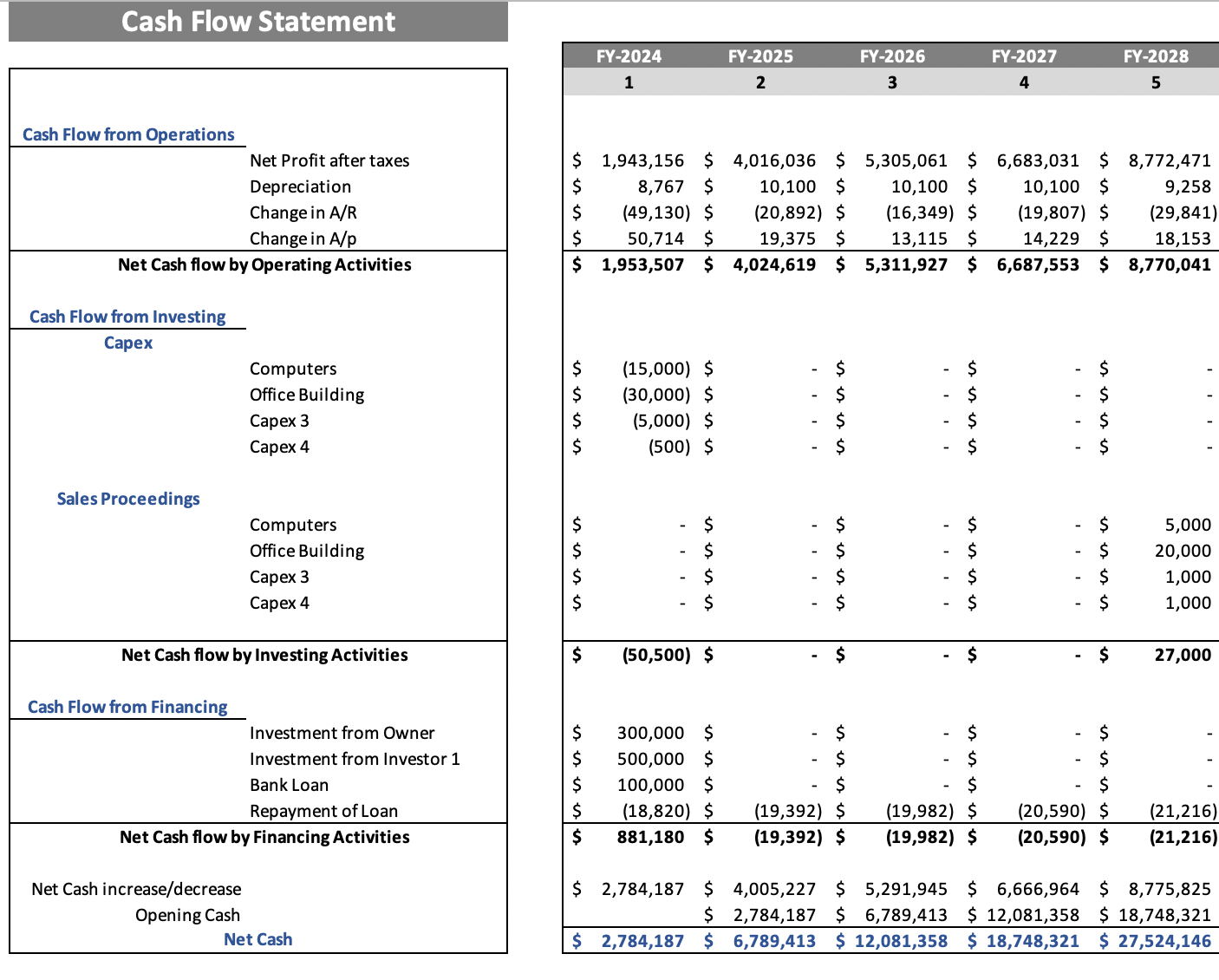
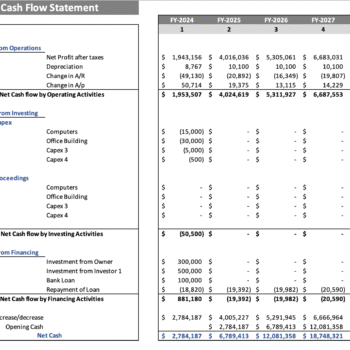
- Cash Flow Statement
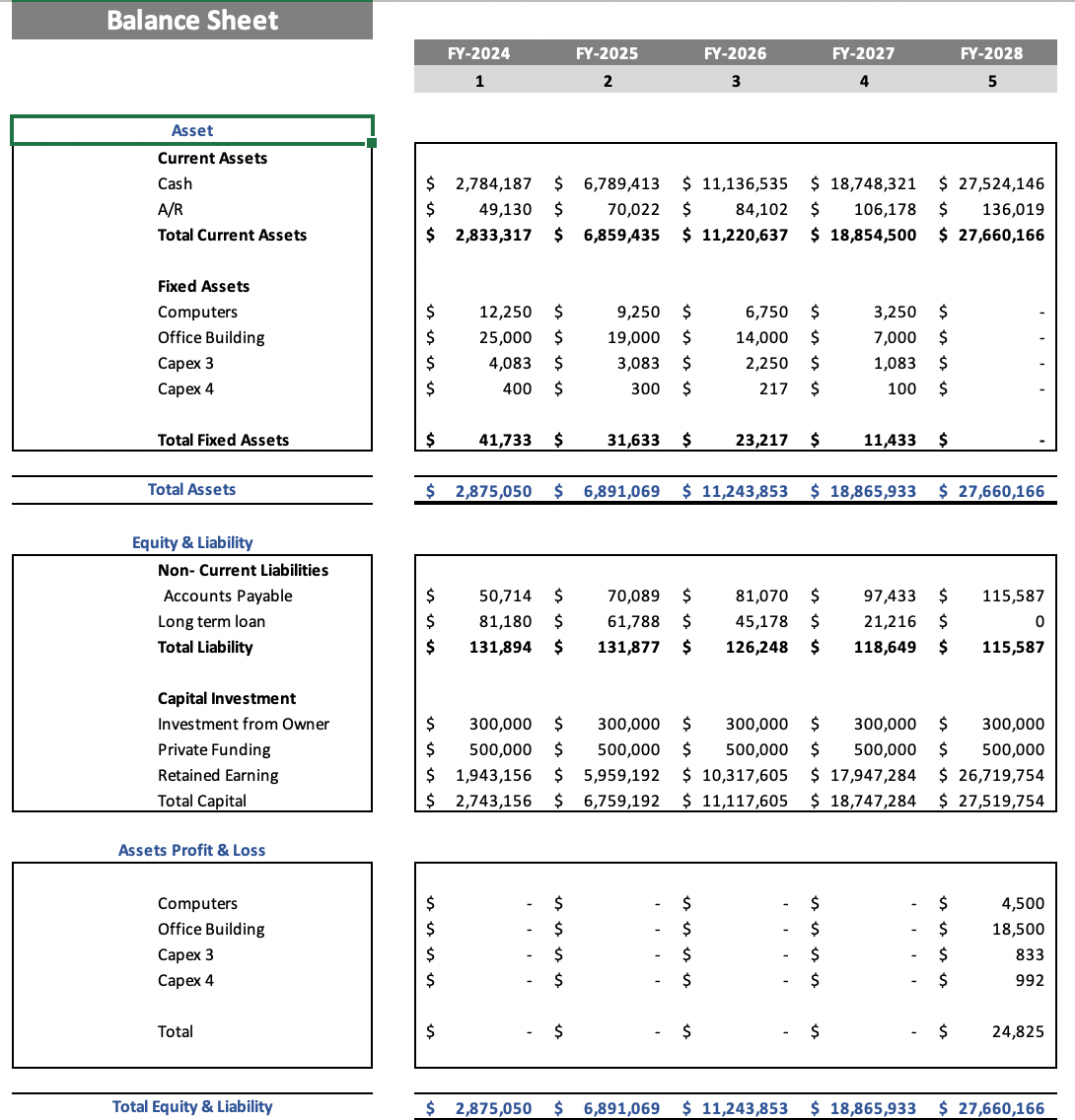
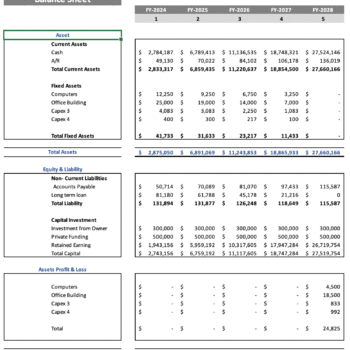
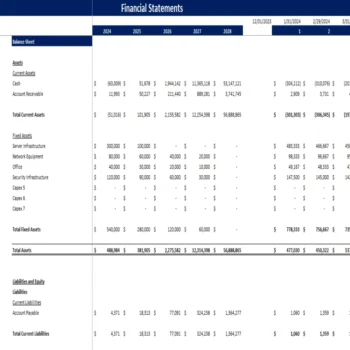
- Balance Sheet Forecast
Key Components
The following comprehensive components form the essential financial and operational framework of this dance studio financial model template.
Revenue:
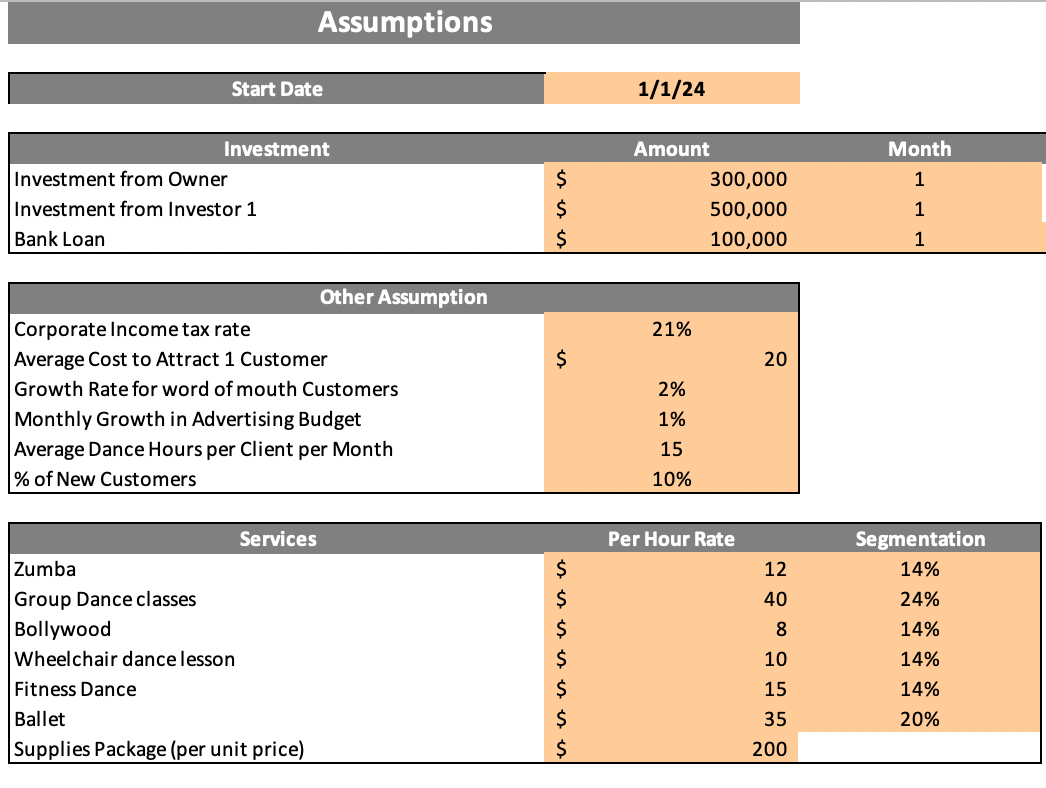
- Revenue by Students Enrolled – Revenue projections are primarily driven by the number of Customers enrolled in different dance programs (e.g., ballet, Zumba, Fitness dance).
- Revenue by Number of Classes – Evaluates revenue based on different services (e.g Zumba, Group Dance classes, Bollywood, Wheelchair dance lesson, Fitness Dance & Ballet)
Cost Structure:
- Instructor Salaries & Studio Rent – Capture direct operational costs such as dance instructors’ compensation and studio space leasing.
- Variable Costs – Reflect cost changes with class frequency and attendance (e.g., utilities, props, and cleaning supplies).
- Operating Expenses – Include ongoing costs like marketing, software subscriptions (booking/scheduling), and administrative staff salaries.
- Initial Setup Costs – Account for one-time expenses including dance studio renovation, sound systems, mirrors, and dance flooring.
- Recurring Monthly Costs – Cover continuous expenses such as utilities, instructor fees, equipment maintenance, and student management tools.
Profitability Analysis:
- Gross Margin – Measure the financial picture of the business’s profitability.
- Operating Expenses – Track the impact of fixed costs and rental expenses.
- Net Profit – Assess the return on investment and overall financial position.
Cash Flow Management:
- Working Capital – Plan for business operations and day-to-day expenses.
- Cash Burn Rate – Monitor cash movements and future cash inflows.
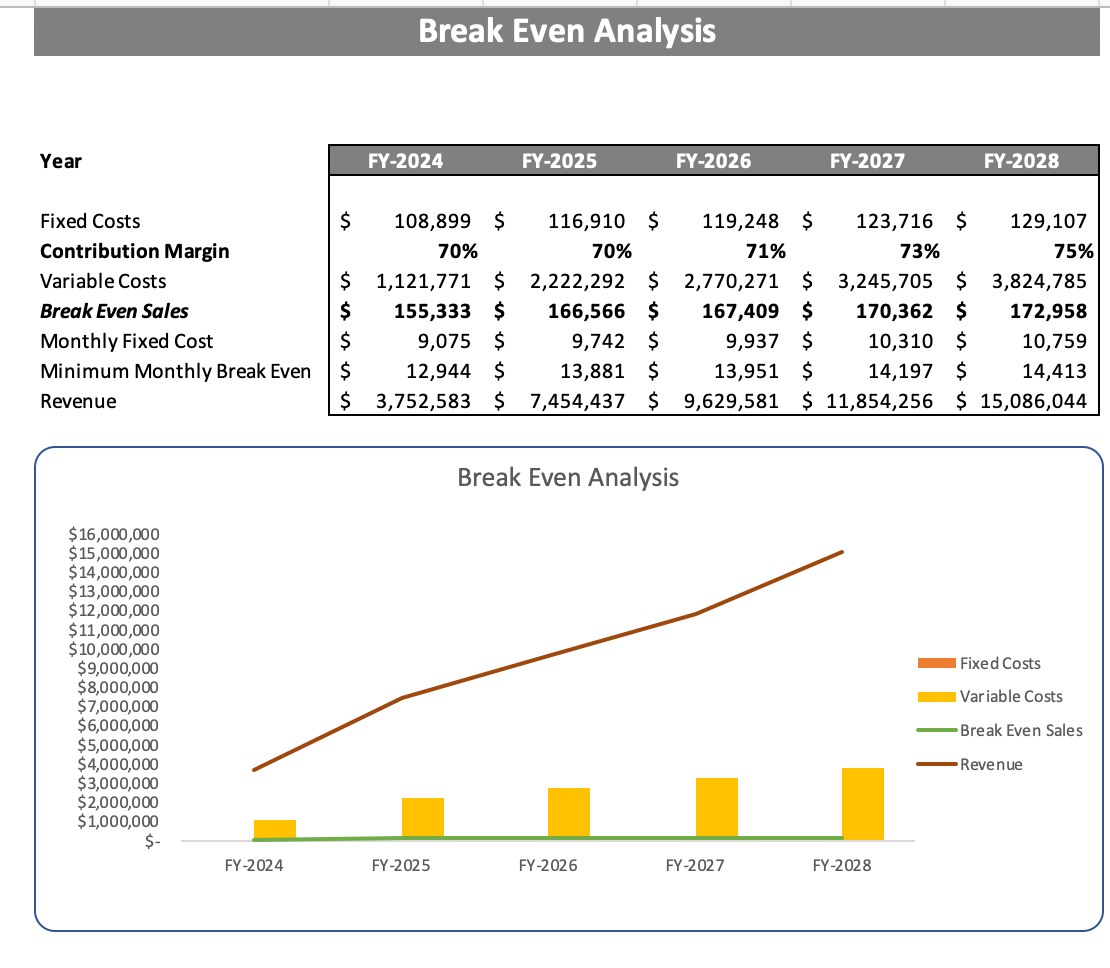
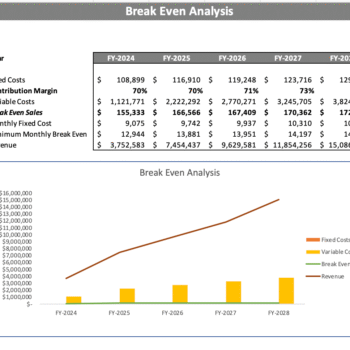
- Break-Even Analysis – Determine the sales potential needed to cover all costs.
Scenario Analysis:
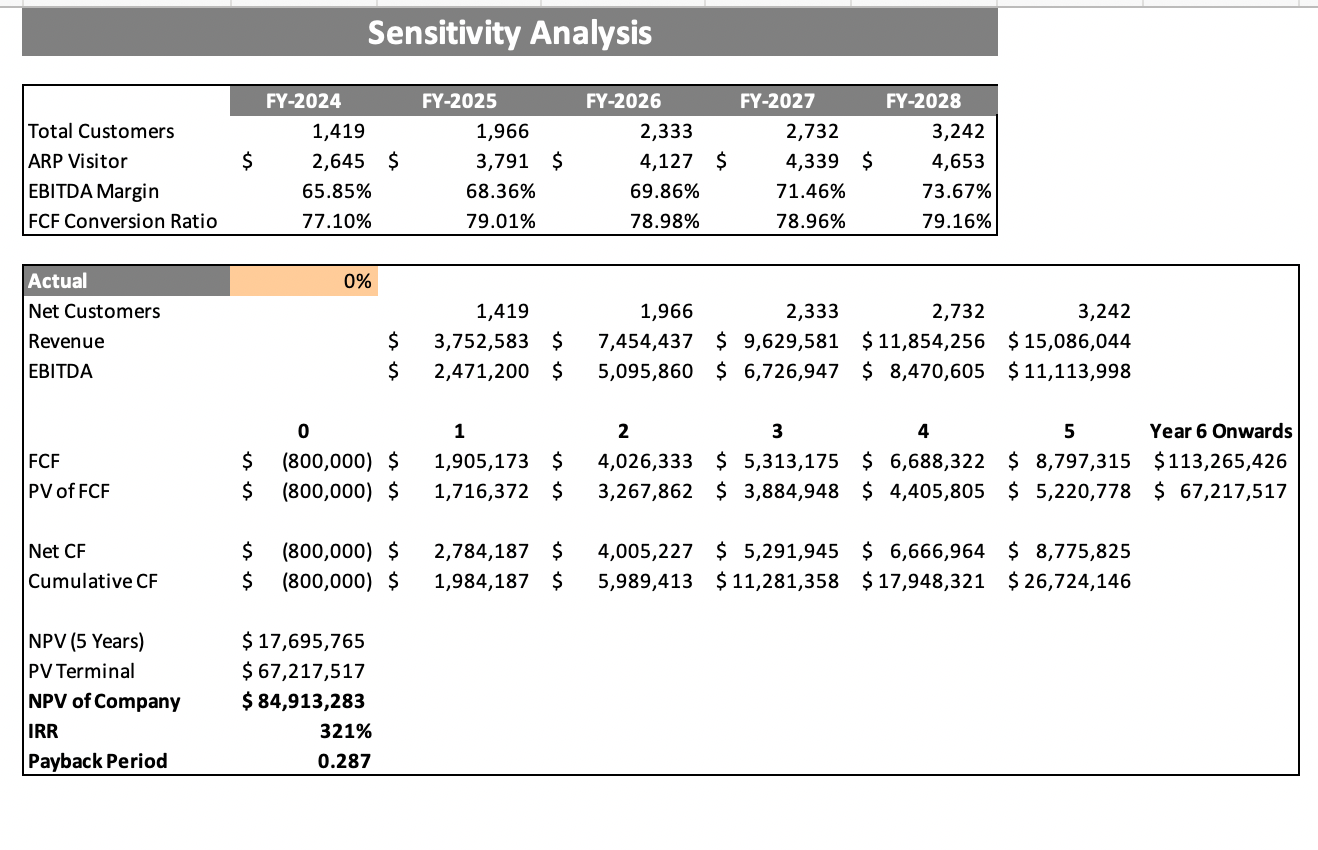
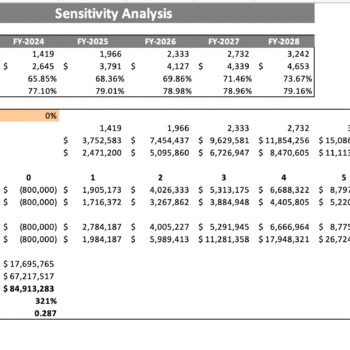
- Sensitivity Analysis – Actual, Optimistic and pessimistic Analysis.
- Market Conditions – Evaluate different business strategies to adapt to changes in demand.
Key Performance Indicators (KPIs):
- Operational Efficiency – Analyze capital expenditure related to essential tools and leverage the model’s built-in financial planning tools to formulate a robust long-term growth strategy.
- Advertising Expenses – Measure the impact of marketing on sales.
Funding and Valuation:
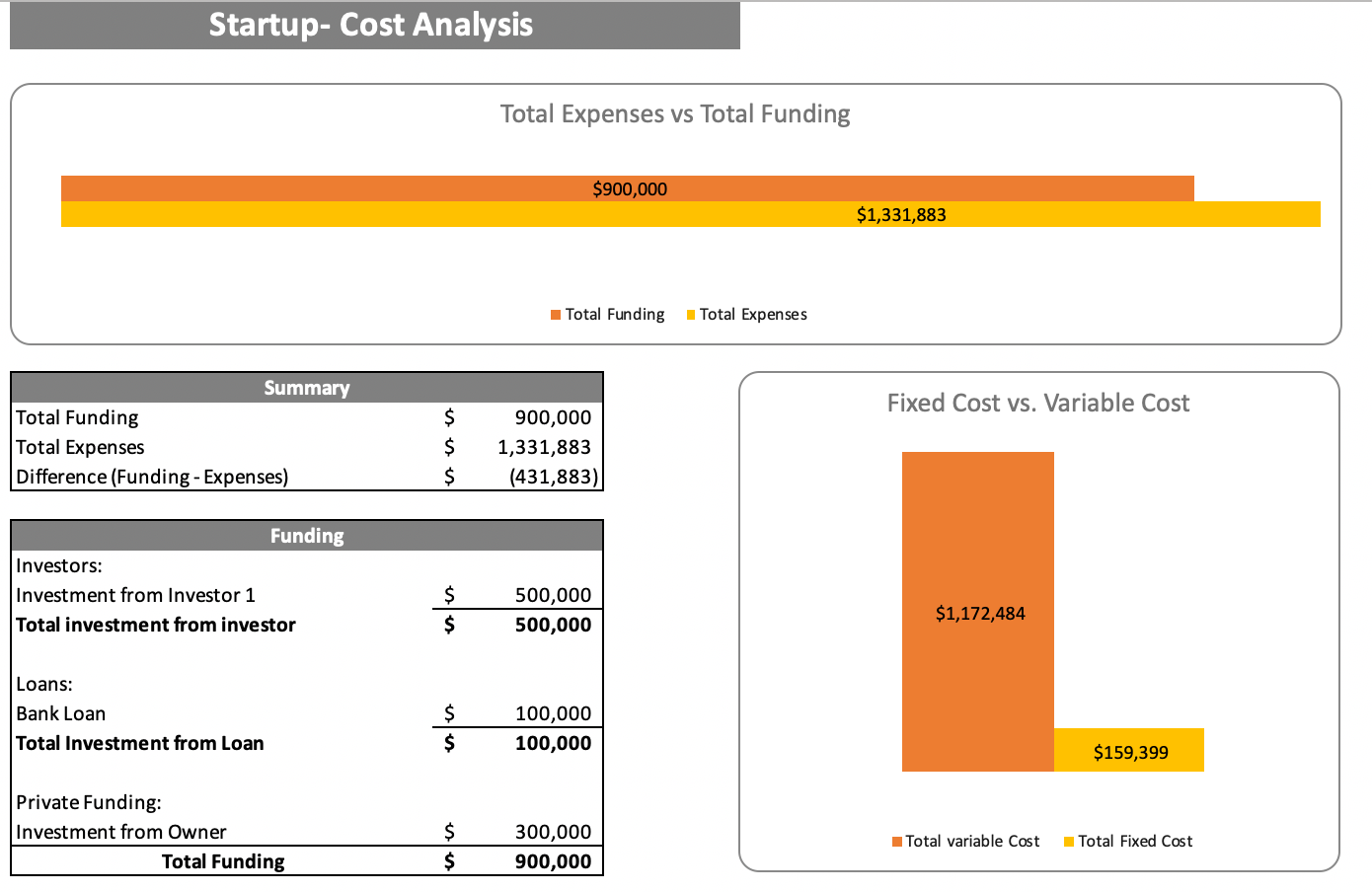
- Capital Requirements – Identify funding needs for business expansion.
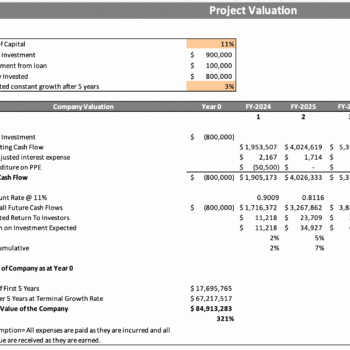
- Valuation Metrics – Analyze financial statements to assess business growth.
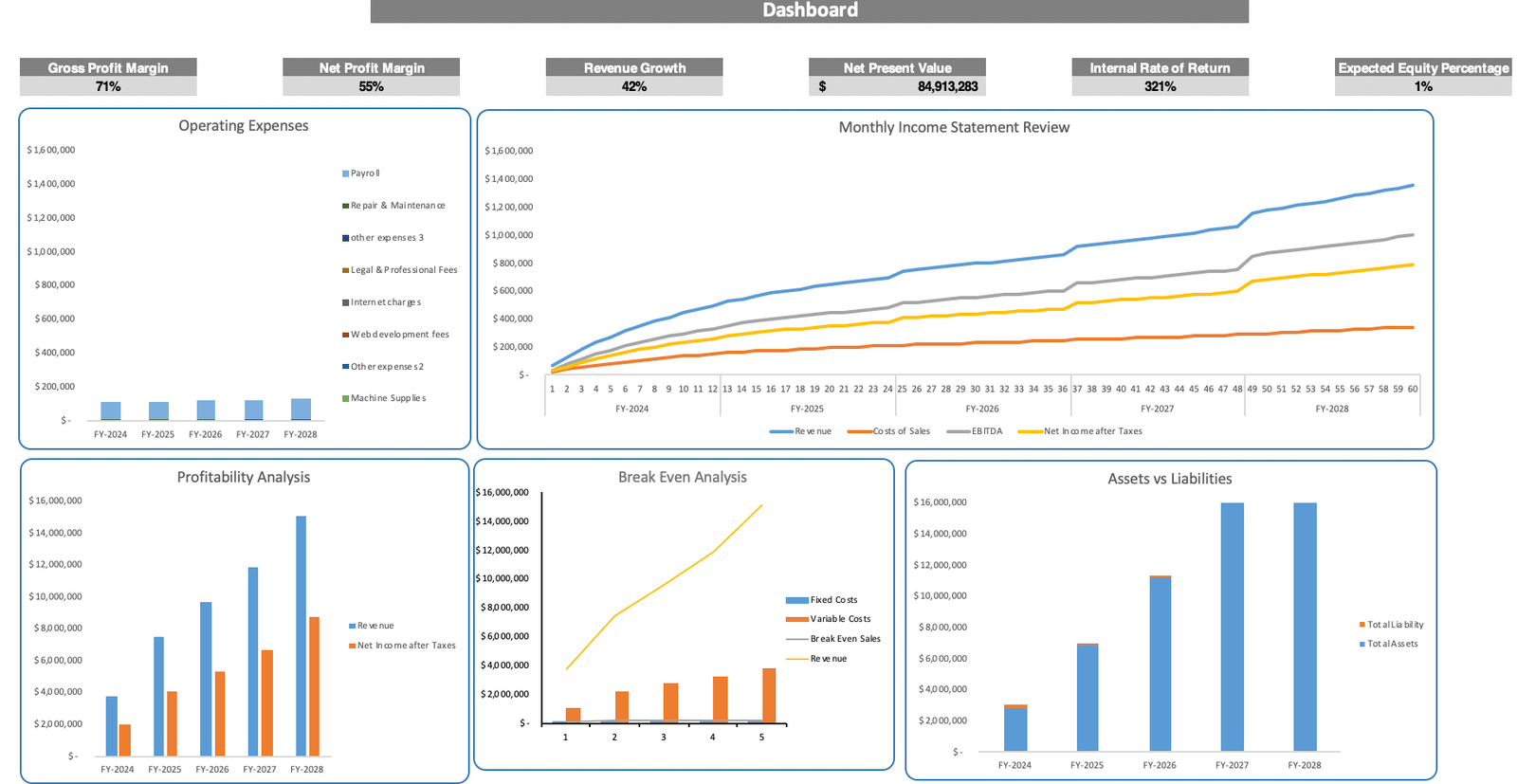
Visual Dashboards:
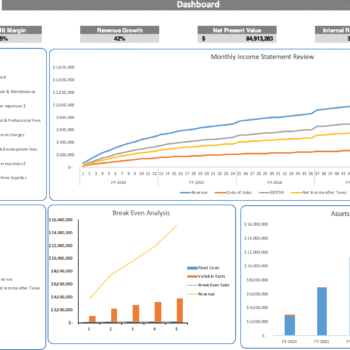
- Financial Analysis – Graphical representation of cash payments and accounts payable.
- Revenue Projections – Track revenue trends and future cash inflows.
FAQs
- What inputs are needed for the model?
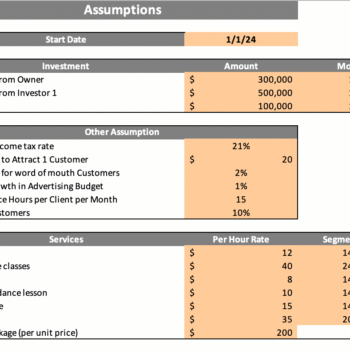
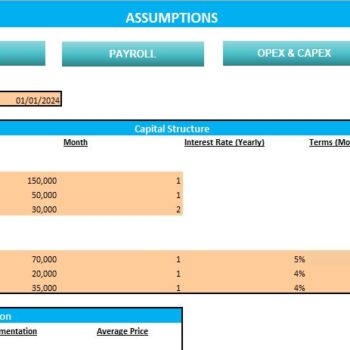
Basic inputs include student count, class pricing, instructor pay, rent, and marketing costs. - Can I customize different class types and memberships?
Yes, class types and pricing plans are fully editable. - Does it include seasonal variations in student enrollment?
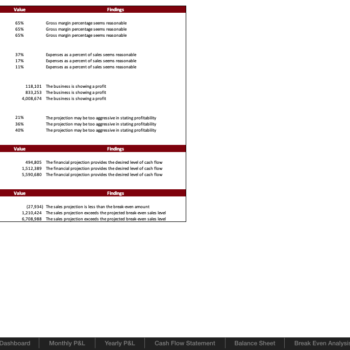
Yes, monthly student numbers can be adjusted to reflect seasonal trends. - What reports does the model generate?
It includes Profit & Loss, Cash Flow, Balance Sheet, and dashboards. - Is the model investor or bank ready?
Yes, it’s formatted for professional use in funding proposals and presentations.
Terms of Use:
Oak Business Consultant and our range of products, including this financial model template, are not endorsed by or officially connected to any specific software or platform unless explicitly stated. Your purchase allows you a single license for personal or business use, exclusive to your individual or company needs. Redistribution, resale, or sharing of the files and templates is strictly prohibited. Please direct others to our shop if you find our financial model valuable and wish to recommend it.
Note:
Our product is a digital Excel file. Due to the nature of digital products, we cannot offer returns or exchanges. We encourage you to address any queries or seek clarification before finalizing your purchase.
Need More Help?
Email us at info@oakbusinessconsultant.com to get a customized Dance Studio Excel Financial Model Projection Template
Walk-through video of the Dancing Studio Excel Financial Model
The following video will give you an overview of the different components of the financial model and will help you understand how it works.
1 review for Dance Studio Excel Financial Model Template
Add a review
You must be logged in to post a review.












Joseph William –
I had a great experience with this company and its products. Highly recommended!