The Ultimate Guide to Avoiding Business Sale Mistakes
How to Protect Your Legacy and Maximize Value
Selling a business is likely the most significant financial transaction you will ever experience. It represents the culmination of years of grit, personal sacrifice, and strategic growth. However, the path to a successful exit is rarely a straight line. Many entrepreneurs approach the process with a DIY mindset, only to find that a single business sale mistake can cost them millions in exit value or lead to a complete deal collapse during the final stretch.
The difference between a record-breaking windfall and a disappointing settlement usually comes down to preparation. In the high-stakes world of Mergers and Acquisitions, the “information asymmetry” between a seasoned buyer and an unprepared seller is vast. To ensure you walk away with the purchase price you deserve, you must navigate the valuation process and due diligence with surgical precision.
This comprehensive guide explores the most critical business sale mistake pitfalls you must avoid to secure your financial future.
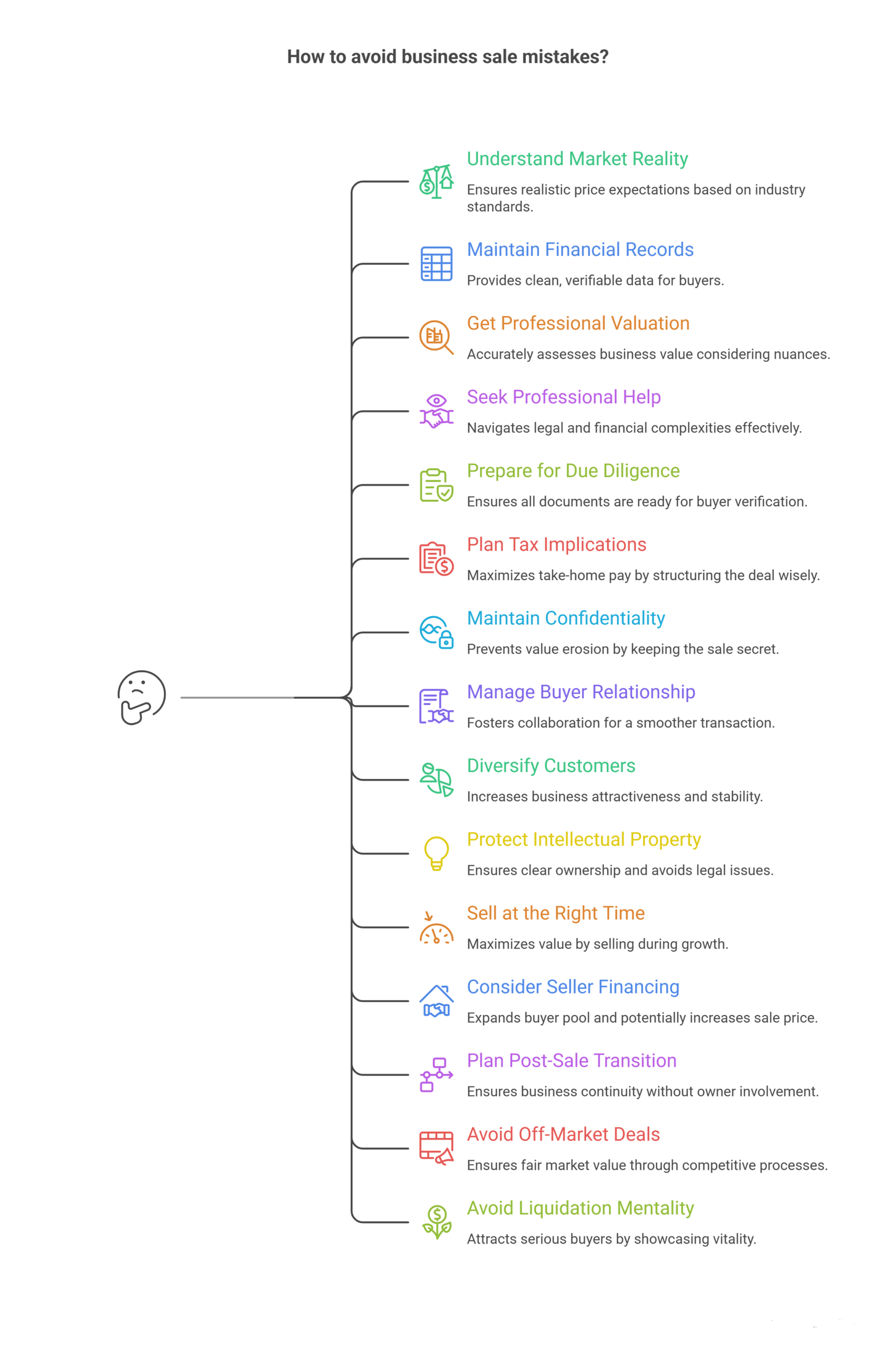
1. Failing to Understand True Market Reality
One of the most common business sale mistake instances occurs before the company even hits the market: unrealistic price expectations. Many owners base their asking price on “sweat equity” or personal financial needs rather than industry standards.
To determine a fair market value, you must look beyond your gut feeling. Professionals typically use a market approach, comparing your company to similar entities that have recently sold, or an asset-based approach for more capital-intensive firms. If your expectations aren’t aligned with the current economic climate, you risk having your listing languish, which signals to buyers that the business may be “damaged goods.”
2. Poor Maintenance of Financial Records
When a buyer initiates due diligence, they aren’t just looking at your product; they are auditing your history. Relying on disorganized accounting records is a catastrophic business sale mistake. Buyers want to see clean, verifiable financial statements, including a detailed Balance Sheet and accurate tax returns for the last three to five years.
If your financial data is co-mingled with personal expenses or if your monthly accountant hasn’t kept pace with digital transformation, the buyer will likely discount the purchase price. They view messy books as a sign of hidden liabilities or poor management.
3. Neglecting the Importance of Business Valuation
Skipping a professional business valuation is a gamble you cannot afford to take. Many owners rely on free business valuation calculators found online, but these tools often fail to account for the nuances of your specific niche, such as intellectual property or the strength of your customer database.
A formal valuation helps you understand the profit potential from a buyer’s perspective. It considers your cash flow, net profit, and revenue projections, providing a baseline that prevents you from leaving money on the table.
4. Attempting to Sell Without Professional Help
While it is possible to sell a small business on your own, it is rarely advisable. Navigating the legal issues and financial reporting requirements of a sale is a full-time job. Many owners who forgo an M&A Advisor or reputable business brokers end up overwhelmed, leading to errors in the Letter of Intent (LOI) or the Confidential Information Memorandum (CIM).
Professional advisors, such as those recognized by the International Business Brokers Association or Business Brokers of America, bring a network of qualified buyers and the expertise to manage an auction process that drives up the price.
5. Inadequate Preparation for Due Diligence
Due diligence is the “proctology exam” of the business world. It is the phase where the buyer verifies every claim you’ve made. A major business sale mistake is failing to have your “data room” ready. This should include everything from legal documents and non-compete agreements to your merchandising strategy and social media analytics.
If a buyer discovers undisclosed legal issues or discrepancies in your Q4 revenues during this stage, they may invoke “renegotiation” clauses or walk away entirely, citing a lack of transparency.
6. Ignoring the Tax Implications of the Deal Structure
It’s not about what you sell the business for; it’s about what you keep after the government takes its cut. Failing to plan for tax implications is a business sale mistake that can decrease your take-home pay by 20% to 40%.
Whether the transaction is structured as an asset sale or a stock sale has massive consequences. For example, buyers often prefer an asset sale because it allows them to “step up” the basis of assets for depreciation. However, this can trigger higher taxes for the seller. Consulting with experts on deal structure early on is essential to protect your seed money.
7. Breaking Confidentiality
The moment employees, customers, or competitors find out a business is for sale, the value begins to erode. Staff may start looking for new jobs, and competitors may use the news to poach your customer relationships.
A common business sale mistake is failing to enforce strict confidentiality agreements and Non-Disclosure Agreements (NDAs). All communications should be funneled through your advisors to ensure that the fact that you are selling a business remains a secret until the ink is dry.
8. Mismanaging the Working Relationship with the Buyer
While the business sale is a financial transaction, it is also a human one. Maintaining a professional and collaborative common ground with the buyer is vital. If the relationship becomes adversarial, the buyer may become overly cautious during the final numbers phase.
Remember, many deals include earnout structures where you may need to work with the buyer post-closing to hit certain Tangible Metrics. Starting off on the wrong foot can jeopardize these future payouts.
9. Failing to Diversify the Customer Database
If 50% of your revenue comes from a single client, your business is a high-risk investment. “Customer concentration” is a significant red flag in the valuation process. Buyers fear that if that one client leaves, the business will face liquidation.
Before selling, focus on digital transformation and a robust marketing plan to spread your revenue across a wider base. This increases your exit value and makes the company more attractive to SaaS technology companies or private equity groups looking for stability.
10. Overlooking Intellectual Property and Legal Counsel
Many small business owners neglect to properly register their trademarks, patents, or proprietary software. During a business sale, legal counsel for the buyer will scrutinize your ownership of these assets. If there is a cloud over your intellectual property, it creates a massive “legal issue” that can stall the closing. Ensure all your legal documents are in order and that you have clear title to all assets, including your web server and hosting provider.
11. Waiting Too Long to Sell
Timing the market is difficult, but waiting until your numbers are declining is a classic business sale mistake. You want to sell when the “hockey stick” of your revenue projections is pointing up. If you wait until you are burnt out or the economic climate shifts toward a recession, you lose your leverage. Selling while the business is thriving ensures you get the highest multiple of your cash flow.
12. Not Considering Seller Financing
In the current market, many buyers struggle to secure 100% of the purchase price through traditional banks. Refusing to offer any form of seller financing can be a business sale mistake that limits your pool of buyers. While it carries some risk, it also shows your confidence in the company’s future profit potential and can often result in a higher overall sale price.
13. Neglecting Post-Sale Transition Planning
A buyer is often buying your “troubleshooting information” and your “human level” knowledge as much as the assets. If you haven’t documented your processes or trained a management team to function without you, the business is less valuable. A successful business sale requires a transition plan that ensures the store owner or CEO can step away without the company collapsing.
14. Falling for “Off-Market Deal” Traps
Sometimes, a buyer will approach you directly with an “off-market deal,” promising to save you money on broker commissions. While tempting, this is often a business sale mistake. Without the competitive pressure of an auction process or the guidance of an M&A Advisor, you have no way of knowing if you are getting the true market value.
15. The “Liquidation Sale” Mentality
Unless you are facing an actual business liquidation, never market your company with a sense of desperation. A “store closing sale” or “liquidation sale” mindset attracts bottom-feeders who will low-ball your valuation. Stay focused on the long-term growth and the conversion rate of your sales funnel to prove the company’s ongoing vitality.
Frequently Asked Questions (FAQs)
What is the most common business sale mistake?
The most frequent error is a lack of preparation. Many owners decide to sell and want to be “out” in three months, whereas a proper exit strategy usually takes 12 to 24 months of cleaning up financial statements and optimizing operations.
How does an asset sale differ from a stock sale?
In an asset sale, the buyer purchases specific items (equipment, customer lists, IP), while in a stock sale, the buyer purchases the entire legal entity. Stock sales are generally more favorable for sellers due to capital gains tax treatments, whereas buyers prefer asset sales for the depreciation benefits.
Why is the Letter of Intent (LOI) so important?
The LOI outlines the preliminary terms of the business sale. While mostly non-binding, it sets the stage for the purchase price and the exclusivity period. A mistake here can tie you up with a buyer who has no intention of closing at the agreed price.
How can I improve my business valuation before selling?
Focus on increasing your net profit, diversifying your customer base, and ensuring your financial reporting is handled by a professional monthly accountant. Implementing modern SaaS technology companies’ practices, like recurring revenue models, also significantly boosts multiples.
Conclusion
Avoiding a business sale mistake requires a blend of financial discipline, emotional detachment, and expert guidance. From the initial valuation process to the final numbers in the closing room, every step must be calculated. The complexities of tax returns, intellectual property, and market reality are too significant to handle alone.
If you are a business owner considering an exit, don’t leave your legacy to chance. Navigating the world of Mergers and Acquisitions requires a strategic partner who understands the nuances of cash flow and deal structure. To ensure your financial records are pristine and your exit value is maximized, consider professional intervention.
For expert guidance in preparing your company for the market, Oak Business Consultant provides specialized CFO services and financial modeling to help you avoid these mistakes and secure the future you’ve worked so hard to build. Contact us today to start your journey toward a successful exit.