ESG-Linked Venture Funding: What Startups Need Before Their First Raise
ESG for Startups: What’s Material, What’s Noise, and What Investors Check
Most founders think ESG means picking a green cause to mention on the About page. Then a term sheet arrives with a clause tying part of the deal to sustainability KPIs, and there’s no time left to build the numbers that clause needs. ESG has moved from a slide in the pitch deck to a line item in the deal terms, and it’s showing up earlier in the funding process than most first-time founders expect.
This isn’t a call to overhaul your business model before you raise a dollar. It’s about knowing which few ESG facts actually get asked for at your stage, and having them ready before an investor asks.
Why ESG shows up before the first raise, not after
Institutional money is pulling ESG down into venture. Limited partners now expect the venture funds they back to show sustainability discipline across the portfolio, and that expectation flows down to the startups those funds check. Regulation adds pressure on top: the EU’s Sustainable Finance Disclosure Regulation and the Corporate Sustainability Reporting Directive push European funds to classify and report on the ESG posture of every company they hold, seed-stage included.
There’s also a financial argument, not just a compliance one. Lenders are starting to offer better terms on venture debt tied to sustainability performance, the same mechanism corporate credit facilities use. A startup that can show clean governance and a credible ESG story isn’t just checking a box. It’s occasionally getting a better price on capital.
None of this means a two-person startup needs a sustainability report. It means the ESG conversation now starts at the term sheet stage instead of after Series B, so it pays to know what’s coming.
What material ESG issues actually apply to your startup
Not every ESG issue applies to every company, and treating them all as equally relevant wastes time you don’t have pre-raise. The useful test is materiality: which environmental, social, or governance factors could plausibly affect your business model, your customers, or your regulatory exposure.
A fintech startup’s material issues look different from a hardware company’s. Data privacy and algorithmic fairness matter far more to a lending app than its office’s energy use. A logistics startup should care about emissions and labor conditions in its supply chain long before it thinks about board diversity metrics. The Sustainability Accounting Standards Board publishes industry-specific materiality maps that are a reasonable starting point for figuring out which two or three issues are actually yours.
Picking the wrong issues to focus on is its own risk. Investors who’ve seen enough ESG decks can tell when a founder picked a generic cause instead of the one tied to their actual business.
The few ESG metrics investors actually ask for at seed and Series A
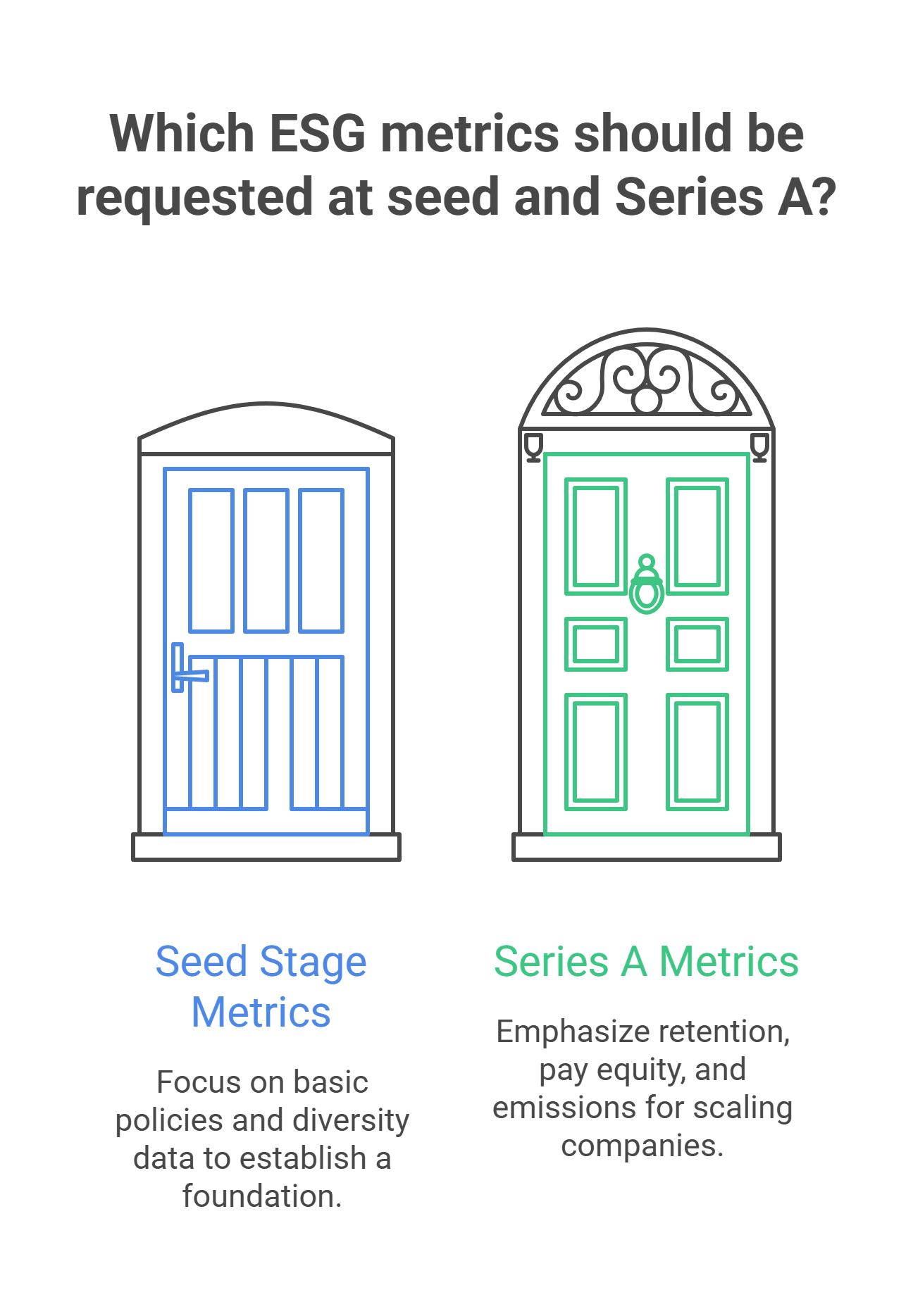
Early-stage investors aren’t expecting a Global Reporting Initiative-aligned disclosure. What comes up in practice is narrower: one to three metrics tied to the business stage, not a comprehensive report.
For a seed-stage team, that might mean a written data privacy policy, a basic diversity breakdown of the founding and early hiring team, or a documented approach to responsible AI use if the product touches machine learning. For a Series A company scaling headcount, it more often becomes retention and pay-equity data, or an emissions estimate if the business has any physical footprint at all.
The pattern that matters here: pick what you can measure honestly today, not what would look best in a report. A founder who says “we track gender balance in interview pipelines and it’s improved from X to Y” gives an investor something concrete. A founder who cites big-picture ambitions with no baseline gives them nothing to underwrite.
How ESG-linked clauses actually show up in a term sheet
This is the part most founders haven’t seen before it happens. A small but growing number of venture deals now carry ESG-specific language, and it takes a few different forms.
The lightest version is a reporting commitment: the company agrees to share a short annual ESG update covering board composition, safety incidents, or emissions, without financial consequences attached. Groups like VentureESG have published standard environmental clauses for exactly this purpose, aimed at keeping the ask proportionate to company stage rather than importing private equity-scale requirements into a seed round.
The heavier version, more common in venture debt than pure equity, is a sustainability-linked facility. The loan carries a margin that moves based on whether the company hits agreed sustainability performance targets, the same structure Carlyle Group used on a multi-billion dollar credit line, scaled down to venture size. Missing the target usually costs a small premium rather than triggering default, but it does mean the KPI needs to be something you can actually track and report on time.
Neither version should catch a founder off guard if the ESG groundwork from the two sections above is already in place.
Building the ESG story into your data room and financial model
An ESG story only holds up if the numbers behind it hold up too. That means the same discipline that goes into revenue projections and unit economics needs to extend to whatever ESG metrics you’re claiming.
If diversity data is part of the pitch, it should live in the same data room as the cap table, not a separate slide nobody can audit. If a sustainability KPI is being proposed as loan collateral, it needs a defined measurement method and a realistic target before a lender signs off on it, not after. This is where ESG stops being a narrative exercise and becomes a modeling exercise: baseline numbers, a credible trajectory, and a way to report progress without needing a full-time sustainability hire.
Oak’s startup financial model services build that kind of tracking into the underlying model from the start, so an ESG metric is treated with the same rigor as a revenue line rather than bolted on separately. The same applies to the investor-ready pitch deck: an ESG slide that’s backed by a real number in the model reads very differently to an investor than one that isn’t.
Avoiding the greenwashing trap at pre-seed and seed stage
The instinct to overclaim is understandable. A founder wants to look investor-ready on every dimension, ESG included, and it’s tempting to describe intentions as if they were already policy. Investors who’ve sat through enough pitches can usually tell the difference, and an inflated ESG claim tends to raise more questions than it answers.
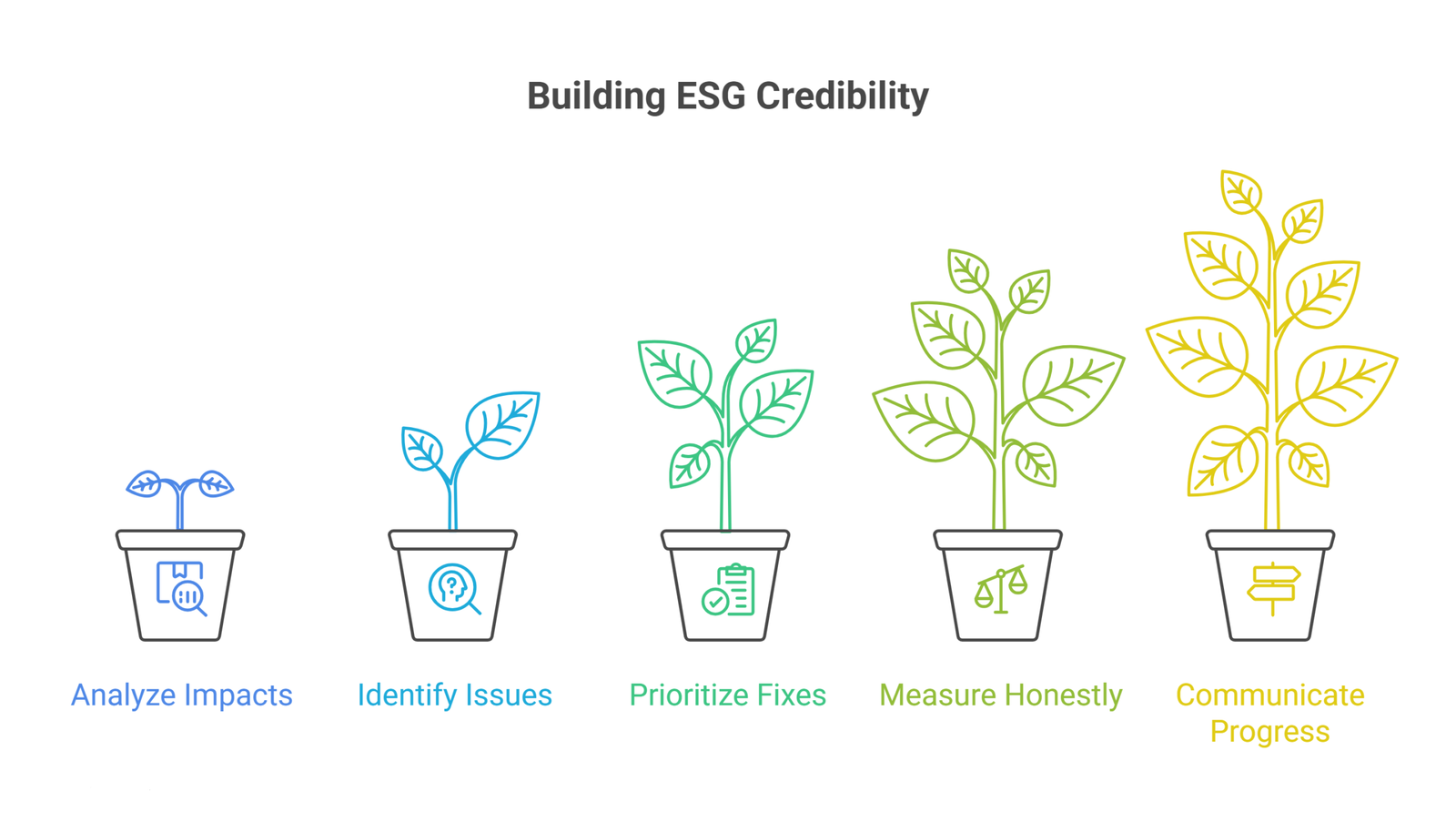
The safer approach, borrowed from how the World Economic Forum has framed it for early-stage founders, is to start small and build. Analyze which second-order impacts your product might have as it scales. Identify the one or two material issues in your sector. Prioritize the highest-value, lowest-complexity fix first. Measure only what you can measure honestly. Communicate ESG as a work in progress rather than a finished credential.
No investor expects a pre-seed company to have solved diversity, emissions, and governance all at once. What they’re checking for is whether the founder understands which of those actually matter for this business, and whether the numbers behind any claim are real.
ESG readiness by funding stage
| Stage | What typically gets asked | Documentation to have ready |
| Pre-seed | Awareness of material issues in your sector | A one-page note on which 1-2 ESG issues apply and why |
| Seed | One to three trackable metrics (privacy policy, hiring diversity, AI governance) | Baseline numbers in the data room, not just narrative |
| Series A | Retention, pay equity, or emissions data; possible light ESG reporting clause | A repeatable measurement process, not a one-time snapshot |
| Series A+ / venture debt | Sustainability-linked KPIs tied to loan pricing | A defined measurement method and realistic target, agreed before signing |
Frequently Asked Questions
Does a pre-seed startup actually need an ESG policy before raising?
Not a formal policy. What helps is knowing which one or two ESG issues are material to your specific business and having an honest, if informal, answer ready if an investor asks.
What’s the difference between an ESG clause and a sustainability-linked loan?
An ESG clause in an equity term sheet is usually a reporting commitment with no financial penalty attached. A sustainability-linked loan ties the actual interest margin to whether the company hits agreed sustainability targets, which makes the KPI a financial term, not just a disclosure.
Which ESG metrics matter most for a SaaS or fintech startup specifically?
Data privacy practices, algorithmic fairness if the product uses machine learning, and governance basics like a functioning board and clean cap table tend to matter more than environmental metrics for software-first companies.
Can claiming ESG credentials that aren’t backed by real data actually hurt a raise?
Yes. Investors who run any diligence on ESG claims will notice gaps between the pitch and the paperwork, and an unsupported claim tends to raise more scrutiny on the rest of the deck, not less.
Do US-based startups need to worry about EU ESG regulation like SFDR?
Directly, no, unless the fund raising from is EU-domiciled or reports under SFDR itself. Indirectly, yes, since many international VCs are applying SFDR-style expectations to portfolio companies regardless of where those companies are based.
The groundwork is smaller than it looks
ESG readiness before a first raise isn’t about publishing a sustainability report or hiring a chief impact officer. It’s about knowing which two or three ESG facts are actually material to your business, having honest numbers behind them, and being ready to talk about the gaps as work in progress rather than a finished story. That’s a fraction of the work most generic ESG guides imply, and it’s the part investors actually check.
Getting the underlying numbers right, whether that’s an ESG metric, a valuation, or a full financial model, is easier with a second set of eyes before the term sheet lands. Oak’s startup fundraising consultant services build ESG-ready financials, pitch decks, and business plans into the same process used to prepare for investor conversations, so the numbers behind any ESG claim are as solid as the revenue projections next to them.