How to Start a Food Business
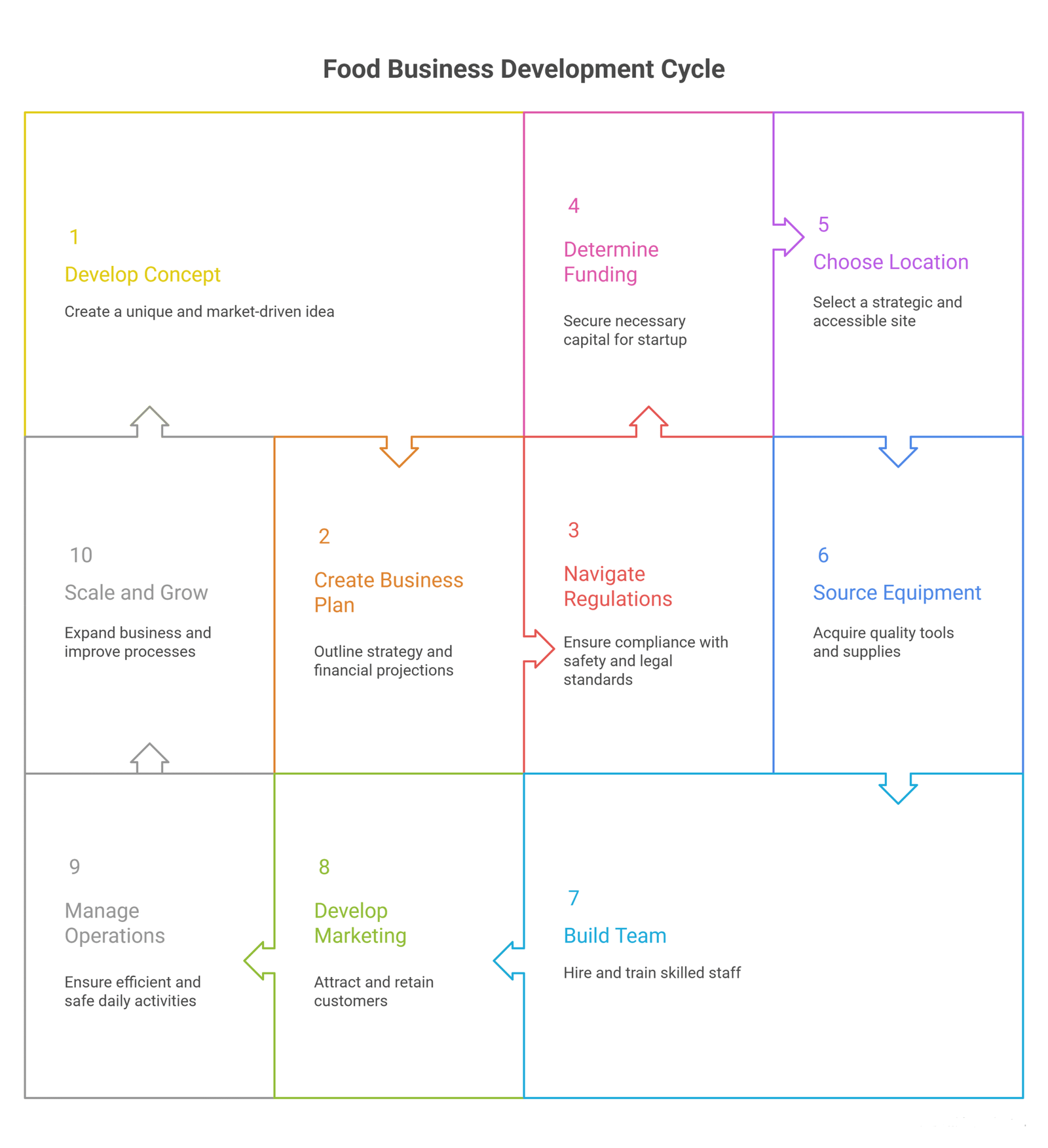
Steps to Start a Food Business
The food industry continues to thrive, with the global food service market projected to reach $5.4 trillion by 2030. Whether you dream of opening an ice cream shop, launching food trucks, or creating a specialty cookie business, understanding how to start a food business is the first critical step toward turning your culinary passion into a profitable venture.
This comprehensive guide walks you through every essential step of starting a successful food business, from initial concept development to opening day and beyond.
Understanding the Food Business Landscape
Before diving into how to start a food business, it’s crucial to understand the diverse opportunities within the food industry. From traditional restaurants and commercial kitchens to farmers markets and pop-up events, entrepreneurs have countless options to explore.
The food service industry has evolved significantly, with new business models emerging including ghost kitchens, food delivery services, and micro markets. Each model comes with unique advantages, startup costs, and regulatory requirements that you’ll need to carefully evaluate.
Types of Food Businesses to Consider
Traditional food establishments include full-service restaurants, fast-casual dining concepts, coffee shops, bakeries and specialty food shops, ice cream parlors, meat shops, wine shops, and brewery businesses. These brick-and-mortar operations offer customers an in-person dining or shopping experience and typically require significant upfront investment.
Mobile and flexible options have gained tremendous popularity in recent years. Food trucks, food carts, pop-up restaurants, catering services, and food vending machines allow entrepreneurs to test concepts with lower startup costs while maintaining operational flexibility.
Modern food business models continue evolving with technology and changing consumer preferences. Ghost kitchens operate as delivery-only operations without dining rooms, meal prep and subscription services cater to health-conscious consumers, online food businesses leverage e-commerce platforms, and food processing plants supply wholesale markets. Micro markets and incubator kitchens provide shared resources for emerging food entrepreneurs.
Step 1: Develop Your Food Business Concept
The foundation of learning how to start a food business begins with a solid concept. Your concept should reflect your culinary passion while addressing real market demand.
Identify Your Niche
Successful food entrepreneurs identify gaps in the market. Consider what makes your food offering unique and who your target customer will be. Think about the specific problem your food business solves and how you’ll differentiate from competitors. These fundamental questions guide every subsequent decision in your business development.
Conduct Market Research
Thorough market research helps validate your business idea and understand market potential. Visit farmers markets, attend temporary events, study competitors, and gather customer feedback through taste tests and surveys.
Understanding your local food industry dynamics, customer preferences, and competitive landscape will inform crucial decisions about menu planning, pricing, and positioning.
Step 2: Create a Comprehensive Business Plan
A well-crafted business plan serves as your roadmap for success and is essential when seeking funding. When figuring out how to start a food business, this document becomes your most valuable tool.
Essential Components of Your Food Business Plan
Your business plan should begin with an executive summary that provides a brief overview of your concept, target market, and financial projections. The business description section offers detailed explanation of your food business type, cuisine, and unique value proposition. Market analysis demonstrates thorough research on your target customers, competitors, and industry trends.
The organization and management section outlines your business structure, ownership, and team composition. Your product line details complete menu descriptions, sourcing strategies, and pricing approach. Marketing strategies explain your plans for attracting and retaining customers through social media storytelling, email newsletters, and community presence. Finally, financial projections present revenue forecasts, startup costs, and your timeline to profitability.
Step 3: Navigate Legal Requirements and Food Safety Regulations
Understanding food safety regulations and obtaining proper licenses is non-negotiable when learning how to start a food business. Food safety standards protect your customers and your business from legal liability.
Federal Regulations
The FDA regulates most food businesses in the United States, excluding meat, poultry, and certain egg products which fall under USDA jurisdiction. Key federal requirements include food facility registration, where most facilities that manufacture, process, pack, or hold food must register with the FDA. You’ll need documented food safety plans with procedures for preventing contamination. Compliance with labeling requirements including nutritional information and allergen warnings is mandatory. Businesses processing meat and poultry must participate in the Meat and Poultry Inspection Program.
State and Local Permits
State and local requirements vary significantly across jurisdictions. Most food businesses need a general business license for legal operations, typically costing between $50 and $7,000 depending on location. A food service license demonstrates compliance with food safety protocols and food hygiene standards, ranging from $100 to $1,000. Food handler’s permits require employees to complete training, with costs between $15 and $500 per person.
Health permits are issued after passing kitchen inspection by the local health department. You’ll also need a certificate of occupancy confirming your space is zoned for food business operations, which costs approximately $100 to $400. A seller’s permit allows collection of sales tax from customers. If you plan to serve alcohol, a liquor license is required, and these vary widely by state with some exceeding $200,000 in cost.
Additional permits include zoning permits ensuring your location is approved for commercial food operations, sign permits for outdoor business signage costing $100 to $1,000, and fire safety permits confirming compliance with fire codes.
Food Safety Management Systems
Implementing robust food safety procedures protects your customers and business. Essential practices include proper temperature control with refrigeration and hot-holding procedures. You must establish food safety protocols for cross-contamination prevention and sanitation standards. Regular employee training on food safety keeps your team current on best practices. Food preservation requires proper storage and handling techniques. Documentation through maintaining Food Safety Program records demonstrates compliance.
In the UK food industry, businesses must also comply with Natasha’s Law, which requires full ingredient labeling for prepacked food.
Working with Regulatory Authorities
Establish relationships with local agencies including your local health departments, Division of Food and Recreational Safety, Kansas Department of Agriculture or your state equivalent, food inspectors and licensing specialists, and fire marshals. These connections help you navigate requirements and maintain compliance.
Step 4: Determine Your Funding Strategy
Understanding startup costs is crucial when learning how to start a food business. Costs vary dramatically based on your business model:
Typical Startup Costs by Business Type
Food cart businesses represent the most affordable entry point, ranging from $5,000 to $30,000. These costs cover cart purchase and customization, permits and licenses, initial inventory, and basic equipment.
Food trucks require significantly more investment, typically between $50,000 and $200,000. This includes vehicle purchase or lease, commercial kitchen equipment installation, permits averaging $1,864 in major cities, initial inventory and supplies, insurance, and commissary fees for required storage and prep space.
Restaurant startups vary dramatically from $100,000 to over $1,000,000 depending on the concept and location. Major expenses include lease deposits ranging from $2,000 to $12,000, build-out and renovations to create the dining environment, commercial kitchen equipment, furniture and fixtures, licenses and permits, initial inventory, marketing and pre-opening expenses, and crucial working capital to sustain operations until profitability.
Ghost kitchen concepts offer a middle ground, typically requiring $30,000 to $100,000. Costs include commercial kitchen rental, equipment if not included in the rental agreement, technology and delivery logistics systems, initial inventory, and marketing to build the delivery customer base.
Funding Sources
Personal savings remain the most common initial funding source for food entrepreneurs, allowing complete control without debt obligations. Small business loans through banks or SBA programs provide substantial capital for established business plans. Investors including angel investors or venture capital firms can provide funding along with valuable expertise and connections.
Crowdfunding platforms like Kickstarter or Indiegogo allow entrepreneurs to validate concepts while raising capital. Grant and funding opportunities exist at local and federal levels for qualifying businesses. Many entrepreneurs also turn to family and friends for personal network investments, though these relationships require careful management.
Step 5: Choose and Prepare Your Location
Location significantly impacts your success. Consider these factors:
For Brick-and-Mortar Establishments
High foot traffic with visibility and accessibility significantly increases customer choice and drives sales. Demographics matter tremendously as proximity to your target customer base determines your market penetration. Consider the competitive landscape carefully, as nearby competitors can drive traffic but also split the available market.
Parking and accessibility features encourage repeat visits from customers who value convenience. The size and layout of your space affects operational efficiency, with restaurants typically allocating 45-60% to dining areas, 35% to kitchen operations, and the remainder to storage. Lease terms with favorable conditions and flexibility protect your investment. Future development in the neighborhood trajectory can dramatically affect long-term success as areas evolve.
For Mobile Operations
Research permitted locations thoroughly as regulations determine where food trucks can legally operate. Event opportunities at farmers markets, festivals, and temporary events provide high-traffic sales venues. Strategic positioning affects your delivery radius and determines your food delivery service coverage area. Most jurisdictions require commissary kitchen access, providing required parking and prep space when your truck isn’t actively operating.
Setting Up Your Commercial Kitchen
Your kitchen is the heart of your operation. Ensure kitchen inspection readiness by meeting all compliance requirements before scheduling official inspections. Equipment selection requires balancing quality with budget constraints to maximize value. Workflow design with efficient prep space and smooth service flow minimizes bottlenecks during busy periods. Storage solutions need adequate refrigeration and dry storage capacity for your menu requirements. Safety equipment including fire suppression systems, first aid supplies, and proper ventilation systems protects staff and customers.
Step 6: Source Equipment and Suppliers
Essential Equipment
Investment in quality equipment ensures efficient operations. For cooking, you’ll need ovens, ranges, and grills, along with fryers and steamers, plus specialty equipment like espresso machines or soft-serve machines depending on your concept.
Refrigeration requirements include walk-in coolers and freezers, reach-in refrigerators for immediate access, and display cases for showcasing products. Prep equipment encompasses food processors and mixers, cutting boards and prep tables, plus scales and measuring tools for precision.
Service equipment includes a modern POS system with payment hardware like Stripe Terminal or similar solutions, serving utensils and plating supplies, and point-of-sale displays. For storage, invest in shelving systems, food-safe containers, and adequate dry storage areas to maintain organization and food safety.
Finding Reliable Suppliers
Build relationships with quality suppliers for fresh produce, considering local farmers markets for seasonal ingredients. Source proteins and dairy from reputable vendors who meet safety standards. Stock dry goods and staples efficiently through wholesale relationships. Select packaging materials that protect product quality while reflecting your brand. Identify specialty ingredients that differentiate your menu offerings.
Establish delivery systems and schedules that maintain food quality while managing inventory costs effectively.
Step 7: Build Your Team
Successful food businesses require skilled, reliable staff:
Key Positions
Successful food businesses require skilled, reliable staff across multiple roles. Management positions typically include a general manager overseeing daily operations, kitchen manager directing food preparation, and front-of-house manager ensuring customer service excellence.
Kitchen staff comprises chefs and cooks who execute your menu, prep cooks handling ingredient preparation, and dishwashers maintaining cleanliness and sanitation. Service staff includes servers and baristas interacting directly with customers, cashiers processing transactions, and delivery drivers bringing your food to customers’ doors.
Training and Development
Invest in comprehensive training covering food safety procedures to protect customers, customer service excellence to create memorable experiences, POS system operation for efficient transactions, thorough menu knowledge to answer questions confidently, and health and safety protocols to maintain a secure workplace.
Step 8: Develop Your Marketing Mix
Effective marketing strategies attract and retain customers:
Build Your Brand
Create a strong brand identity with a memorable logo, cohesive colors, and clear messaging that resonates with your target audience. Develop an online presence through a professional website showcasing your menu and story. Maintain active social media profiles with engaging content and ensure social media handles appear on all materials. Build community involvement through participation in local events and farmers markets, strengthening your neighborhood connections.
Marketing Channels
Digital marketing provides cost-effective reach through social media storytelling with behind-the-scenes content, email newsletters featuring promotions and updates, seamless online ordering integration, and search engine optimization to attract local customers.
Traditional marketing still delivers results through local newspaper features highlighting your unique story, radio spots reaching commuters, direct mail campaigns targeting neighborhoods, and community sponsorships building brand awareness.
Customer retention strategies maximize lifetime value through well-designed loyalty programs, special event promotions creating urgency, exceptional customer experience that generates word-of-mouth referrals, and responsive monitoring of customer satisfaction to address concerns quickly.
Delivery and Online Ordering
Modern food businesses must address online food delivery strategically. You can partner with third-party platforms like DoorDash, Uber Eats, and Grubhub for immediate market access, develop your own delivery service for better margins and customer relationships, or combine both approaches. Consider implementing delivery management software for route optimization, maintain an appropriate delivery radius that balances speed with coverage, ensure food quality during transport through proper packaging, and properly package items to arrive fresh and appealing. Train delivery drivers on service standards to represent your brand effectively.
Step 9: Manage Operations and Quality
Daily Operations
Food preparation requires consistent menu planning, rigorous quality control procedures, careful inventory management, and food waste minimization strategies. Customer service excellence comes through friendly, efficient service, effective problem resolution, systematic feedback collection, and continuous customer experience enhancement.
Financial management demands daily sales tracking, careful expense monitoring, vigilant cash flow management, and regular financial analysis to identify trends and opportunities.
Food Quality and Safety
Maintain rigorous standards through daily temperature logs documenting proper food storage, regular equipment maintenance preventing breakdowns, supplier quality verification ensuring consistent inputs, customer feedback monitoring to catch issues early, regular staff training updates keeping everyone current, and unwavering compliance with food safety standards.
Technology Integration
Leverage technology for efficient operations through modern POS systems streamlining transactions, inventory management software tracking stock levels, delivery logistics platforms coordinating orders, route optimization tools reducing delivery times, and security solutions protecting against online attacks and data protection threats.
Step 10: Scale and Grow
Expansion Strategies
Once established, consider growth opportunities including additional locations to increase market presence, franchise development to scale your concept, product line expansion offering new menu items, catering services capturing event business, wholesale distribution supplying other retailers, and pop-up events at new markets testing expansion viability.
Continuous Improvement
Continuously monitor market trends to stay relevant, gather customer feedback to understand preferences, refine menu offerings based on popularity and profitability, update marketing strategies as channels evolve, invest in staff development to build capabilities, and enhance operational efficiency to improve margins.
Special Considerations for Different Business Models
Home-Based Food Businesses
Cottage food laws vary by state, but generally allow specific products sold directly to consumers. Benefits include lower startup costs compared to commercial operations, flexible scheduling around personal commitments, and minimal regulatory burden depending on your state’s specific requirements.
However, limitations often include revenue caps restricting business growth, restricted product types usually limited to non-hazardous items, direct sales only with no retail distribution allowed, and specific labeling requirements for consumer protection.
Food Trucks and Mobile Operations
Mobile food businesses offer unique advantages including lower overhead compared to brick-and-mortar establishments, flexibility to test different markets and locations, event-based opportunities at festivals and gatherings, and ability to follow customer traffic patterns.
Challenges include ongoing vehicle maintenance costs, limited menu capacity due to space constraints, weather dependency affecting sales, and commissary kitchen requirements for food preparation and storage.
Ghost Kitchens
Delivery-only concepts minimize startup costs through several advantages. There are no dining room expenses for furniture, decor, or front-of-house staff. Lower rent in commercial areas compared to high-traffic retail locations reduces overhead. Focus on delivery radius optimization allows strategic positioning. Reduced staffing needs eliminate servers and bussers.
Success requires strong delivery partnerships with major platforms, excellent packaging that maintains food quality during transport, consistent quality despite lack of direct customer interaction, and efficient delivery logistics coordinating multiple orders.
Protecting Your Food Business
Insurance Requirements
Essential coverage includes general liability insurance protecting against customer injuries, property insurance covering building and equipment, workers’ compensation for employee injuries, product liability addressing food-related claims, public liability insurance especially important for UK food industry operations, commercial auto coverage for food trucks and delivery vehicles, and business interruption insurance maintaining income during closures.
Risk Management
Protect against multiple threats including food safety incidents that could sicken customers, customer injuries on your premises, employee injuries during work, property damage from accidents or disasters, food poisoning claims requiring legal defense, supply chain disruptions affecting inventory, and online security threats like SQL command injections and malformed data attacks targeting your systems.
Working with Industry Resources
Leverage available support from organizations like the Small Business Administration (SBA), SCORE mentorship programs, Oklahoma State University food business programs or your local university equivalents, the Wisconsin Local Food Marketing Guide or your state equivalent resources, OSU Patent and Trademark Resource Center for intellectual property protection, your local chamber of commerce, and relevant industry associations.
Access training resources and regulatory guidance through state departments of agriculture, local health departments, food safety certification providers, and business development centers in your region.
Frequently Asked Questions
Do I need a commercial kitchen to start a food business?
This depends on your business type and local regulations. Cottage food operations may allow home kitchen use for specific products, but most food businesses require a licensed commercial kitchen. Food trucks need commissary kitchen access for prep and storage, while restaurants and caterers need full commercial facilities.
What licenses do I need to start a food business?
At minimum, most food businesses need a business license, food service license, and health permit. Additional permits may include seller’s permits, zoning permits, signage permits, and if serving alcohol, liquor licenses. Requirements vary significantly by state and locality, so check with your local health department and Kansas Secretary of State (or your state equivalent).
How long does it take to open a food business?
Timeline varies based on complexity. A simple cottage food operation might launch in weeks, while a full restaurant could take 6-18 months from concept to opening. Factors include securing locations, obtaining permits, construction/renovations, equipment installation, and staff hiring.
Do I need investors to start a food business?
Not necessarily. Many successful food entrepreneurs bootstrap their businesses with personal savings, especially when starting small with food trucks or cottage operations. However, larger ventures like full-service restaurants often benefit from investor funding, bank loans, or a combination of funding sources.
How do I price my menu items?
Use food cost percentage (typically 28-35% for restaurants) as a starting point. Calculate ingredient costs, account for labor, overhead, and desired profit margin. Research competitor pricing and consider your target market’s price sensitivity. Remember that pricing strategy affects both profitability and market positioning.
What are the biggest mistakes new food businesses make?
Common mistakes include insufficient market research, undercapitalization, poor location choice, overcomplicating the menu, inadequate food safety protocols, weak marketing strategies, pricing too low, neglecting customer satisfaction, and failing to plan for seasonal fluctuations.
Conclusion
Understanding how to start a food business requires a blend of passion and strategic planning. Regulatory compliance, a well‑defined financial plan, and operational readiness are core pillars of success. Use structured business tools and pitch resources to strengthen your plan and communicate effectively to stakeholders. With thoughtful execution and continuous refinement, your food business can transition from a compelling idea to a sustainable enterprise.