

Excel and digital templates by Oak Business Consultant
Savings Goal Tracker
Unlock the path to your financial dreams with our Savings Goal Tracker! This intuitive Excel template empowers you to easily define, manage, and visualize your savings objectives. Whether planning for a vacation, home, or emergency fund, effortlessly input your income, track expenses, and monitor progress with vibrant charts. Tailor your budget, navigate your financial journey, and watch your savings grow, steadily steering you toward financial freedom and security. Start achieving your financial milestones now!
Original price was: $90.$54Current price is: $54.
- Instant download
- Secure checkout
- Personal & business licence


Product details
Introduction
Saving money is pivotal for achieving financial freedom and reaching your long-term goals. Whether you’re saving for a vacation, a new car, a down payment on a house, or simply to build an emergency fund, having a savings plan and a savings spreadsheet in place is crucial. To help you manage your monthly expenses and spending habits effectively, we’ve created the Savings Goal Tracker Excel Template. This article will guide you through setting up and using this perfect tool to take control of your finances and navigate towards your money goals.
Setting Up an Effective Savings Goal Tracker
A good savings goal tracker spreadsheet should allow you to:
- Define Clear Goals: Specify your short-term savings goal or yearly savings goal, whether it’s for occasional expenses like a vacation or long-term ones like retirement.
- Create a Budget: Establish a monthly or annual budget, considering your monthly income, daily expenses, and credit card payments.
- Track Progress: Monitor your expenses against your budget to ensure you stay on track using an expense tracker.
- Visualize Goals: Visual representations like charts and graphs can help you see your progress and stay motivated.
Key Components
Our Savings Goal Tracker Excel Template is a versatile tool designed to simplify the process of managing your finances. This template consists of several key components, each serving a specific purpose:
Input Sheet
The Input Sheet is where you’ll enter your financial information. You can input your income sources, expenses, and debts to overview your financial situation comprehensively.

Budgeted Income and Expense
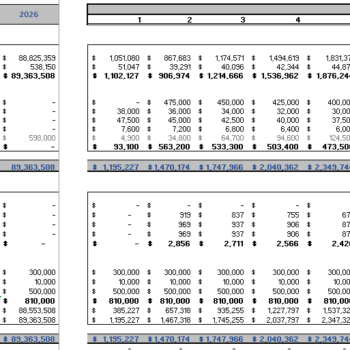
This section helps you establish a budget by detailing your expected income and planned expenses for each category. It forms the foundation of your savings plan. You will have a proper monthly budget spreadsheet.

Actual Income and Expense
Track your actual income and expenses in this section. Regularly updating this information will enable you to compare it against your budget and adjust as needed.

Tracker Sheet
The Tracker Sheet provides a visual representation of your progress towards your savings goals. It includes graphs and charts that make it easy to see how you’re doing at a glance.

Individual Saving Goals
This section allows you to set and monitor individual savings goals. You can specify the goal, target amount, and target date, and the template will help you track your progress toward achieving each goal.

Dashboard
The dashboard is a summary of your financial health. It displays key information such as your total savings, remaining expenses, and progress toward your goals.

Benefits of Using the Template
- Financial Control: With a budget category in place, you’ll have better control over your monthly expenses and credit card payments.
- Motivation: Visual charts and graphs, like those in a Savings Tracker Dashboard, motivate you to stay on track and reach your money goal trackers faster.
- Extra Money: By keeping track of extra cash and hidden costs, you can ensure that every penny is accounted for in your household budget.
How to Use the Template
- Input Your Data: Fill in the Input Sheet with your business income, unplanned expenses, and bank account details.
- Set Goals: In the Individual Saving Goals section, specify your realistic goals, target amounts, and dates.
- Track Progress: Regularly update the Actual Income and Expense section to monitor your progress against your weekly budget template or yearly budget.
- Adjust as Needed: If you’re falling behind on your goals or exceeding your budget category, adjust your spending habits accordingly.
Frequently Asked Questions
- How do I create a savings tracker in Excel?
Creating a savings tracker in Excel involves setting up columns for income, expenses, and savings goals and using formulas to calculate totals and track your progress. Our template simplifies this process.
- How do I make a savings plan spreadsheet?
Create categories for income, expenses, and savings goals to make a savings plan spreadsheet. Input your financial data, set specific goals, and regularly update your progress. - How do you write a savings goal?
When writing a savings goal, be specific, set a target amount, and establish a target date. For example, “I will save $5,000 for a vacation by December 31, 2023.” - How do I track my savings goals?
Use our savings budget tool or a Budget Planner to track your savings goals. Input your goals, target amounts, and dates, and regularly update your progress in the template. - How do I create a To-Do list and tracker in Excel?
Creating a to-do list and tracker in Excel involves creating a table with columns for tasks, deadlines, and completion status. You can also use Excel’s conditional formatting to highlight completed tasks.
Conclusion
Managing your finances and achieving your savings goals is easier with the Savings Goal Tracker Excel Template. This digital budget tool helps you manage your savings budget, track your spending habits, and systematically achieve your money manager goals. Start using the template today and watch your savings grow as you move closer to your financial goals, whether they involve a Savings Challenge Tracker or a money challenge.
Walk-Through Video of Saving Goal Tracker Excel Template.
The following video will give you an overview of the different components of the financial model and will help you understand how it works.
How it works
How do you get and use a template?
Three steps from checkout to your own numbers.
1. Check out and download
Add the template to your cart and check out. Your download link appears on the order confirmation and in your account.
2. Add your numbers
Open the file and replace the sample inputs with your own assumptions.
3. Use the results
Review the outputs and charts, and use them in your plan, budget or investor pack.
Template or done for you?
Need it built around your business?
A template suits standard inputs. If you need several entities, an investor or lender-ready model, or a full three-statement forecast, Oak’s financial modelling team can build it with you.
Template vs. done for you
| Option | Template | Done for you |
|---|---|---|
| Who builds it | You | Oak’s team |
| Best for | Standard inputs, one plan | Investor, lender or multi-entity work |
| Next step | Add to cart | Book a 30-minute call |

Related templates
Which templates work well with this one?
Chosen from the same categories in the shop.
Related products
- Browse by Categories, Browse by Industry, Business Plan, Financial Excel Model, Financial Excel Template, Fintech industry business plan, Fintech Industry Financial Model, Fintech Industry Solutions, KPI Dashboard Excel, SaaS Industry, SaaS Industry Financial Model, Small Online Business Excel Financial Model Projection, Startup
Fintech SaaS – Excel Financial Model
Original price was: $135.$50Current price is: $50. - Browse by Categories, Browse by Industry, Deals, Financial Excel Model, Financial Excel model Valuation Templates, Financial Excel Template, financial forecasting modeling, Financial Forecasting Models, financial model, Financial model excel template, financial modeling, KPI Dashboard Excel, Services/ Consulting, Services/ Consulting Financial Model, Small Online Business Excel Financial Model Projection, Startup, Startup Financial Model
Ride-Hailing Excel Financial Model
Original price was: $125.$50Current price is: $50. - Browse by Categories, Browse by Industry, Deals, E-commerce Financial Model, Financial Excel Model, financial modeling, SaaS Industry, SaaS Industry Financial Model, Small Online Business Excel Financial Model Projection, Software Business Financial model
SaaS E-Commerce Software Excel Financial Model
Original price was: $300.$50Current price is: $50. - Browse by Categories, Browse by Industry, Deals, Financial Excel Model, financial modeling, SaaS Industry, SaaS Industry Financial Model, Small Online Business Excel Financial Model Projection, Software Business Financial model, Startup
Small Business CRM Software Excel Financial Model
Original price was: $125.$50Current price is: $50.




Browse the shopAll templatesTools and templatesFinancial Excel modelsEvery industry
Policies
What should you know before you buy?
Plain-language terms for digital products.
Licence of use
Single licence for personal or business use. Do not redistribute, resell or share the files.
Refunds
Digital products cannot be returned or exchanged once downloaded. Please ask any questions before you buy.
Delivery
Instant digital download after checkout. There is nothing to ship.
SDG note: digital templates and planning tools support SDG 8 (decent work and economic growth), SDG 9 (industry, innovation and infrastructure) and SDG 12 (responsible consumption, with no printing or shipping). Self-assessed by Oak, not a UN endorsement.
Not sure this is the right template?
Book a 30-minute call and we will point you to the right model, or build one for you.
Open 24 hours, Monday to Friday. Closed Saturday and Sunday.
Learn moreAbout OakMeet Sadaf Abbas


