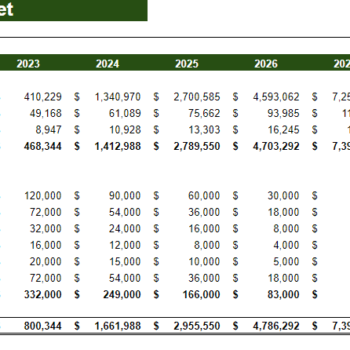
A financial model for a clothing business serves as a comprehensive tool designed to project the financial performance and evaluate the viability of this venture over a specific period. This model encompasses various components, such as revenue forecasts, cost of goods sold (COGS), operating expenses, and cash flow analysis, tailored to the unique dynamics of the fashion industry.
Revenue forecasting within this model considers multiple income streams, including direct sales from brick-and-mortar stores, online sales, and wholesale orders. It takes into account seasonal trends, fashion cycles, and marketing strategies that significantly impact sales volumes. The model adjusts for the variability in demand across different seasons and collections, providing a realistic projection of future revenues.
The COGS section meticulously accounts for the direct costs associated with producing the clothing items, such as fabric, labor, and manufacturing overheads. It’s crucial for determining the gross margin, which reflects the profitability of the products before accounting for operating expenses. This section helps businesses price their products competitively while ensuring profitability.
Operating expenses in the model cover all costs required to run the clothing business outside of direct production costs. This includes rent for retail spaces, salaries for staff, marketing and advertising expenses, and administrative costs. The model allows for scenario analysis to understand how changes in operating expenses can impact the bottom line.
Cash flow analysis is another critical component, highlighting the liquidity of the business. It tracks the inflow and outflow of cash, ensuring the business can meet its short-term obligations. This section is vital for assessing the need for external financing or investments.
In summary, the financial model for a clothing business is an indispensable strategic tool. It provides a clear roadmap for profitability, informs decision-making, and is adaptable to the fast-paced nature of the fashion industry. By accurately modeling financial outcomes, clothing business owners and investors can make informed decisions to drive growth and achieve long-term success.
- Browse by Categories, Browse by Industry, Fashion Retail, Fashion Retail Excel Financial Model, Financial Excel Model, Financial Excel model Valuation Templates, Financial Excel Template, financial forecasting modeling, Financial Forecasting Models, financial model, Financial model excel template, financial modeling, Retail Industry Financial Model, Retail Industry Solutions, Small Online Business Excel Financial Model Projection, Startup, Startup Financial Model
Women’s Clothing Store Financial Model Template
Original price was: $180.$108Current price is: $108. - Browse by Categories, Browse by Industry, Financial Excel Model, Retail Industry Financial Model, Retail Industry Solutions, Small Online Business Excel Financial Model Projection
Plus Size Clothing Store Financial Model
Original price was: $180.$108Current price is: $108.